







An airport has many valuable assets, and tracking each one is important. They include lifts, generators, elevators, moving walkways, air bridges, surveillance systems, CCTV cameras and laptops.
These assets need tracking for maintenance management, and they need to be protected from theft and misplacement. An airport is a complex piece of infrastructure that has to be maintained, which is why airport asset management is required.
Airports need asset tracking software. Many airports already use it, and others are planning to.
What Is the Need for Maintenance in the Air Terminal?
Maintenance is required across airport venues such as machine shops, workplaces and storage space. All these places matter to the airport, and everything in it should be maintained and well managed. If machines stop working, the airport loses business.
Take HVAC as an example. What does it do at the airport? It is needed indoors and outdoors. It provides fresh air along with cooling and heating, and it also controls humidity and filters the air. What happens if the HVAC stops working?
None of those functions will work, and that can damage the airport’s reputation. That is why maintenance is essential for keeping machines and spaces in top condition.
What Is the Need for Asset Management at the Airport?
Airport asset management is needed to manage and monitor assets. Here are the main reasons airports need asset management.
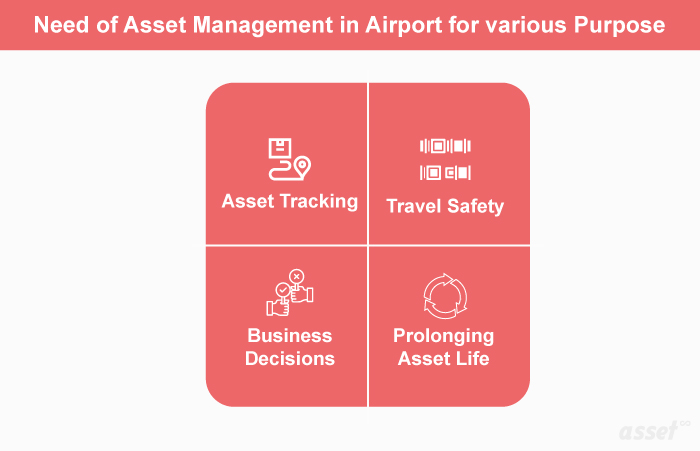
1. Asset Tracking
Assets run daily operations; without them, no work gets done. That is why asset tracking is important. It tells you where assets are and gives crucial details, such as whether an asset is running or stopped.
Asset tracking also keeps a record of maintenance history. Overall, it replaces manual handling of assets with automated handling. It tracks locations and records, giving a clear view of airport operations.
2. Travel Safety
Airlines are responsible for getting passengers to their destinations without any issue. The airport maintenance team, in turn, is responsible for making sure every part is working, because ignoring even a small issue can put a whole journey at risk.
With the software, the airport maintenance team can check that all parts are working, and any issue found is fixed through a work order.
The software collects data on performance, covering aspects such as ride quality and opportunities to improve safety.
3. Business Decisions
The software’s reports and analysis on every important area, such as maintenance, help you make strategic business decisions based on solid numbers.
The system gives you information about each asset’s condition, its expected life and its planned replacement date. Data on completed work and expenses can be used to improve how assets perform. You can also run reports on asset performance and on the total number of assets.
The software supports business decisions such as:
- Identifying areas for improvement from reports
- Estimating future asset performance
- Managing tracking expenses
- Controlling maintenance costs
4. Prolonging Asset Life
Airport assets are very valuable and must be maintained, or they can break down or fail. Emergency maintenance can be very expensive.
To avoid unnecessary expenses, maintenance should be done on time. Timely maintenance extends asset life.
How Is Asset Tracking Done at the Airport?
Several technologies are available for asset tracking, and they can provide real-time tracking: RFID (radio-frequency identification), BLE (Bluetooth Low Energy), GPS (Global Positioning System) and IoT (Internet of Things).
Each of these asset tracking technologies has pros and cons. At an airport, some are good for indoor tracking and some for outdoor tracking.
1. RFID
RFID tags are good for indoor tracking. They fall into two categories: active and passive. Active tags cost more than passive tags and have a longer range. Active tags are used for large assets such as vehicles.
2. GPS
GPS (Global Positioning System) is effective for outdoor tracking. Ride-hailing and navigation apps use it to find the most cost-effective route and avoid traffic jams. With GPS asset tracking, you get real-time location tracking for vehicles and equipment.
3. BLE
BLE beacons can be used for indoor and outdoor tracking, and they can track assets in real time without sacrificing accuracy. Beacons are installed in places like hospitals and warehouses, and airports are now turning to BLE technology too. For best results, BLE tags are combined with other technologies such as IoT or GPS.
Bringing Airport Asset Tracking Together
With enterprise asset management software, you can combine these asset tracking technologies to get full control over your assets. The software gives you one place to manage assets efficiently and shows an up-to-date picture of where they are.
Managers get alerts and notifications when maintenance is due, and maintenance or servicing can be scheduled by asset location. The software keeps everyone on the same page.
It helps improve the terminal’s infrastructure and the airport’s security, and it keeps track of assets in real time. This software has real potential to improve how an airport runs.
Frequently Asked Questions (FAQs)
1. What is asset management?
Asset management is the process of monitoring and managing assets effectively. It keeps assets maintained so they last longer.
2. What is indoor tracking and outdoor tracking?
Indoor tracking is used when an asset is inside an organization’s premises, such as an airport terminal. Outdoor tracking is used when the asset is outside the premises, such as a vehicle.
3. Which asset tracking technology is best?
As we said above, every technology has pros and cons. Some are good for indoor tracking and some for outdoor tracking, and some cost more than others. The best technology is the one that fits your business budget and requirements.