





GPS asset tracking that turns miles driven into maintenance due
GPS asset tracking for vehicles, generators and mobile plant that reports where each one is, the trips it made and its odometer. Those readings feed the meters that schedule its maintenance.

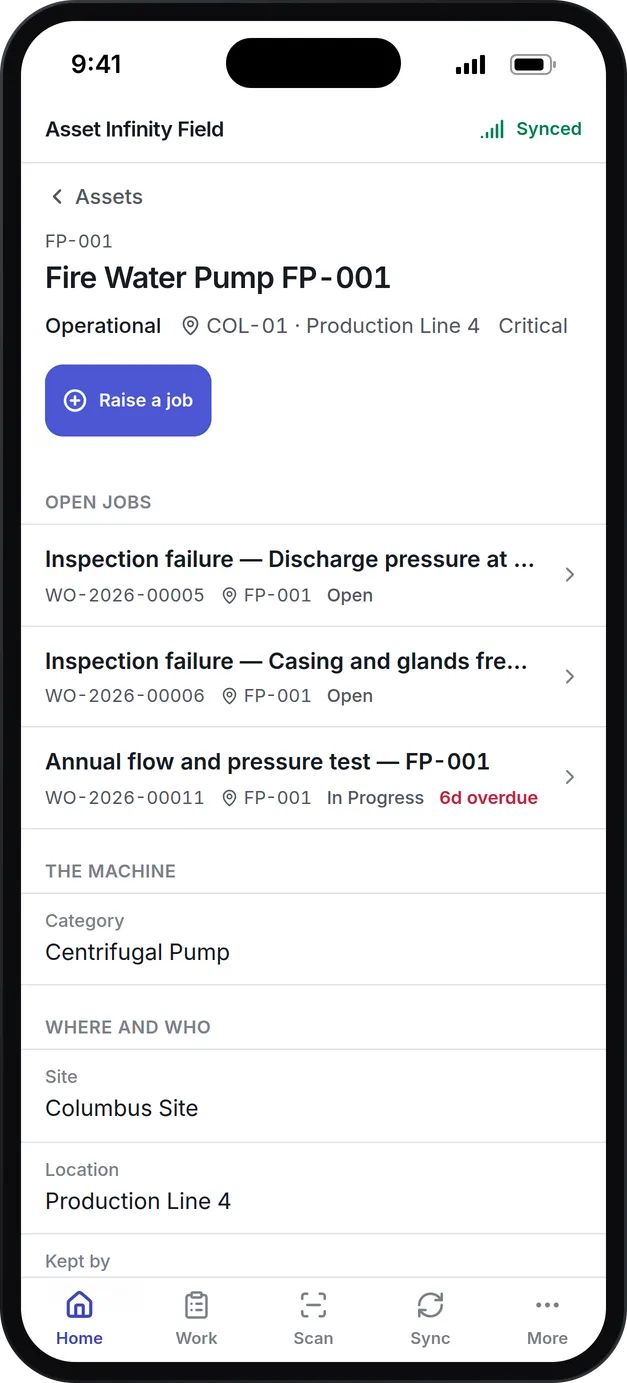
What our GPS asset tracking does for vehicles and plant
Trackers you can buy
Teltonika devices work out of the box, along with Concox, Queclink, Ruptela and phones running OsmAnd.
Trips and replay
Positions are grouped into trips, and any day or the last 7 days can be replayed on the map.
Odometer to meters
The tracker's odometer and engine hours feed the asset's meters once a day, so a plan due every 10,000 miles falls due because the vehicle was driven.
Areas on the map
Draw an outline around a yard, quarry or depot. The asset's location changes when it arrives, and leaving raises a notification.
Alerts from the device
A power cut, the tracker being unplugged, a flat backup battery and the SOS button are passed to the site's supervisors as they happen.
Silence noticed
A tracker that stops calling for longer than its window is flagged, so a removed or switched-off tracker does not go unseen.
What is GPS asset tracking?
GPS asset tracking fits a satellite tracker to a vehicle or a piece of mobile equipment so you can see where it is, where it has been and how far it has traveled. The tracker reports its position over a cellular connection, and the software keeps the trail, the trips and the alerts the device raises.
Most products stop at the dot on the map. For a maintenance team the more useful answer is what the miles and engine hours mean for the asset, which is why the trackers in Asset Infinity feed the same meters your service plans run on.
How GPS asset tracking works in Asset Infinity
Trackers are registered against assets in the register, so the van, the generator or the excavator keeps one record with its location, meters, work orders and costs together.
- Point the tracker at the system.In the tracker’s own configurator, enter the server domain and port shown for its make. A tracker that calls before it is registered keeps what it recorded and sends it after registration.
- Register it by IMEI.Enter the fifteen digits on its label, choose its make and fit it to an asset, by search or by scanning the asset’s label.
- Decide how the pin moves.Set how far the asset must move before its coordinates change and how often they may change at most. GPS wanders a few meters when standing still, and the full trail is kept regardless.
- Map the meters.Choose the asset’s odometer and engine-hours meters, and add an offset so a tracker fitted to a truck with 112,000 miles on the clock starts from the right number. Readings are taken once a day unless you choose otherwise.
- Draw areas.Outline each yard, depot or quarry on the map. A tracked asset inside one is moved to that site or location automatically.
- Watch for alerts.Power cuts, unplugging, a low backup battery, the SOS button and a tracker that stops calling are passed to the site’s supervisors.
On each tracker’s page, positions are grouped into trips, any day or the last 7 days can be replayed on the map, and each trip shows its start, end, distance, duration and top speed.
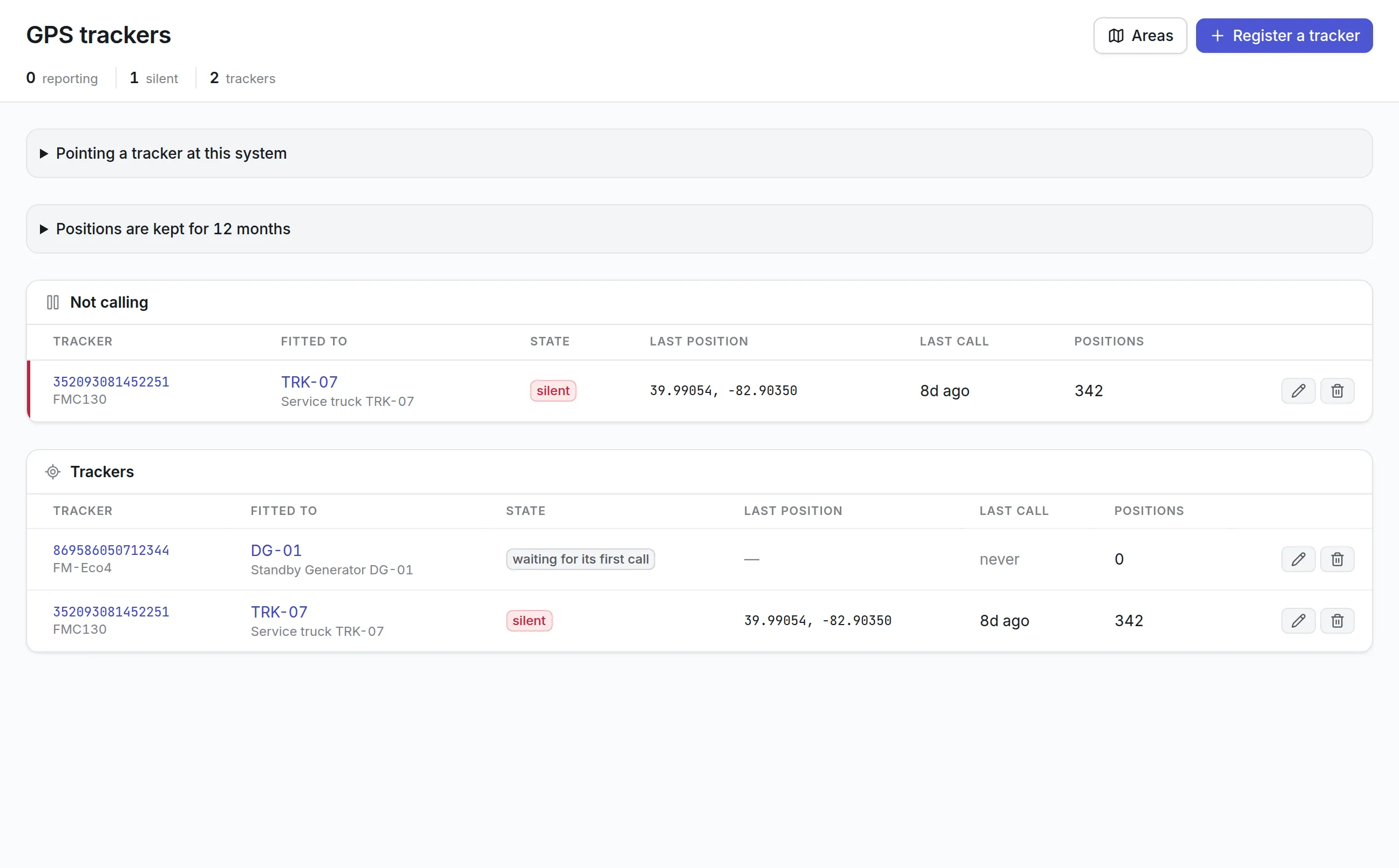
Which GPS trackers work with Asset Infinity
You buy the hardware that suits your vehicles. These families are supported:
| Family | Examples | Notes |
|---|---|---|
| Teltonika | FMB, FMC, FMM and FMT series | Works out of the box |
| Concox GT06 and compatible | GT06 protocol devices | Vehicle trackers that speak GT06 |
| Queclink @Track | GV and GL series | Vehicle and asset trackers |
| Ruptela | FM-Eco4, FM-Pro4, Trace5 | Vehicle and equipment trackers |
| OsmAnd or Traccar Client | An app on a phone | Useful for trials or vehicles without a fitted tracker |
A tracker can also be limited to the address range of its SIM on a private APN from your mobile operator, so knowing an IMEI is not enough to send positions as that tracker.
See it on your own assets, or price it in two minutes.
What to look for in GPS asset tracking software
| Capability | Why it matters | In Asset Infinity |
|---|---|---|
| Hardware choice | Being tied to one tracker vendor limits what you can fit | Five tracker families, including a phone app |
| Usage-based maintenance | Calendar servicing over-services idle vehicles | Odometer and engine hours feed the asset’s meters |
| Geofences tied to sites | A dot in a yard should update the asset’s location | Areas move assets to their site or location |
| Leaving alerts | Plant that should stay on site needs watching | Supervisors told when a tracked asset leaves an area |
| Tamper and power alerts | A tracker that is unplugged tells you nothing | Unplugged, no power, low battery and SOS alerts |
| Silence detection | A switched-off tracker looks like a parked vehicle | Trackers past their offline window are flagged |
| Retention you control | Location trails are often personal data about drivers | Positions kept 12 months by default, changeable per organization |
| One record per asset | Fleet data in a separate tool never reaches the work orders | Trips, meters, work and cost on the same asset |
From miles driven to maintenance due
The tracker counts distance and ignition time itself, and those counts are written into the asset’s meters. A maintenance plan set for every 10,000 miles or every 500 engine hours then falls due because the vehicle was actually driven that far.
More detail
Plans can combine triggers, such as every six months or every 10,000 miles, whichever comes first. The tracker page shows each meter it feeds, the value written, what the tracker reported plus the offset, and why a reading was not taken if one was skipped. Set the plans up in preventive maintenance software, and run the whole service schedule for vans and trucks in fleet maintenance software.
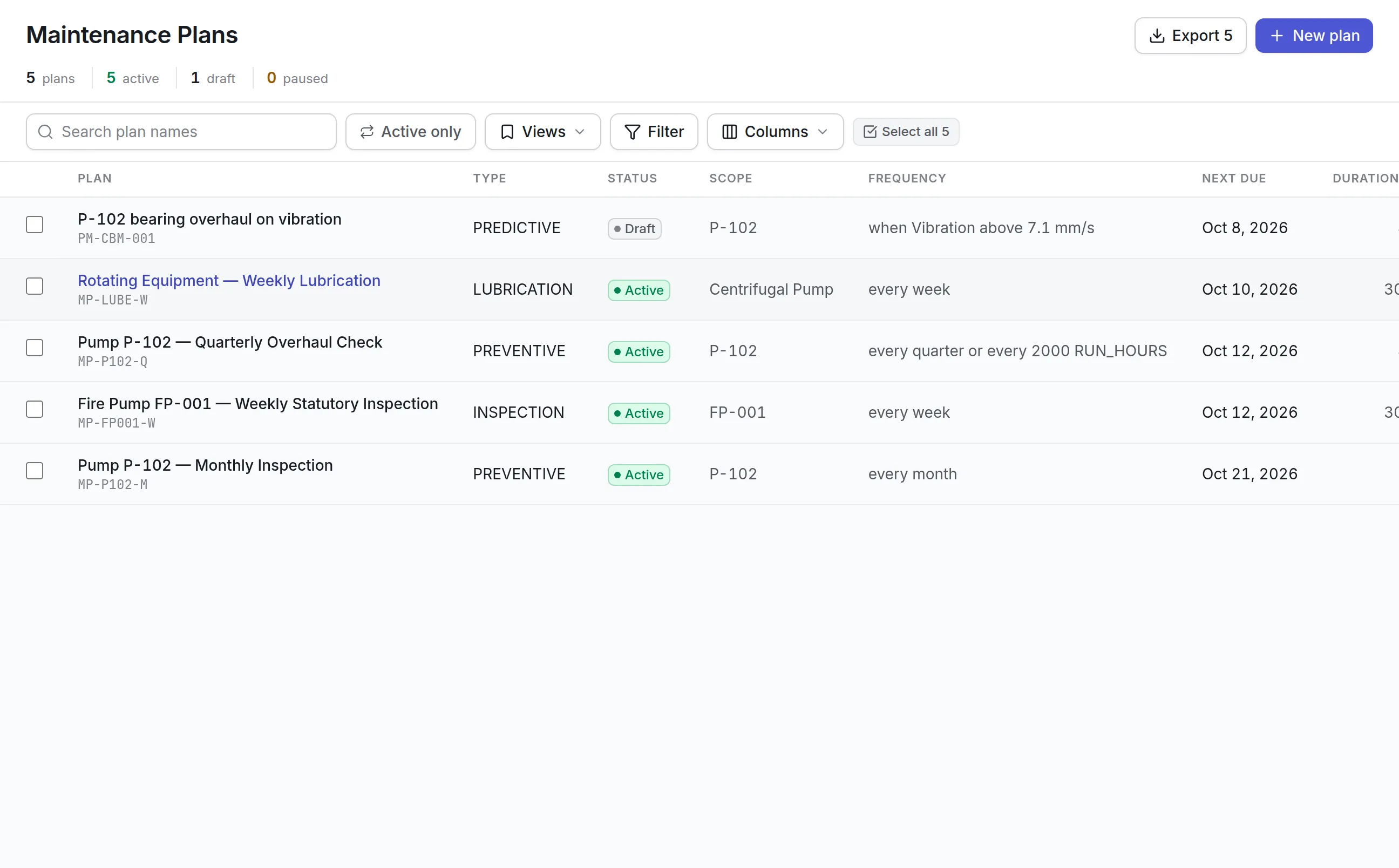
Areas, alerts and silence
An area is the outline of the ground a site or one of its locations occupies. When several overlap, a location’s area wins over its site’s, so a truck in the workshop yard is placed in the workshop yard.
More detail
Positions are kept for 12 months by default. An administrator can shorten or lengthen that period, and shortening it removes older positions that night.
GPS asset tracking examples by industry
Service fleets
A facilities contractor fits Teltonika trackers to its vans. Odometer readings feed the service plans, and the trip list answers where a van was when a customer calls.
Oil and gas
Generators and light towers move between well sites. Each well pad is drawn as an area, so the asset’s location updates when it arrives, and engine hours drive its servicing. See oil and gas asset management.
Water utilities
Portable pumps and standby generators are deployed during storms. Leaving alerts on the depot area tell the supervisor when one goes out, and the trail shows where it was used. See water utility asset management.
Construction and plant
Excavators and compressors left on open sites carry trackers with power and unplug alerts, so tampering reaches a supervisor while it is happening.
Getting started with GPS asset tracking
Most teams have their first trackers reporting within a week. The usual order is:
After that, readings arrive once a day without anyone typing them, and the first service due on actual use shows up on the maintenance schedule.
What GPS asset tracking costs
GPS trackers are priced with your tracker model, and we add them to your formal quote. Each tracked asset lives in the asset register, which starts at $130 a month for up to 500 assets with unlimited users. Build a quote and tell us which trackers you plan to fit. For equipment indoors, where satellites cannot reach, see RFID asset tracking and the wider asset tracking software page.
More in Track
Common questions
What is GPS asset tracking?
GPS asset tracking fits a tracker to a vehicle or piece of equipment so you can see where it is, where it has been and how far it has traveled.
Which GPS trackers are supported?
Teltonika trackers, plus devices that speak the Concox GT06, Queclink and Ruptela protocols, and the OsmAnd or Traccar Client app on a phone.
Can GPS mileage trigger preventive maintenance?
Yes. Map the tracker's odometer or engine hours to the asset's meter, add an offset so it matches the dashboard, and meter-based plans fall due on actual use.
What happens if a tracker loses signal?
Trackers store their positions and upload them when they reconnect. If one stays silent past its offline window, it is flagged and the site's supervisors are told.
How long are positions kept?
Twelve months by default. An administrator can set a longer or shorter period for the organization.
Does GPS asset tracking work indoors?
Not reliably, because satellites cannot reach most buildings. Indoors, use RFID readers or Bluetooth (BLE) tags, which Asset Infinity also supports.
See it with your own assets
A demo run on an example from your industry. Or start the trial and look around on your own.