






Asset tracking and management play a very important part in running a business. This article answers some basic questions about the key topics around asset tracking.
It also highlights some of the most important benefits.
Here are the questions this article covers:
- What is asset tracking?
- What are the techniques used in asset tracking?
- What are the advantages?
- How is it done?
- What should be tracked?
- Which industries use asset tracking?
- What is the future?
Answers to the Basic Questions About Asset Tracking
1. What is Asset Tracking?
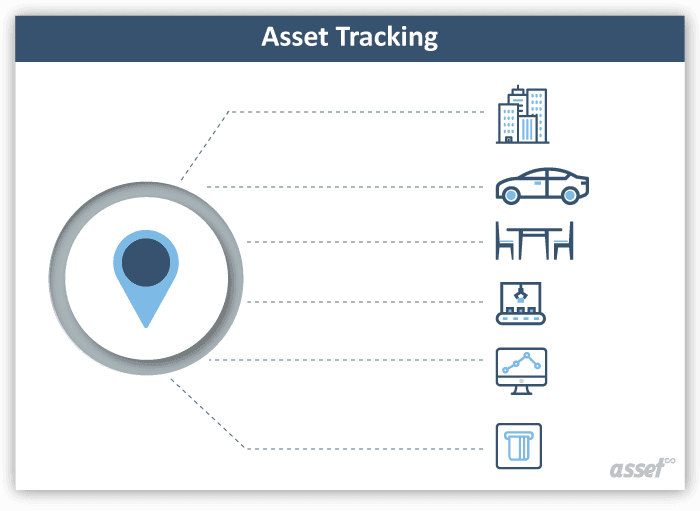
Asset tracking is the process of knowing the location of your physical assets. It improves business processes by reducing cost and time and increasing revenue and efficiency.
2. What are the techniques used?
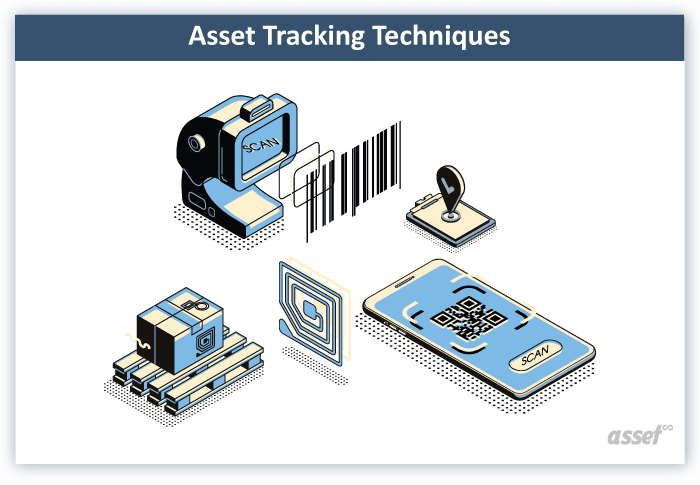
Several methods can be used, such as:
- Barcode Label: Your valuable items can be tracked with a barcode or QR code label. The code can be scanned with a barcode scanner or a mobile phone. Barcode labeling is very cost-effective.
- RFID Tag: RFID is also used for tracking. It can be short-range or long-range depending on your business requirements, and it can be active or passive. With RFID, a person can scan multiple assets within a few seconds.
- GPS: Assets can be tracked all around the world using devices with GPS or a cell phone. These devices are known as GPS asset trackers, and many have an internal battery.
- NFC: NFC is one of the newer technologies used for asset tracking. It makes tracking simple: just tap the tag with a phone to get all the information.
You can use any of these methods, but keep your business requirements in mind so the workflow is effective.
3. What are the advantages of Asset Management?
It has several advantages:
Finding Ghost Assets: Say you bought four laptops last year and one of them is missing; you don’t know where it is. In simple terms, ghost assets are assets that are recorded in your books but physically missing. With proper asset management, you are far less likely to lose an asset again.
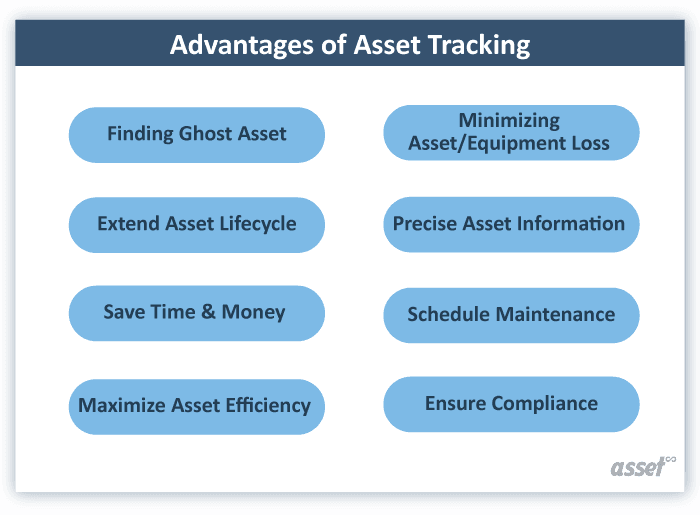
Extend Life Cycle: If your assets, such as machines and vehicles, do heavy work, you know how important maintenance is. With asset tracking, you get regular maintenance reminders for each asset, and as a result its life is extended.
Minimizing Asset and Equipment Loss: When you have all the information about an asset or piece of equipment in your system, the chances of theft or loss go down.
Precise Asset Information: Tracking an asset gives you crucial information: Who has the asset? What state is it in? Where is it located? Precise information helps you make better decisions.
Save Time and Money: A machine that does not work properly needs maintenance, which can take a lot of time and money. It can also disrupt your workflow and hurt productivity.
Schedule Maintenance: You get alerts and notifications for asset maintenance, so you do not have to worry about it, and there is no need to write it in a record by hand because the asset management system does it for you.
Get the Most from Each Asset: Proper maintenance makes an asset more efficient and reduces the risk of sudden breakdowns. It also extends the asset’s life cycle.
Establish Compliance: With asset management software, you can get detailed reports for asset management compliance, which helps your organization meet regulatory requirements.
4. What should be tracked?
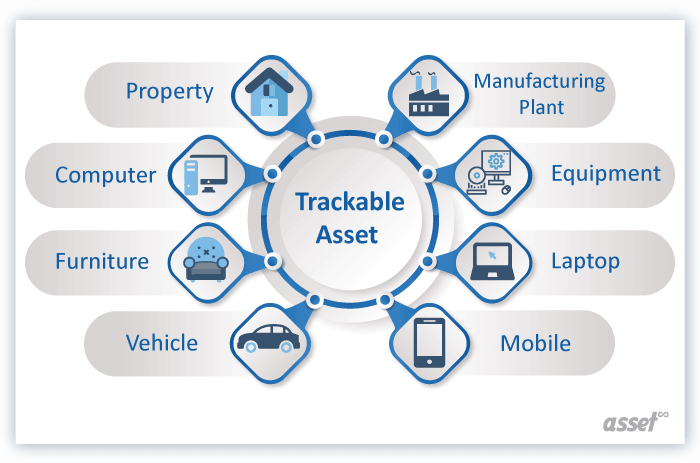
A few examples of what can be tracked are office furniture, carpets, HVAC equipment, manufacturing equipment, room appliances, computers, printers and copiers, and IT equipment.
5. Which industries use asset tracking?
Many industries use asset tracking, such as hospitality, manufacturing, healthcare, technology, education, banking, construction, government, nonprofits, food and beverage, and many more.
6. How is it done?
We covered the techniques that can be used for asset tracking above. But how does it work with a barcode?
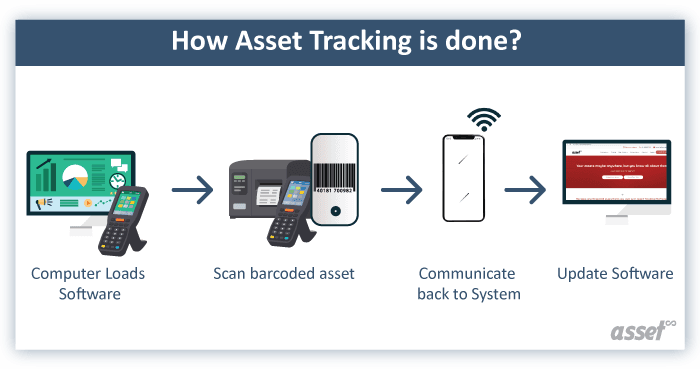
You have seen the black-and-white stripes with a number printed on almost anything you buy from a retail store.
That sticker is a barcode, and you have also seen workers scan it with barcode scanner software. When the scanner reads the barcode, it picks up the unique identification number and shows the product information on your device.
7. What is the future?
A few trends point to where asset tracking and management are heading:
- Organizations continue to own more assets, which means more to track.
- Businesses keep moving their systems from their own data centers to the cloud.
- More assets carry tags and sensors, so their location and condition can be recorded automatically.
- Phones and handheld scanners let staff update records where the asset is, instead of back at a desk.
What Asset Tracking Software Does for Your Business
The main objective of asset tracking software is to get the most control over assets and minimize asset loss. An asset tracking system should use automated asset tracking methods, such as fixed scanners, barcodes and asset tags, and generate reports for managing assets.
It replaces spreadsheets and improves how your team works. Asset management software is effective, makes employees much more efficient and offers real-time tracking.
A company can avoid unnecessary expenses, unexpected maintenance, asset loss and theft. As you have read above, the future of asset management is bright. It has great potential to save you a lot of money and take your business to a whole new level.