






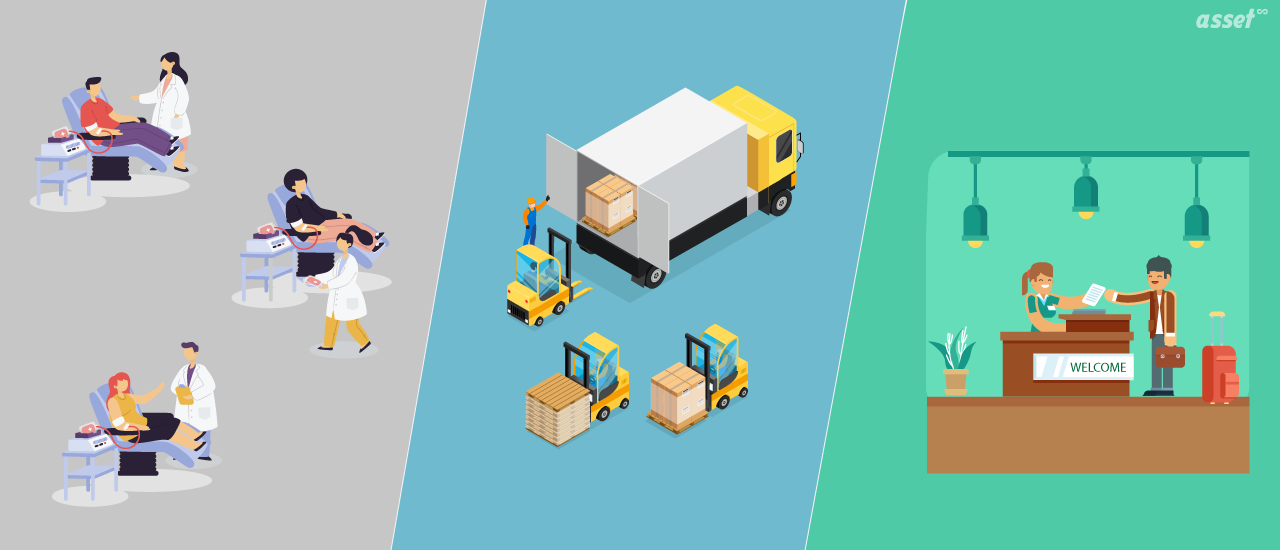
RFID is one of the most successful technologies to emerge for asset management, and several industries use it to manage their assets.
Many people are not clear on what RFID technology is. So, after a basic introduction to RFID, we will look at the industries that use it.
RFID is short for radio-frequency identification. It works through a tag: a tag is attached to the asset, and a reader scans the tag to fetch all the details of the asset. The technology works using radio frequencies.
With the basics covered, let’s turn to the main topic: the industries that use RFID for asset tracking and management.
Many industries use RFID for asset tracking, and we will go through a few of the main ones.
Health Care Industry

In recent years, many healthcare organizations have adopted asset tracking techniques, partly to bring order to their asset management. Some other reasons are below.
Patient history records
A wristband with an RFID tag is put on a patient’s wrist. Through this tag, the hospital keeps track of the patient and maintains the patient’s record.
When a patient is admitted for a long stay, RFID helps the doctor find out whether the patient is allergic to any medicine. The patient’s history also provides crucial information for surgery.
Keeping surgical tools tracked & clean
A hospital owns many surgical tools, and each one is costly. They come in all sizes, and small tools are easily lost or stolen. With an RFID tag, you can always keep track of your tools, and every tool matters in a hospital.
Hospitals can also keep tools maintained with asset management. Every tool needs to be cleaned, sterilized and kept sharp so each surgery goes without a problem.
Maintaining medicines inventory
How much medicine is left in stock? Which medicines will expire soon? An effective asset management system answers these questions easily. It also tells hospitals their stock levels and where the stock is. With RFID tags, you get accurate information about stock and inventory with little effort.
Maintenance of big equipment
Hospitals have many large pieces of equipment, such as stretchers, MRI machines, X-ray machines, radiology equipment and CT scanners. They all need maintenance, but how will you keep up with all of it?
Manually? There is a better way.
With RFID asset management, your maintenance records are at your fingertips, and you receive a notification when each piece of equipment is due for maintenance, so no piece of equipment lets you down at the most important time.
Hospitality Industry

Like healthcare, the hospitality industry can also improve its business with RFID technology. Hotels constantly look for ways to improve the customer experience and run more efficiently.
RFID offers a cost-effective way to make a hotel more efficient. Let’s look at how RFID helps in hospitality.
Tracking item and inventory
A hotel has a lot of inventory, such as bedsheets, comforters, staff uniforms, towels and other laundry items. Guests need to receive them on time, because service matters to the customer, and these items are used every day.
That raises the chance of theft and loss, and this is where RFID tags play an important role in inventory tracking.
Upkeep valuable items
A hotel has many valuable items, such as fine carpets, electronic equipment and chillers. This heavy equipment needs maintenance on time, or a failure can disrupt your business.
RFID technology helps you keep them maintained without trouble and get a better return on investment (ROI). RFID brings benefits to the hotel business well beyond operational efficiency.
Customer care quality
RFID asset management improves the quality of customer service. When quality is good and customers are satisfied, they are more likely to return.
It strengthens the brand and builds trust and loyalty among customers. RFID asset management also helps operations run smoothly.
Vehicle Industry
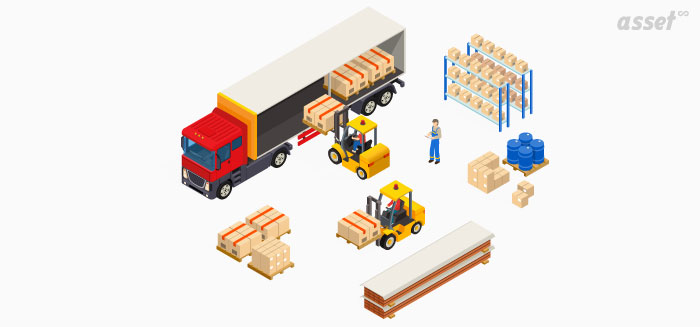
Vehicles are key elements of the supply chain, and the vehicle industry is one of the biggest in the world. Large vehicles such as trucks carry raw materials from one place to another.
In the past, inaccurate information caused many problems. Since RFID came into the industry, these problems have fallen sharply.
Cab agencies also use RFID to keep track of their vehicles and drivers. Other benefits of RFID in the vehicle industry are given below.
Real-time information
When your truck is out on a delivery, you get updates at regular intervals, so you can tell your client exactly when the product will arrive.
Identification
RFID helps make sure the right driver drives the assigned vehicle and helps track how efficiently employees work. Each driver carries an ID card with an RFID chip issued by their agency or company, which can also record working hours and overtime.
RFID can also be used for vehicle tracking, asset management, document tracking, security, supply chain visibility and item-level inventory or stock tracking.
RFID Pays Off for Businesses of Every Size
Whatever your business and whatever its size, every company has assets, whether few or many, and keeping a record of every asset matters.
How each asset performs matters a lot. Is it taking more maintenance than it should? If so, you can sell it and buy a new one. RFID for asset management makes questions like these easy to answer.
It also gives you more information for making better decisions for your organization. Overall, it increases productivity and helps your business grow.