







From the hospitality sector to the construction industry, from healthcare to food services, asset management is present practically everywhere. While some organizations still do it manually, many use software. Asset management is as important to a company as its assets. In this post, we explain what asset management is, and what its types and benefits are.
What Is Asset Management?
Asset management is the process of managing and monitoring assets efficiently. Its main function is to track and record assets across their entire life cycle. It gives the organization actionable data, such as where each asset is located, who is using it, how it is being used, and when it will need maintenance.
Physical asset management resolves issues of organizations such as return on investment, maintenance activity, inventory management, etc.
What Are The Benefits of Asset Management?
Here are a few of the main asset management benefits:
A. Decreased Asset Breakdown
When an unforeseen breakdown occurs, it costs money and also holds back the company’s productivity. Workers are left idle and the whole downstream process is affected.
Not maintaining assets regularly can cause breakdowns, expensive repairs, and more. Asset management software puts the emphasis on scheduled maintenance, because when it comes to problems, prevention is better than repair.
B. Maximizing Asset Life
The real importance of maintenance shows when a machine or vehicle is put on a heavy workload. When maintenance falls due, the software notifies the people responsible automatically, so physical asset management is done efficiently.
Tracking asset life is also essential for an organization. With asset management software, it is easy to find out if an asset is working properly, whether it needs any kind of maintenance, and so forth. Overall, the system helps keep assets in good condition and performing as expected.
When the organization is kept informed of the status of its assets, it can make the right decisions. This saves costs and extends the life of assets. One of the major benefits of asset tracking is that it lets you track, manage, and extend the asset’s life cycle. Asset tracking provides regular updates and reports on the maintenance of assets, which helps them last longer.
C. Preventing Asset Theft
In a small organization with a limited number of vehicles, the threat of asset theft is easier to manage and a maintenance record is easier to keep. When the number of vehicles is high, it becomes very difficult to keep track of assets and their maintenance history by hand, and the chances of theft increase. That is why software is needed to keep track of assets efficiently and completely.
Vehicle and equipment theft is a real cost for businesses. With GPS tracking in the software, you can see the latest location of vehicles and other tracked assets. Knowing the whereabouts of assets is one of the main reasons organizations implement asset tracking software.
What Are Different Asset Management Types?
Also Read: 5 Crucial Benefits of Asset Management for the Manufacturing Sector
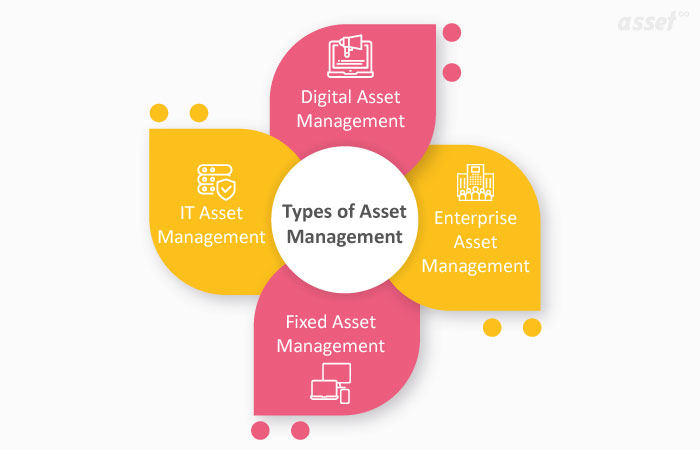
There are various asset management types, as discussed below:
1. Digital Asset Management
Digitalization has a huge impact on daily life. From watching movies and taking pictures to video conferencing, everything has gone digital. A digital asset management system keeps track of digital files and their use. Storing and retrieving them is simple and quick in digital asset management, because files are found through their metadata. If required, you can also link photos, videos, and documents with each asset.
2. Enterprise Asset Management
This is one of the most well-known asset management types. It is the practice of managing assets to extend their life and reduce related costs, such as maintenance. Enterprise asset management monitors asset performance, helps increase efficiency, and boosts productivity.
3. Fixed Asset Management
Fixed asset management involves monitoring, managing, and maintaining physical assets and equipment. These can include office furniture, laptops, computers, printers, machinery, and so on. The system helps keep assets in top condition and minimize losses.
Fixed assets such as transport infrastructure, elevators, or servers can be a huge investment. Fixed assets require regular maintenance. Without suitable fixed asset management software in place, things can grow very complex and the organization’s bottom line can suffer.
4. IT Asset Management
IT asset management is also referred to as ITAM. It is useful when an organization has multiple sites. Every branch has a lot of IT assets, and problems arise when this information is not centralized and wrong information gets circulated.
IT asset management software brings the organization’s IT data together in one place. ITAM is useful for tracking tangible assets such as laptops as well as intangible ones such as software licenses. It helps make sure the company’s IT assets are maintained on time, upgraded when needed, and disposed of at the end of their life.
Also Read: How Asset Infinity Helped a Luxury Hotel Cut Asset Losses by 40%?
Every Asset Management Type Serves the Same Goals
You can choose whichever asset management type you need. They all serve the same objectives: less asset theft, longer asset life, fewer breakdowns, greater efficiency, and so forth.
The system provides data that aids decision-making and helps shape future company goals. More importantly, it helps avoid unexpected maintenance expenses and improves the return on investment (ROI).
Frequently Asked Questions (FAQs)
1. Why is asset management important?
Asset management is important because it is a systematic approach to resolving issues, or potential issues, that arise in an organization from time to time. In this process, every asset is tracked, managed, and maintained. In simple words, asset management increases the productivity of the organization.
2. What is the purpose of an asset?
An asset adds value to the organization or institution. The owner deploys it in the expectation that it will produce a profit in the future.
3. How many types of assets are there?
There are two basic types of assets: tangible assets, such as land, vehicles, and equipment, and intangible assets, such as copyrights and licenses. Tangible assets are also called physical assets, and intangible assets non-physical assets.