






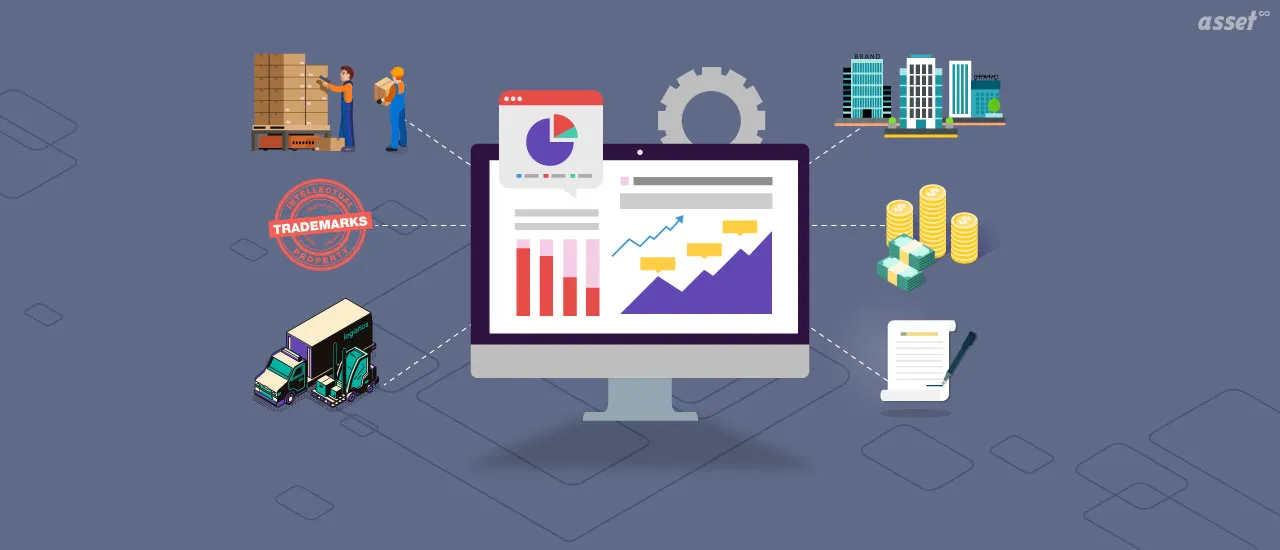
What Are Fixed Assets and Why Do They Matter to a Business?
Fixed assets are long-term tangible resources a business owns and uses in its operations to generate revenue. Often called property, plant, and equipment (PP&E), these assets include items such as land, buildings, machinery, vehicles, and office equipment. Unlike current assets that convert to cash within a year, fixed assets have a useful life of more than 12 months and, except for land, are depreciated over time.
Fixed assets are important because they:
- Support day-to-day business operations
- Help generate consistent revenue streams
- Reflect a company’s financial strength on the balance sheet
- Influence lending decisions by banks and investors
For most companies that own equipment, fixed assets are among the largest numbers on the balance sheet. They are also the assets most likely to drift from the books: they move between sites, change hands and get scrapped without anyone telling finance. That is why accurate fixed asset records matter for audits, insurance and tax as much as for operations.
Also read: the definitive guide to fixed asset tracking and management
What Is the Difference Between Assets and Fixed Assets?
“Assets” covers everything a business owns that has value: cash, accounts receivable, inventory, prepaid expenses, land, buildings, equipment, and intangibles such as patents and trademarks. Fixed assets are one group inside that list.
A fixed asset has three traits:
- It is tangible. You can touch it. Patents, trademarks and software licenses are intangible assets and sit in their own section of the balance sheet.
- It is held for use, not for sale. A forklift a dealer sells is inventory. The same forklift used in your warehouse is a fixed asset.
- It lasts more than a year. Supplies used up within the year are expensed.
| Current assets | Fixed assets | Intangible assets | |
|---|---|---|---|
| Examples | Cash, receivables, inventory | Land, buildings, machinery, vehicles | Patents, trademarks, goodwill |
| Expected to last | Under a year | More than a year | Usually more than a year |
| Cost spread over time by | Not applicable | Depreciation (land excepted) | Amortization, or impairment testing for goodwill |
| Balance sheet line | Current assets | Property, plant and equipment | Intangible assets |
For a fuller comparison, see current assets vs fixed assets.
What Are Examples of Fixed Assets Across Industries?
Fixed assets examples fall into a handful of standard categories. Most US companies use these same classes in their chart of accounts, because each one carries its own useful life and depreciation rules.
| Category | Examples | US GAAP book treatment | Typical MACRS tax class |
|---|---|---|---|
| Land | Building lots, parking land, farmland | Recorded at cost, never depreciated | Not depreciable |
| Buildings | Offices, warehouses, plants, retail stores | Depreciated over the useful life the company sets | 39 years (nonresidential); 27.5 years (residential rental) |
| Machinery and equipment | CNC machines, compressors, production lines, forklifts | Depreciated over the useful life | Usually 7 years, varies by industry |
| Vehicles | Delivery vans, pickups, trucks, company cars | Depreciated over the useful life | 5 years for cars and light trucks |
| Computer equipment | Laptops, desktops, servers, network switches | Depreciated over a short useful life | 5 years |
| Furniture and fixtures | Desks, chairs, shelving, filing cabinets | Depreciated over the useful life | 7 years |
| Leasehold improvements | Walls, flooring and lighting added to a rented space | Depreciated over the shorter of the useful life and the remaining lease term | 15 years if it qualifies as qualified improvement property |
Under US GAAP, book useful lives are a management estimate set in the company’s capitalization policy. Tax lives are set by the IRS, which is why many companies keep two depreciation schedules for the same asset. Our MACRS depreciation calculator shows the tax schedule for any class.
Fixed assets in different industries
The categories stay the same; what fills them changes:
- Manufacturing: production machinery, tooling, overhead cranes, the plant building.
- Healthcare: imaging equipment, beds, infusion pumps, the hospital building.
- Retail and restaurants: store fit-outs, refrigeration, kitchen equipment, point-of-sale hardware.
- Logistics: trucks, trailers, forklifts, racking, warehouses.
- Offices and professional services: laptops, servers, furniture and leasehold improvements to rented floors.
What is not a fixed asset
Inventory held for sale, office supplies, prepaid rent, and items below your capitalization threshold are expensed or recorded elsewhere. Software is a special case: purchased or developed software is usually an intangible asset, as explained in is software a fixed asset?
How Do You Calculate Net Fixed Assets?
Net fixed assets is what your fixed assets are worth on the books after depreciation and any impairment.
Formula:
Net Fixed Assets = Gross Fixed Assets − Accumulated Depreciation − Impairment
Gross fixed assets is the original cost of everything you hold, plus capitalized improvements. Liabilities such as an equipment loan do not reduce net fixed assets. They sit on the other side of the balance sheet.
Example: a company holds the following at year-end.
| Item | Amount |
|---|---|
| Machinery at cost | $200,000 |
| Vehicles at cost | $90,000 |
| Computer equipment at cost | $30,000 |
| Gross fixed assets | $320,000 |
| Less accumulated depreciation | ($110,000) |
| Net fixed assets | $210,000 |
If it also owed $50,000 on an equipment loan, net fixed assets would still be $210,000. The loan reduces equity, not the asset. See accumulated depreciation explained for how that figure builds up.
What Is the Lifecycle of a Fixed Asset?
The fixed asset lifecycle follows a predictable path:
- Acquisition. Purchase, lease, or self-construction. Cost includes the price plus what it takes to get the asset ready for use, such as freight and installation.
- Capitalization. The asset enters the register and the balance sheet, gets an asset number and a tag, and depreciation starts when it is placed in service.
- Use and maintenance. Repairs that keep the asset running are expensed. Improvements that extend its life or capacity are capitalized.
- Depreciation and review. Depreciation runs each period. If events suggest the asset is worth less than its book value, it is tested for impairment.
- Disposal. Sale, scrapping, donation or loss. The cost and accumulated depreciation come off the books and any gain or loss is recorded.
What Is Fixed Asset Accounting and Why Is It Critical?
Fixed asset accounting is the process of recording the purchase cost, depreciation, and disposal of fixed assets. In the US it follows GAAP, where PP&E is recorded at historical cost and reduced by depreciation.
It involves:
- Capitalization: deciding what goes on the balance sheet, using a dollar threshold and a useful life of more than one year.
- Depreciation: spreading the cost over the useful life with a method such as straight-line, declining balance or units of production.
- Impairment: writing an asset down when its carrying amount cannot be recovered.
- Disposal: removing the asset and recording the gain or loss.
Accurate fixed asset accounting keeps businesses from overstating or understating asset values, which flows straight into reported profit. It starts with a reliable register; our guide on how to prepare a fixed asset register walks through building one.
What Is the Fixed Asset Turnover Ratio and How Do You Calculate It?
The fixed asset turnover ratio measures how efficiently a business uses its fixed assets to generate sales.
Formula:
Fixed Asset Turnover = Net Annual Sales ÷ Average Net Fixed Assets
Example: a company with $1,000,000 in net sales and $400,000 in average net fixed assets has a turnover ratio of 2.5. Each dollar of fixed assets produced $2.50 of sales.
Compare the ratio with companies in the same industry, because capital-heavy businesses such as utilities naturally run lower ratios than service firms.
What Are the Benefits of Managing Fixed Assets Effectively?
Proper fixed asset management leads to:
- Accurate financial reporting: the register matches the general ledger, so the balance sheet holds up in an audit.
- Correct tax deductions: depreciation is claimed on assets you still own, and disposed assets stop being taxed.
- Correct insurance: you insure what you actually have, at values you can show.
- Better maintenance planning: repair history sits beside the asset, so you can see what is costing too much to keep.
- Better investment decisions: age and condition show what to replace and what can be moved to another site instead of buying new.
What Are the Common Challenges in Fixed Asset Management?
- Ghost assets: items still on the books that were lost, scrapped or sold.
- Untracked assets: items in use that never reached the register.
- Incorrect depreciation: assets in the wrong category, with the wrong life or method.
- Stale data: locations and custodians that nobody updated after a move.
A yearly physical count against the register, plus a monthly reconciliation to the ledger, catches most of these before an auditor does.
How Can Businesses Improve Fixed Asset Turnover?
- Sell or redeploy idle assets: frees up capital and lowers the asset base.
- Lease instead of buying where usage is short or uncertain.
- Upgrade equipment that limits output.
- Maintain on schedule so assets spend less time broken down.
How Asset Infinity Keeps Fixed Asset Records Accurate
Asset Infinity’s fixed asset management software holds each fixed asset as one record with its asset number, category, site and location, custodian, purchase cost, dates and expected life.
- Depreciation: straight-line, declining balance, units of production driven by meter readings, and rate tables, with MACRS GDS and ADS included. An asset can carry several books, such as one for the financial statements and one for tax.
- Period runs: each run is calculated, posted and can be reversed, and journals export to your general ledger.
- Verification: auditors scan QR, barcode or RFID tags with the mobile app and mark each asset verified, moved, damaged or not found.
- Disposals: recorded with a reason (sold, scrapped, lost, donated or transferred), sale price and the gain or loss in each book.
- Reports: the depreciation register, book value by asset class, assets acquired by month and disposals by reason are standard.
Frequently Asked Questions
What are fixed assets in a business?
Fixed assets are the tangible, long-term items a business owns and uses to operate, such as land, buildings, machinery, vehicles, computers and furniture. They appear on the balance sheet as property, plant and equipment.
What are 5 examples of fixed assets?
A warehouse building, a delivery van, a CNC machine, a server and an office desk are all fixed assets. Land and leasehold improvements are two more.
Is a laptop a fixed asset?
Yes, if it costs more than your capitalization threshold and will be used for more than a year. Below the threshold, most companies expense it but still track it in the asset register.
Why isn’t land depreciated?
Land does not wear out or get used up, so US GAAP records it at cost with no depreciation. Buildings and land improvements on it are depreciated separately.