







Asset management for events can be very useful. Event management is stressful and comes with its own set of difficulties and complexities. You need a basic grasp of the essentials, such as event budgeting, estimating ROI, choosing a venue, and so on.
Event planning is not a simple job. There are many factors that need attention, and that is where asset management software comes into play. In this post, we discuss how event asset management software helps in organizing events.
What Is Asset Management for Events?
Asset management software for events covers the equipment from the beginning of an event to the end. It automates and simplifies the equipment side of event planning. In simple words, it creates a roadmap for you and your equipment vendors.
Large events are often asset-intensive, and these assets are expensive. They play an important part in a successful event. Asset management keeps events organized and helps each one accomplish its goals.
Also Read: How Asset Management Software Helps Manufacturing Organizations?
Why Are Events Crucial for Business?
Events, exhibitions, presentations, and gatherings are significant because they let organizations enter new markets, explore new industries, secure new partners, extend their customer base, and open new routes to business with potential clients.
That is why events matter for business expansion. However, organizations must run events well, or the plan can backfire. If everything goes right, your business can raise funds and move up to another level. It is one of the main reasons that event management keeps growing.
How Asset Management Helps Events Succeed
There are many types of event management software on the market, but asset management is often neglected. It plays a crucial role in making an event successful.
The benefits of asset management for events are as follows:
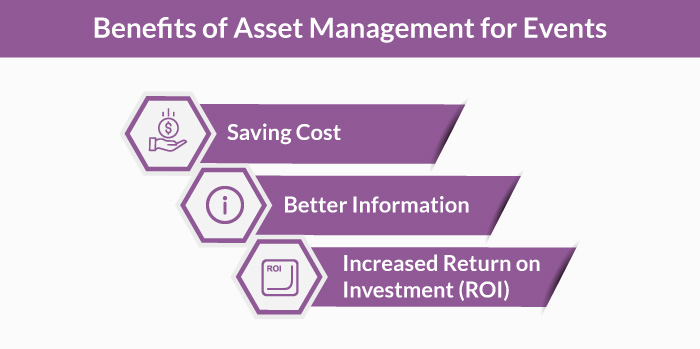
1. Saving Cost
A successful event takes a lot of planning, and much of that time goes on coordination between departments, because nobody wants to leave anything to chance.
Knowing what’s available is a practical way of limiting wasted time. Asset management software helps you see what gear is available, what is being used, where it is right now, and when it will be available again. With this information, you can prepare for any outcome, and managers can make full use of the resources they have.
Also Read: What Are the Major Benefits of Asset Management in the Utility Sector?
At events, staff are often doing two or three things at once and forget something in the rush. Asset management keeps a tab on every asset and saves you from unnecessary expenses.
2. Better Information
When you use asset tracking software, you get the details of each asset. This helps event managers, because they can see who has checked out an asset and when it is due back.
When managers have the data at their fingertips, they can make better-informed decisions.
Event managers often struggle with a lack of data, poor data collection, and an inability to track key measures, and these problems hurt the return on investment (ROI).
Asset management software provides detailed reports and analytics that help avoid these issues.
3. Increased Return on Investment (ROI)
This software helps you simplify event planning. When you want to improve your return on investment, you must set your objective right.
Every plan and every conversation should keep that objective in mind. Do you want to generate leads? Attract new customers? Build brand awareness? Build strong relationships with customers?
Asset management software helps make sure no asset is misplaced or lost. It helps manage inventory so that stock is not wasted. It also keeps track of maintenance so that sudden failures don’t happen.
This software helps assets last longer as well. In these ways, return on investment increases, and both employees and assets become more productive.
Better Events Start With Knowing Where Your Equipment Is
Quality asset management software reduces problems, minimizes costs, and improves ROI by helping you keep a tab on how resources are used. It also helps in increasing productivity throughout the event.
It covers planning, acquiring, and disposing of an asset, and keeping assets maintained and in the best condition, so asset management software becomes one place for all of an event’s asset problems.
With asset management software, everybody stays on the same page and up-to-date information is shared. Asset management helps you grow your profit by saving money and time.
Also Read: Tips to Manage Your Art Gallery with Asset Management Software
Frequently Asked Questions (FAQs)
1. What is event planning and event management?
Event planning includes selecting a theme, deciding the menu, negotiating venue contracts, hiring service providers, and creating invitations. Event management includes monitoring the event, resolving problems as they arise, coordinating with vendors when required, and managing staff. Event planning comes before event management.
2. What are the assets in an event?
They can include banners, booths, furniture, and high-tech devices such as laptops, monitors, and drones.
3. What is the role of an event management company?
An event management company starts by understanding the requirement, then plans and organizes the event. Managing an event is a big responsibility, because any issue can damage the brand image of both the client and the event company. Event management companies also assist with conferences, exhibitions, and similar gatherings.