






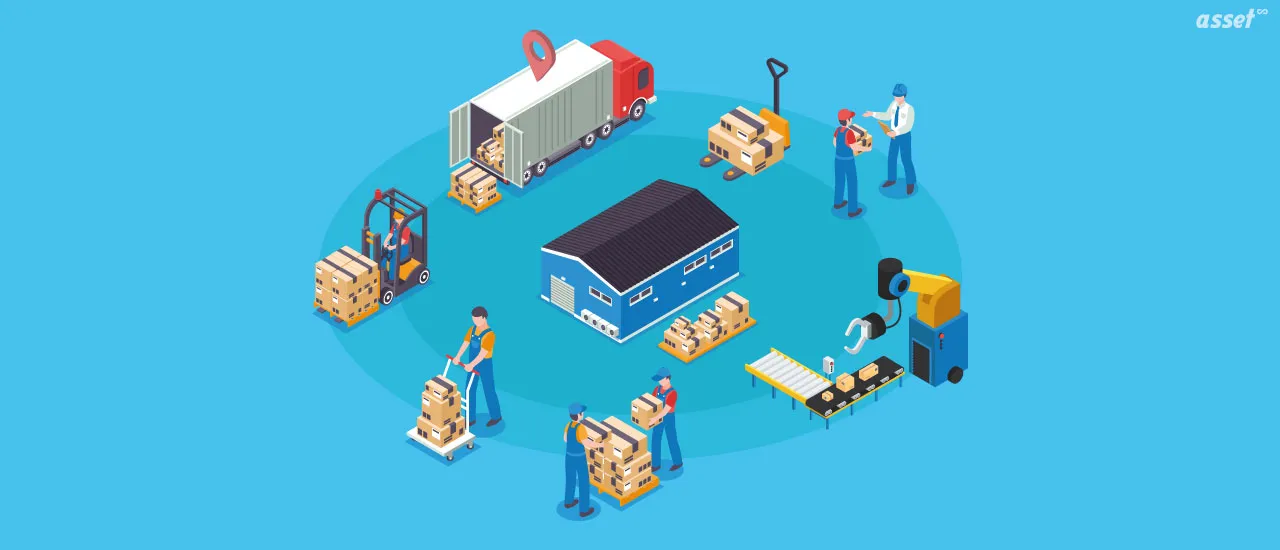
For a logistics company, managing assets well is essential. Logistics companies move their assets regularly from the warehouse or facility to other places, and every move raises the chance of loss and theft. This is why asset tracking matters so much to them.
The question is how. The answer is logistics asset management combined with asset tracking technologies such as barcodes, QR (Quick Response) codes and RFID (Radio-Frequency Identification). Poor logistics management can do real financial damage to your organization.
What Is Logistics Management, Anyway?
Some people simply call it logistics. Supply chain management and logistics management are closely connected. Logistics covers collecting materials, production, packing and transport, from the manufacturer all the way to stores and shops.
Wikipedia describes it this way:
“Logistics is generally the detailed organization and implementation of a complex operation. In a general business sense, logistics is the management of the flow of things between the point of origin and the point of consumption to meet the requirements of customers or corporations.”
What Is Asset Management?
Asset management is the process of managing and monitoring assets in a systematic way. It also includes operating, upgrading and disposing of assets. Overall, it manages the whole asset lifecycle cost-effectively.
Also Read: IoT Asset Management is The Best Option For Logistics Industry?
How Can Logistics Organizations Track and Manage Assets Effectively?
Logistics organizations can track and manage assets effectively with logistics asset management and asset tags. Organizations use tags to keep asset management organized. A tag is fixed to each asset and usually carries a unique ID through which the asset is tracked.
With asset management software and a handheld scanner, supervisors can pull up information about any asset. Tags also help organize and maintain assets, from acquiring them to disposing of them.
Tags reduce errors by removing manual tracking. Most importantly, they provide crucial information such as asset movement and maintenance expenses.
The logistics industry is complex, and up-to-date information matters a great deal. As mentioned above, several technologies are available for asset tags, such as barcodes and RFID. For vehicles and goods on the move, GPS and IoT are the most useful, because they report location as it changes.
When you know where a shipment is right now, you can tell your client or partner exactly when it will be delivered, so they can plan accordingly.
Technologies for Better Logistics Management
1. IoT
Many activities happen at once in logistics, and one small mistake can delay an operation. To keep operations running smoothly and clients satisfied, managers can use IoT (Internet of Things) for logistics asset management. With IoT, organizations can track tools as they move, which removes delays spent searching for them.
IoT also helps you manage inventory, because it can report exact stock counts and estimate when stock will run out. IoT technology creates a connected environment that improves warehouse asset management.
2. GPS
GPS (Global Positioning System) is used in transport, which makes it important for logistics organizations too. It does more than help drivers navigate.
For example, a manager can tell clients how long a shipment will take to reach its destination. With GPS, you can see a vehicle’s speed and route, and whether it is stopped or moving.
Because GPS updates continuously, drivers can see traffic jams ahead and decide how to avoid them. Managers can also review costs, such as whether a driver took the most cost-effective route or used a vehicle for personal trips. Live tracking also lowers the risk of theft.
Daily operations in a logistics organization are complex, and inventory plays a significant role in running them efficiently. Asset tracking software simplifies the workflow and helps you handle inventory efficiently.
Also Read: How to Get a Better Hold on Your Asset Management Process
What Are the Benefits of Using Logistics Asset Management for Organizations?
The benefits of using logistics asset management for organizations are given below:
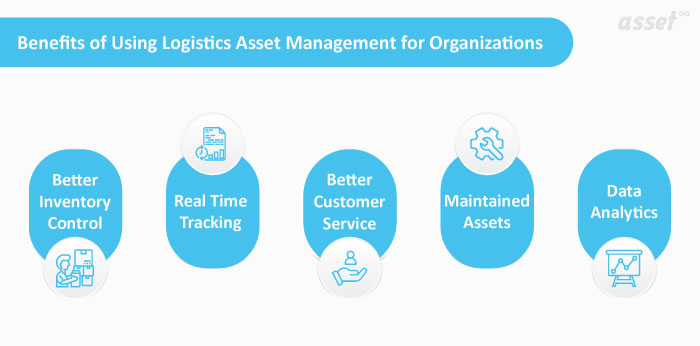
1. Better Inventory Control
Effective asset management helps you analyze product requirements so you avoid inventory shortages. Effective inventory management is crucial for producing goods. If it is not managed properly, production is delayed, productivity drops and customers are disappointed.
2. Real-Time Tracking
Logistics asset management gives you a complete view of your assets. Your organization knows the location of each asset across sites, how it is being used and what condition it is in.
You can also view the movement history of each asset. Live tracking keeps your records accurate and prevents duplicate entries.
3. Better Customer Service
When a logistics company signs a contract with a client, the client expects a good return on that investment. The client also expects the company to share shipping information, such as when a shipment will be delivered and where it is now. With logistics asset management and tracking technology, you can keep customers informed about their shipments.
4. Maintained Assets
When assets perform well, you see a better return on investment. Maintenance expenses go down, failures become less likely and work is delivered on time. Asset management tells you in advance when your assets need maintenance.
It keeps your assets in good order. It also keeps the crucial information about each asset, such as acquisition date, model number, warranty expiration date, maintenance and repair history and expected life.
Logistics organizations run a lot of heavy equipment. Keeping it maintained is necessary, or serious problems can arise and the business will suffer.
5. Data Analytics
Analytics helps identify issues and is valuable to logistics managers. With data, managers can make better, informed decisions. It lets the organization find potential problems and solve them, so productivity increases.
How Asset Management Software Keeps Logistics Operations on Schedule
Logistics organizations can organize their planning, resourcing and execution with asset management software. It makes the supply chain more transparent. With this software and tracking technologies, data is captured automatically, which removes human mistakes and makes employees more productive.
In the logistics sector, one small error can delay production. Logistics asset management software is a helpful tool that improves an organization’s daily operations and gives better control over assets and inventory.
Frequently Asked Questions (FAQs)
1. What are some of the components of logistics?
Fleet management, warehouse asset management, inventory management, material handling, and inbound and outbound transportation are some components of logistics.
2. What are the different types of logistics management?
There are four types of logistics management: Supply - Getting products and materials to the right location at the right time. It requires planning, coordinating and procuring materials. Distribution - Moving materials and products from a central location to the other locations that need them. It includes loading and unloading. Production - Getting materials to a specific location to make a product. Reverse - Reusing products and materials left over from production.