







Asset management has moved from pen and paper to scanners and software.
We have come a long way. A lot of improvement is clearly visible, and a lot can still be improved.
Organizations are adopting these technologies and practices. However, some organizations are so focused on sales that they forget about their assets. Asset tracking is simply not a priority for them.
As a result, assets go missing, maintenance costs rise and nobody can say for certain what the business owns. Tracking and managing assets well is a necessary part of growing a business.
This post sets out 7 asset management best practices that you can apply in your business.
Follow them and your business stays compliant, and your assets stay safe, in good condition and accounted for. Each one is simple to start, and each one gets easier with the right tools. Let’s begin.
Also Read: How Can Asset Tracking Software Boost Your Business Efficiency?
7 asset management best practices
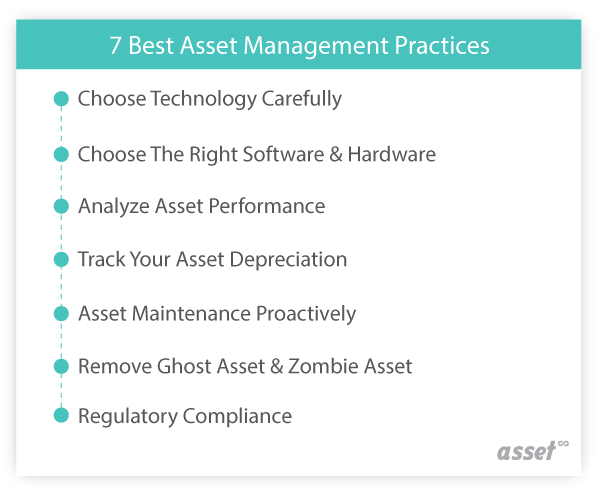
- Choose technology carefully. Choosing the right technology for your business matters. Asset tracking technologies such as RFID (radio-frequency identification), barcodes, NFC and GPS are all available. Each is effective, and each works in its own way, so start by understanding your company’s requirements. Only then can you choose the right technology. Consider how many assets you have, where they are kept, how often they move and how much you can spend on tags and readers. Most organizations use barcode and RFID technology.
- Choose the right software and hardware. Manual techniques for asset tracking waste time. To save time and money, use current software and hardware. Both make a large difference to how efficiently and accurately you manage assets. Make sure the software and hardware work well together. Your scanner should read data easily, and the software should read and store that data without extra steps.
- Analyze asset performance. How is each asset performing? Is it taking more maintenance than it should? Keep asking these questions. It is equally important to understand the lifecycle of an asset. Compare the expenses related to the asset with the performance you expect. If an asset is no longer productive, you can dispose of it, sell it or donate it. Keep track of your asset performance too. Software makes this easy.
- Track your asset depreciation. Without tracking depreciation, you may pay more tax than you need to. Calculate asset depreciation properly. You don’t have to do it by hand, because software can calculate it for you. You can also look up how fast a particular asset is depreciating and when you should dispose of or decommission it.
- Maintain assets proactively. Do maintenance on a regular schedule. If you wait for a machine to deteriorate, the repair costs more and wastes time. Your work suffers and productivity drops. Asset management software helps you avoid that by sending notifications and alerts when maintenance is due. This is the most important practice, yet many organizations skip it and pay for it later.
- Remove ghost assets and zombie assets. Ghost assets are assets that are listed in your books but are physically missing or stolen. Zombie assets are physically present but missing from the books. Both come from poor asset management practice, and both affect taxation. Why are ghost assets a problem? You may be paying tax and insurance on assets you no longer have. Second, when a work order arrives, you may think you have the asset needed to fulfill it, only to find you are short. Why are zombie assets a problem? They put your organization at risk and disrupt work. You can remove both ghost and zombie assets by performing a physical audit on a regular basis.
- Stay on top of regulatory compliance. When asset tracking and management are done correctly, your reports are accurate. Senior management, including the CEO, uses those reports to make strategic decisions. A strong compliance function can set your company apart from competitors. With software, you can produce asset reports within minutes. These include asset history reports, asset maintenance reports, asset records and more.
Also Read: 7 Reasons Why Your Company Needs Asset Tracking Software
Also Read: Roadside Assistance Fleet Optimization
Software makes each practice easier to keep
In every one of these practices, asset tracking software helps you and your organization. It keeps you informed and supports strategic decisions. It also helps you solve problems as they come up, from a missing laptop to a machine that is overdue for service.
These are some important asset management best practices you can use to improve your business.
If you are having problems with asset management and tracking, we at Asset Infinity can help you set up a system that fits your needs.