







Analyzing how your organization manages depreciation is crucial, because it is a significant expense on a company’s income statement. Accurate bookkeeping and expense management are essential for financial health, but calculating depreciation can be a complex and time-consuming task.
This is where depreciation tracking through asset management software like Asset Infinity matters. By automating and simplifying the depreciation process, Asset Infinity helps your organization keep precise records and save time, giving investors, analysts and stakeholders a clearer financial picture.
What is Asset Depreciation and How is It Calculated?
Every organization owns fixed assets that must be accounted for when determining the overall value of the business. These assets may include vehicles, machinery and equipment that are expected to serve the company for a long time. The value of these assets decreases over time with regular use, so they need to be re-evaluated continuously. This decrease in value is what we call depreciation.
According to Investopedia, “Depreciation is an accounting method of allocating the cost of a tangible or physical asset over its useful life or life expectancy. Depreciation represents how much of an asset’s value has been used up. Depreciating assets helps companies earn revenue from an asset while expensing a portion of its cost each year the asset is in use. If not taken into account, it can greatly affect profits.”
Methods for Calculating Depreciation
There are several methods for calculating depreciation, including:
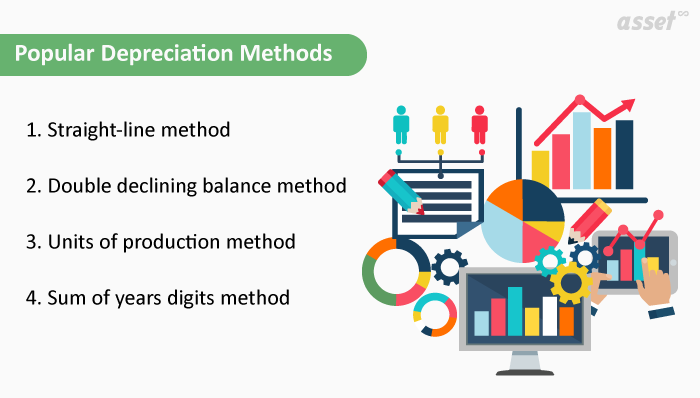
- Straight-line method
- Double declining balance method
- Units of production method
- Sum of years’ digits method
Many organizations prefer the straight-line method for its simplicity. Here’s how it works:
Straight-line Method Formula
(Initial Cost - Salvage Value) / Useful Life = Annual Depreciation
Example
Let’s say you purchase a machine for $50,000 with a salvage value of $5,000 and an expected useful life of 10 years.
Depreciation per year = $(50,000 - 5,000) / 10 = $4,500
This means your asset will depreciate by $4,500 each year.
Important Factors in Calculating Depreciation
When calculating depreciation, three critical factors come into play:
1. Salvage Value
The salvage value is the estimated residual value of an asset at the end of its useful life, after it has been fully depreciated. This value is deducted from the asset’s initial cost to determine the total amount that will be depreciated.
2. Asset Useful Life
This is the estimated period during which an asset is expected to be productive and contribute to the company’s operations. Depreciation is calculated over this useful life.
3. Depreciation Method
While the straight-line method is the most commonly used, some organizations opt for accelerated depreciation methods, such as the double-declining balance method, which results in higher depreciation expenses in the earlier years of the asset’s life.
How Software Makes Depreciation Tracking Easier
Using asset management software like Asset Infinity to track depreciation offers several advantages:
1. Precise Asset Evaluation & Accounting
Accurate asset evaluation is crucial for proper accounting. If depreciation is not accounted for accurately, companies may overstate the value of their assets on balance sheets, leading to incorrect financial statements. Asset Infinity calculates depreciation in regular runs, so you get precise asset valuations and easy access to reports such as the depreciation register.
2. Tax Benefits
Depreciation reduces taxable income, because a portion of each asset’s cost is expensed every year. Asset Infinity automates the depreciation calculation and can keep separate books for statutory, tax and management purposes, so the figures you report reflect your asset costs accurately.
3. Informed Financial Decisions
Asset Infinity provides useful insight into your assets, helping organizations make informed decisions. By tracking depreciation, businesses can compare the cost of an asset with the revenue it generates, which helps determine whether to keep or dispose of it. This leads to more strategic and financially sound decisions.
Also read: Smart Asset Depreciation Improves Financial Accuracy
Accurate Depreciation Keeps the Books Honest
Depreciation is a critical part of asset management, and tracking it accurately is essential for financial integrity. With Asset Infinity, organizations can automate the depreciation process and keep calculations precise for tax filings. This simplifies financial management and supports better business decisions.
Tracking depreciation manually can be daunting and prone to errors. With Asset Infinity’s fixed asset management software, the process is simpler, accurate and efficient. For a quick tax estimate, try the MACRS depreciation calculator.
Frequently Asked Questions (FAQs)
What is the accelerated depreciation method?
Accelerated depreciation refers to methods where the asset cost is depreciated at a faster rate than under the straight-line method, resulting in larger depreciation expenses in the earlier years of the asset’s life. This approach is based on the view that assets are more productive in their early years.
How often should I calculate asset depreciation?
Depreciation can be calculated at tax filing time or continuously using asset management software like Asset Infinity. Once you enter the asset’s cost, useful life and salvage value, depreciation is calculated monthly, quarterly or yearly, which makes planning simpler and more efficient.