






During a global pandemic, people make sure their offices, buildings, factories and warehouses are cleaned regularly. Keeping the workplace clean and sanitized becomes everyone’s responsibility.
Sanitizing is always a good habit, and it becomes doubly essential when a pandemic threatens. In that situation, healthcare and the entire sanitation industry come into high demand, with a heavier workload and a need for more effort and equipment.
Why Is Sanitizing Commercial Places Important?
People spend a lot of time in workplaces such as offices, schools, hospitals, shops and other commercial centers, so these places are very likely to host many kinds of microbes.
Because these are busy public places, the threat of sickness and infection is high. It is therefore crucial to make sure that all vulnerable surfaces and areas are both cleaned and sanitized.
Sanitizing every physical touchpoint is important to kill microbes that can cause infections and illnesses such as the flu.
Cleaning and Sanitizing
Cleaning and sanitizing are different tasks. Cleaning removes dirt and dust from surfaces.
Sanitizing generally follows cleaning and uses heat, radiation or chemicals to kill microbes and pathogens.
Cleaning agents fall into four categories:
- Detergents - dishwashing detergent, automatic dishwasher detergent
- Solvent cleaners - degreasers
- Acid cleaners - sulfuric acid
- Abrasive cleaners - sandpaper, nylon meshes
Cleaning is necessary because a dirty surface can lead to serious contamination.
Sanitizing uses 2 methods:
- Heat - There are 3 heat sanitizing methods: hot air, steam and hot water. Hot water is the most common method in restaurants, with different temperatures for different objects and machines, such as 171°F, 180°F or 165°F.
- Chemicals - The chemicals used for sanitizing include chlorine, iodine and quaternary ammonium.
How well chemical sanitizers work depends on factors such as:
- Concentration - Too little sanitizer is inadequate, and too much can be toxic.
- Temperature - Chemical sanitizers work best between 55°F and 120°F.
- Contact time - How long the sanitizer must stay on the surface depends on the type of sanitizer.
Clearly, cleaning and sanitizing use many chemicals and a lot of equipment.
A sanitation business therefore needs to keep proper records of all the chemicals and equipment it uses, so it does not run out of materials when they are needed. Tracking materials properly means supplies are ordered well in advance.
Why Is Asset Management Necessary for the Sanitation Industry?
Keeping track of chemicals and equipment is a basic necessity in the sanitation industry. It tells the business what stock it physically holds and where, so items can be retrieved when needed.
Inventory management is the process of managing, storing, issuing and reordering inventory. Stock management covers lead times on raw materials, components and finished products, along with how those items are stored and processed.
Here is what asset management software does for inventory in the sanitation industry:
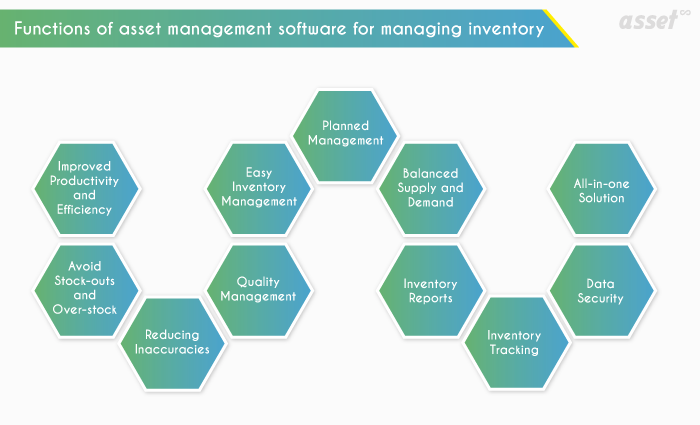
1. Improved Productivity and Efficiency
Asset management software increases productivity and efficiency by automating daily manual tasks, which supports business growth.
It saves countless hours. It prints labels, processes and sends purchase orders, manages stock and keeps every listed item up to date.
| Other Asset Management Features We Provide To Our Clients | ||
|---|---|---|
| Asset Management Software | Asset Tracking Software | CMMS Software |
| Inventory Management Software | Preventive Maintenance Software | Utility Management Software |
| Purchase Requisition Software | Helpdesk Ticketing System | Purchase Order System |
2. Avoid Stockouts and Overstock
Keeping inventory balanced is a difficult task. Running short leads to stockouts, which disrupt sanitation work and customer relationships and can cause losses. Overstocking causes storage problems.
Asset management software solves this. It lets you set a reorder level for sanitation supplies, so you are alerted when stock drops below the threshold.
3. Reducing Inaccuracies
Inventory and stock management involve many internal processes. When these tasks are done by hand, errors creep in, such as wrong or duplicated data.
The system automates data recording and tracking, which leaves far less room for errors.
4. Quality Management
The software can identify and track issues that delay material deliveries. Using the data already entered, it gives the organization information that supports its quality processes.
5. Easy Inventory Management
Inventory tracking software makes inventory work much easier and saves both time and money. It automates business processes and gives you the information to make smarter decisions.
6. Planned Management
You can see where it makes sense to hold stock at more than one location. This increases efficiency and improves service levels.
7. Balanced Supply and Demand
Timing is everything in delivery. In the sanitation business, delays are not acceptable. Services must be delivered on time, at the lowest cost and to a high standard.
8. Inventory Reports
Asset management software produces reports automatically. You can get a variety of reports, such as low stock reports, inventory validation reports and reorder recommendations.
9. Inventory Tracking
Inventory tracking is one of the most useful features of asset management software. The software keeps track of items from the time inventory is received until it is issued.
10. Data Security
With an asset management system, you manage users as needed. You can restrict each user or grant them rights, which helps prevent mistakes. Another important benefit is the security the system provides at every level.
For example, a worker enters data about items, and the manager approves it if everything is correct.
The system defines which users can view which data and what level of information each can access. Because every user is controlled, the risk of data loss or leaks is much lower.
11. All-in-One Solution
Asset management software is a comprehensive solution. It covers purchasing, stock and the issue of materials in one place, which keeps operations running smoothly.
Why Asset Management Matters Most When Demand Peaks
Good asset management software gives you a detailed view of supply and demand, inventory movement and delivery times. It helps you keep customers satisfied at the lowest cost.
Easy reporting is essential in asset management software. It gives a complete list of the inventory and materials that need to be ordered, so stock levels can be maintained.
Asset management software has become indispensable in the sanitation industry for meeting customer requirements and giving management all the records and reports it needs. It is all the more critical during a global pandemic.