






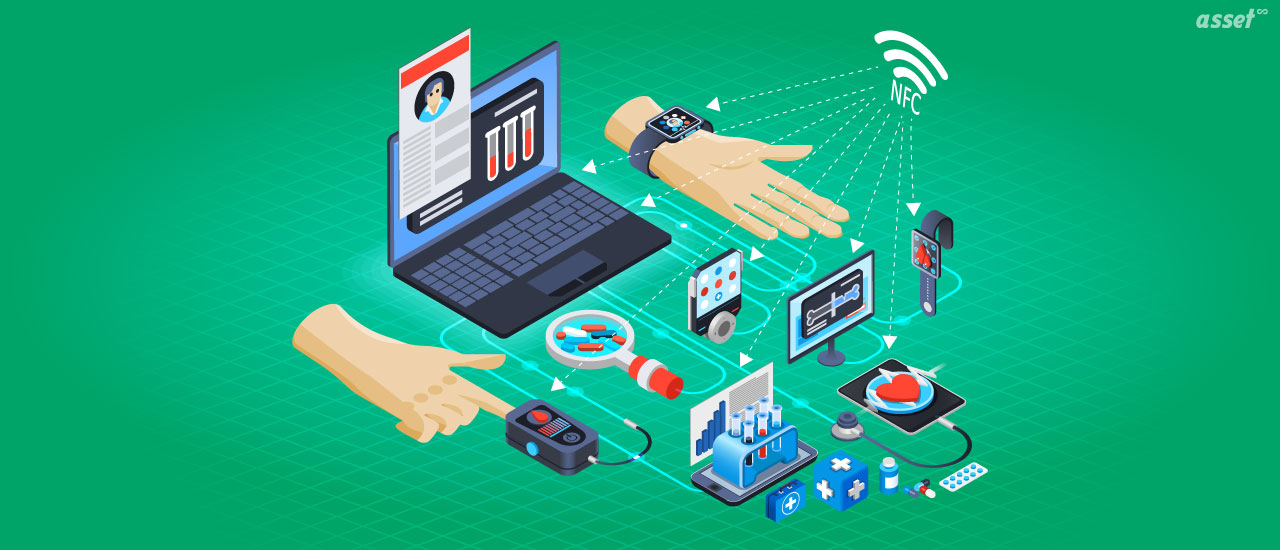
The healthcare industry is one of the most important and essential industries in the world, and one of the fastest growing. It includes clinics, hospitals, pharmaceutical companies and more. It plays a part in everyone’s health, since we have all been to the doctor for one reason or another. As stress levels rise, we need healthcare professionals more than ever.
Healthcare organizations also need current information so they can plan, for example knowing when medicines are arriving. That is where NFC labels come in.
They provide current information and useful data, and that data is analyzed to make crucial decisions.
This article explains why NFC tags are useful for the healthcare industry. First, here are the basics of NFC.
What Is NFC?
NFC stands for Near Field Communication. The technology has existed for a long time, and most new smartphones include it.
Many people are still not familiar with NFC technology, but more are learning about it because it has become a common method of contactless payment.
NFC lets compatible devices communicate. Its range is short, but it is very fast.
Also Read: How is Asset Tracking Using NFC Different from Other Technologies?
NFC devices are either active or passive, and NFC is based on RFID (Radio Frequency Identification) technology. Passive NFC tags have no power source of their own. They draw power from the reader’s field when a phone or reader comes close, and send back the information they store.
Active NFC devices, such as smartphones and payment terminals, have their own power and can both send and receive information. Contactless debit cards and metro travel cards are familiar examples of passive cards read by active terminals.
NFC is a well-known asset tracking technique and is used in many industries.
How Are NFC Tags Helpful to the Healthcare Industry?
Here are the reasons NFC tags are helpful to the healthcare industry:
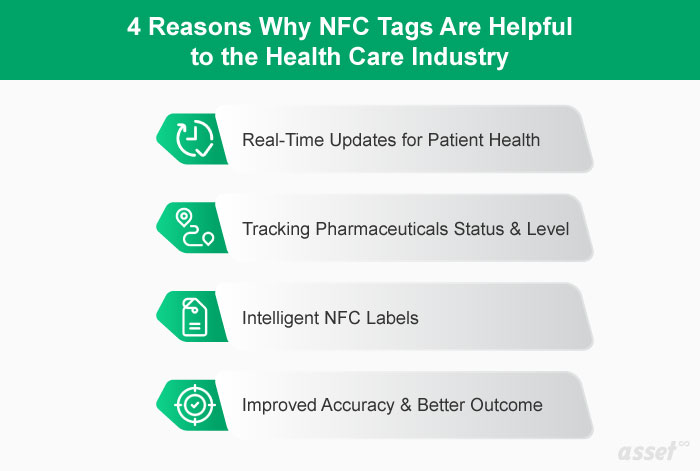
1. Real-Time Updates for Patient Health
NFC tags are attached to a patient’s wristband, and a tap brings up the patient’s record.
They also link to helpful information, such as which medicines the patient has been given and whether the patient has any allergies, which is crucial in an emergency.
The record can show who the main doctor is and when a nurse last visited. NFC tags help centralize this information so doctors can make better decisions.
2. Tracking Pharmaceuticals Status & Level
In hospitals, some medicines are used often and others rarely. That is why it is important to track information such as expiry dates.
Tracking medication matters, because giving expired medicine to patients can be very dangerous, both for the patients and for the hospital’s reputation.
NFC tags help avoid these situations. Each tag links an item to the system, which can warn of expiring medicine in advance so it is removed from stock.
The system can also keep a current count of medicine and warn when inventory falls below set levels.
Also Read: RFID vs NFC: How They are Different in Terms of Asset Tracking?
3. Intelligent NFC Labels
Many patients with life-threatening and chronic diseases prefer to stay at home and receive treatment there.
Often there are few people around to care for them. An NFC label on their wristband helps carers keep track of the patient’s health: a visiting nurse taps it to open the patient’s record and log each visit.
NFC tags also give access to the patient’s history, which helps if the patient returns to the hospital, because staff can retrieve information quickly.
4. Improved Accuracy & Better Outcome
NFC tags and labels help reduce errors and increase productivity, which leads to better results.
This is one of the main reasons NFC tags are used in healthcare. NFC labels reduce the chance of mistakes and keep the team informed about the work.
They improve coordination and record-keeping, which pays off in the long run. Current information supports better decisions, communication and coordination.
What Are the Benefits of NFC Tags Technology?
The benefits of NFC tag technology are:
1. Security
Hospitals are vulnerable to security threats, including theft of supplies and medication.
NFC labels are especially useful in clinical settings for monitoring medical supplies and assets.
Staff and patient access control and equipment tracking systems are other good ways to strengthen security in healthcare facilities.
2. Easy to Use
NFC technology offers a simple, quick way to process payments, which is what customers want.
Because its range is very short, it is also secure. When a process is simple and quick, customers are happy and satisfied.
3. Real-Time Information
NFC labels are valued for giving current information. Each tap records an update about a patient’s care, which is very important for patients with chronic diseases.
Where NFC Fits in Healthcare
NFC tags are clearly helpful to the healthcare industry. They help track medicines, keep patient records current and support better decisions.
When you use NFC tags with asset management software, the results are even better. NFC is one of the asset tracking techniques many businesses and organizations use, including in healthcare.
Also Read: Everything You Need to Know About NFC for Asset Tracking
Frequently Asked Questions (FAQs)
1. What are the various types of asset tracking techniques?
Apart from NFC, asset tracking techniques include: A. Barcode B. QR Code (Quick Response Code) C. RFID (Radio Frequency Identification) D. IoT (Internet of Things) E. GPS (Global Positioning System) F. BLE (Bluetooth Low Energy)
2. How has NFC technology helped in pandemics?
NFC existed before the pandemic, but its use grew during it, because contactless interactions became so important. With isolation rules in place, a quick tap let staff record care and check identities while keeping contact to a minimum.
3. What are the disadvantages of NFC technology?
NFC tags cost more than printed barcodes. Their short range can also be a disadvantage. That is why it is important to know which type of asset tracking suits your organization.