






Many businesses, and startups in particular, are torn between buying assets and leasing them. In this post, you will learn the benefits and drawbacks of both buying and leasing assets, so you get a clear picture of which is right for your organization.
Why Is It Better for Startups to Lease Assets?
A startup has lots of responsibilities. Buying assets pays off over the long term, but owning them takes heavy capital investment.
For a startup, it is better to focus on growing the organization than to struggle with maintenance, and startups do not have many resources to invest.
Equipment rental and leasing is a large and established industry, which shows how many businesses find leasing a sensible strategy.
Also Read: What is Leased Equipment Tracking and Why It is Important?
What Are the Benefits of Leasing Equipment?
The benefits of leasing equipment are discussed below:
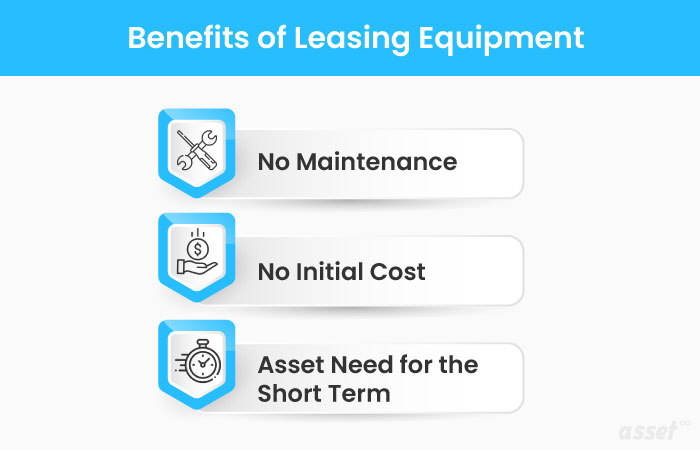
1. No Maintenance
When you lease an asset, you often don’t have to worry about maintenance, because keeping it maintained is the owner’s responsibility. You can focus on growing the organization and meeting customer demand, while maintenance stays with the owner, especially when the asset is leased for no more than a month or two (depending on the contract and the nature of the asset).
2. No Initial Cost
You don’t need huge amounts of money to use the equipment. When you lease assets or equipment, you just pay monthly rent and start work.
A startup has a lot of expenses, including equipment, and it is better to save money for future expenses and business growth.
3. Asset Need for the Short Term
Many organizations lease equipment because another organization has approached them with a contract.
If the contract is worthwhile, they lease equipment from another company, complete the work, and return the assets to their owner.
What Are the Drawbacks of Leasing Equipment?
Drawbacks of leasing equipment are discussed below:
1. Expensive in the Long Term
Leasing equipment is a good strategy for the short term, but over the long term it becomes more expensive than buying.
Here is an example. Suppose you lease a machine that costs $1,200 to buy, for $50 per month over 3 years. You pay $1,800 in all, which is $600 more than the price, and you still don’t own the machine.
2. Strict Rules and Regulations
A lease contract usually states that you pay the full amount whether you use the equipment or not. Before leasing equipment, check its condition, because if it doesn’t perform as it should, your work might suffer.
Some organizations record the condition of assets in the contract, so that if a major issue occurs, it is the responsibility of the owner or lessor.
3. Take Care of Equipment
If you use the equipment beyond the agreed limits, you will have to pay for the extra usage. You also have to return it in good condition, and if parts wear out beyond normal use, you must pay extra for that.
What Are the Benefits of Buying Pieces of Equipment?
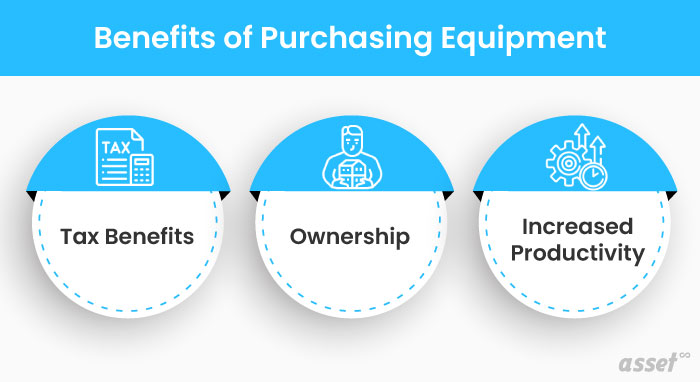
The benefits of buying pieces of equipment are discussed below:
Also Read: Importance of Asset Management Software Tool for Small Businesses?
1. Tax Benefits
One of the most basic advantages of buying equipment is that you can get tax benefits which will directly help you to save money.
2. Ownership
Ownership gives you the freedom to make decisions about maintenance and everything else: whether an asset needs maintenance, when it should get it, and, if a machine isn’t used much, whether to sell it. You are not bound by any agreement or contract.
3. Increased Productivity
You can use an asset as much as you need without worrying about usage limits. New equipment also speeds up production work, so both machines and workers become more productive.
What Are the Drawbacks of Buying Pieces of Equipment?
Drawbacks of buying pieces of equipment are discussed below:
1. Not Good for the Short-Term Goal
If you have a production contract and need a machine for it, it’s better to rent the machine than to own it. Owning a machine is costly and not a good option when you only need it for the short term.
2. High Initial Cost & Upgrade
You need to spend a lot of money to buy new equipment. The expenses don’t end there, because you need to keep the equipment upgraded, which can also be expensive.
This matters most in a competitive market, where you and your machines need to keep up to date to stay competitive.
3. Expensive Maintenance
A sudden breakdown can increase maintenance expenses, especially when the asset is crucial for daily operations. If sudden failures happen frequently, selling may be the best option.
How Is Equipment Leasing Software Helpful for Startups?
We have seen that equipment leasing is a smart choice for a startup. In the early phase, leasing lets a startup avoid buying assets.
Leasing equipment alone doesn’t solve every problem, though. Startups also need software that gives them a complete overview of their leased assets and equipment.
Most importantly, you cannot misplace leased assets. Losing one is a breach of the contract and can end in a large penalty.
Asset tracking software keeps track of leased assets and also helps monitor their health and performance.
You can also record the asset’s condition when you take it on lease, so there is no confusion when you return it.
Lease First, Buy When the Numbers Favor It
Leasing saves expenses in the short term, but over the long term, buying is the better option, and by then you will have the money to purchase assets.
Weigh all the positives and negatives before you decide.
Equipment leasing software is helpful to startups. It is a type of asset management software that helps in the ways described above, and it is useful to any organization using equipment or assets on lease.
Also Read: An Ultimate Guide to Asset Tracking for eCommerce Business
Frequently Asked Questions (FAQs)
1. What is equipment leasing software?
Equipment leasing software is important for small organizations and for any organization that leases equipment for a specific period. It helps you comply with contract terms, rules, and regulations. It shows when each asset is due back, and it provides reports on each leased asset, which help calculate return on investment (ROI).
2. What are the benefits of equipment leasing software?
The benefits of equipment leasing software are discussed below: 1. Data integration 2. Helpful in improving customer service 3. Informed decision making 4. Monitor asset performance
3. What is the difference between leasing equipment and rental equipment?
Rental equipment is taken for a short time, for example from one day to thirty days, while leased equipment is taken for a longer period. A rental usually involves a simple rental agreement, while a lease is a longer formal contract between the lessor and the lessee.