






Buying equipment has its benefits, and so does leasing it. So which option is better: buying equipment or leasing it? Many businesses do not even know they can lease equipment, and equipment leasing can be very beneficial. This article explores why leasing equipment can be more beneficial for a business than buying it.
Equipment rental and leasing is a large industry in the United States, and many businesses rely on it.
Also Read: Why Auditing Assets Matters for Equipment and Tool Rental Companies
What Are the Benefits of Leasing Equipment for Organizations?
The benefits of equipment leasing for organizations are discussed below:
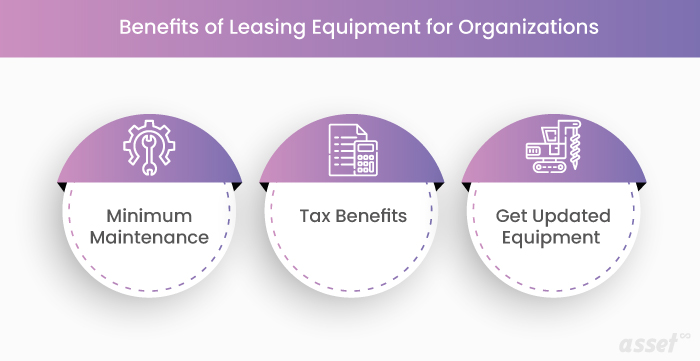
1. Minimum Maintenance
When the total cost of owning equipment rises every year through maintenance and other expenses, it is better to lease. Repair and maintenance are primary concerns for assets and equipment, and their remaining life shrinks every year. Maintenance is costly and eats into profit margins, which is why leasing can be the better option: often you only need to do minimal maintenance.
2. Tax Benefits
If you lease equipment and make lease payments, you may get tax benefits. Share the lease payment records with your finance team so they can claim them. For tax purposes, many equipment leases are treated as a business expense, and the payments can be deducted to lower the organization’s tax liability. Check the treatment of your lease with a tax advisor.
3. Get Updated Equipment
Once you have bought equipment, you cannot easily return or sell it. With leased equipment, you can return it and get newer equipment, as long as the agreement allows it. This way you can use the latest technology without paying much, and you avoid the risk of obsolescence.
In Which Cases Can Equipment Leasing Benefit a Business?
Here are a few cases in which equipment leasing can benefit a business:
Case 1: When you have a specific need. For instance, a client has a particular requirement, and meeting it means getting an asset that is very expensive to buy. In that case, you can lease the asset and return it to its owner once the job is done.
Case 2: Over the long run, leasing assets and equipment can cost more than buying them. Say you could buy a computer for $5,000 or lease it for $150 a month. If you keep renewing the lease for three years, you will have paid $5,400. That is why it pays to plan ahead and anticipate how long you will need the equipment. Before you sign, compare the total of all lease payments over the period you expect to use the equipment with the purchase price, and remember to include what you could sell the equipment for at the end if you bought it.
Case 3: Buying equipment that needs regular maintenance, repairs or updates may not benefit your business. Leasing lets you return old equipment, which removes much of the cost of maintenance, repairs and updates. You can lease newer equipment that does not need updating.
Case 4: When you would rather not spend money buying equipment and want to focus on growing the business, leasing is worth a close look.
Leasing also makes monthly expenses predictable, which makes it easier to plan future spending.
How Can Asset Management Software Help with Leased Equipment?
Asset management software helps you handle equipment effectively, especially leased equipment, because you are responsible for looking after it. The lessee must maintain the assets, or it may have to pay a penalty.
You must keep asset records properly so that you know in advance when an asset is due back and can finish all work before returning it. Good records also show the equipment’s condition when it arrived, which helps settle any dispute with the lessor about wear and damage at the end of the lease.
Asset management software helps lessee organizations look after assets by scheduling the necessary maintenance. It holds all the information about each asset, including its lease or rental contract, so the manager knows when an asset needs to be returned.
Asset management software also provides reports that help improve the performance of each asset and show where equipment performance can be optimized.
When Leasing Makes Sense
Equipment leasing can benefit a business, especially an organization that does not have enough money to buy equipment. However, make sure you lease equipment only for the period you need it. Otherwise, leasing can prove more expensive than buying.
Also Read: What is Leased Equipment Tracking and Why It is Important?
Frequently Asked Questions (FAQs)
1. What is equipment leasing?
Some organizations offer equipment for lease (the lessor), and other organizations take that equipment on lease (the lessee). A lessee that does not want to spend a lot of money buying equipment leases it instead. This is known as equipment leasing.
2. How can leasing be beneficial in a real scenario?
The best example is a cab. Suppose four people want to travel but none of them has a car. They will not buy a car; they will simply book a cab. It is cost-effective, and they save on maintenance and insurance as well. Similarly, when your resources are limited and the need is short-term, you can lease equipment and return it after use.
3. What are the advantages of leasing equipment?
1. You do not have to pay the full amount upfront, because the cost is spread over monthly payments. 2. Access to higher-quality, up-to-date assets. 3. Lower repair and maintenance costs. 4. Lease payments can reduce taxable income.