






Asset management software is useful for businesses, especially when you manage hundreds of assets every day. It saves you unnecessary expenses and keeps assets safe and secure. You can schedule maintenance easily and avoid sudden breakdowns.
Most importantly, it automates work that used to be done by hand. Data is more accurate than in a shared spreadsheet, because the software controls who can change what. Asset management software keeps track of assets as well as inventory. When standard asset management software does not meet your organization’s needs, a personalized asset management system is the answer.
This post covers what a customized or personalized asset management system is and how it helps improve business productivity.
What Is a Customized or Personalized Asset Management System?
A personalized asset management system is an asset management system customized to the customer’s requirements. It helps organizations run their daily operations more effectively.
In plain terms, a personalized asset management system is designed around the customer’s needs. The customer’s needs are gathered first, and the prototype is then designed with those requirements in mind.
Here is an example of how it makes an organization more productive. Suppose an organization uses several software products and could get better results if data flowed from one product to another.
Also Read: Why Does IT Asset Management Play a Vital Role in Data Security?
Integration makes that possible. In simple words, one software product pulls information from another to work better.
How Can a Personalized Asset Management System Improve Business Productivity?
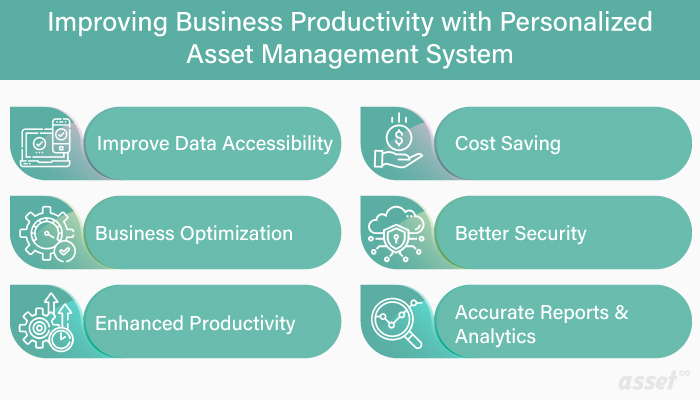
Below we discuss how a personalized asset management system improves business productivity:
1. Improve Data Accessibility
With a customized asset management system, you get more information and can interpret it more clearly, thanks to integration. People at every level can find what they need, which helps the business grow faster.
2. Business Optimization
With customized asset management software, you see information in detail. That helps you make the best decisions for the business, raise productivity and run the business better overall.
3. Enhanced Productivity
Many organizations, especially large ones, take a long time to resolve issues. Large organizations have many departments, and duplicate work sometimes happens, which hurts productivity.
Also Read: What Do We Need to Know About the Asset Reservation System?
With personalized asset management software, you can remove duplicate work and make employees and the organization more productive.
4. Cost Saving
Many teams still keep expensive legacy systems and one-off applications running. Replacing them with one easy-to-use platform that handles your data exchange, applications and integration workflows removes that burden.
Consolidating systems saves maintenance costs and improves operational efficiency, which lets you put your money and resources into core business services.
5. Security
Apart from cost, another drawback of an unintegrated IT environment is that security becomes harder to manage. Handling the risks and security needs of every system and application separately is extremely cumbersome.
An integration platform lets organizations use secure protocols and encryption and add further security tools in a more manageable way. That makes protecting your data, and your customers’ data, a simpler job.
6. Accurate Reports and Analytics
Reports are extremely helpful for getting a complete picture of the organization’s expenses, such as how much you have spent on maintenance.
They also show how much inventory each work order consumed. With asset management reports, you can see how much improvement has been made so far.
What Personalized Asset Management Changes for Your Team
Personalized asset management software lets you do things that standard software cannot, because it is built around the customer.
When you use personalized asset management software, you will notice better communication and understanding between employees. The software centralizes information and avoids duplicate data, which makes you more efficient.
Frequently Asked Questions (FAQs)
1. Why is asset management essential for organizations?
Asset management is essential because it helps organizations improve their productivity and save a lot of money. Keeping track of assets and inventory is one of the most important jobs of this software. It removes existing ghost assets and reduces the chance of future theft and misplacement. It also makes sure assets are maintained on time, which avoids sudden breakdowns.
2. What is the difference between an asset management spreadsheet and a regular spreadsheet?
1. A regular spreadsheet can be edited by anyone who opens it, while asset management software controls who can change each record.
2. When many people edit a spreadsheet, the chance of inaccurate data increases, because data can be dragged or overwritten by mistake. Software checks entries as they are made, so wrong data is much harder to enter by accident, and accuracy improves.
3. A regular spreadsheet does not keep a history of changes. Asset management software records who made each change and when.
These are a few of the main differences between regular spreadsheets and asset management software spreadsheets.
3. What are the types of asset management?
Besides personalized asset management, there are several types of asset management, discussed below: 1. Digital Asset Management - Managing assets digitally means you can manage them remotely, with up-to-date information.
2. Enterprise Asset Management - Enterprise asset management takes care of assets inside and outside the premises, which is why assets are tagged. Asset tags store crucial information that tells you which department of the enterprise an asset belongs to.
3. Fixed Asset Management - Here, keeping track of assets also includes tracking asset life and other aspects such as maintenance and maintenance expenses.
There are also financial asset management and infrastructure asset management.