







Which fixed assets an organization owns and how much they are worth is information required for compliance in most parts of the world. Fixed assets must be managed so they are insured accurately, maintained regularly, valued correctly and written off properly. A slip in any of these steps can expose an organization to penalties.
There are some common errors organizations can avoid when dealing with fixed assets. One of the first things companies need to stop doing is relying on outdated methods like spreadsheets for asset management.
Spreadsheets can hold inaccurate or old data that gives a distorted picture of the assets in use, and keeping them correct takes careful planning. Faulty data can lead to non-compliance or to errors in calculating depreciation and insurance costs.
With spreadsheets, you can never be sure whether unauthorized changes were made to the data. The resulting unreliable information can lead to problems like paying more tax because of wrong depreciation calculations, or budgeting too little for maintenance.
Managing audit trails is another challenge for organizations using traditional methods of asset management. For organizations spread across many locations, keeping track of stolen or missing assets can be costly.
How Asset Tracking Techniques Are Helpful in Physical Asset Tracking?
When you keep track of assets, you always have accurate information. Asset tracking techniques used for this include barcodes, QR (Quick Response) codes, RFID (radio-frequency identification), NFC (near field communication), IoT (Internet of Things) and GPS (Global Positioning System).
These techniques come in the form of labels and tags attached to the asset, and each tag carries a unique number through which tracking is done. They are very useful and effective for physical asset tracking.
What Are the Benefits of Physical Asset Tracking?
The benefits of physical asset tracking are discussed below:
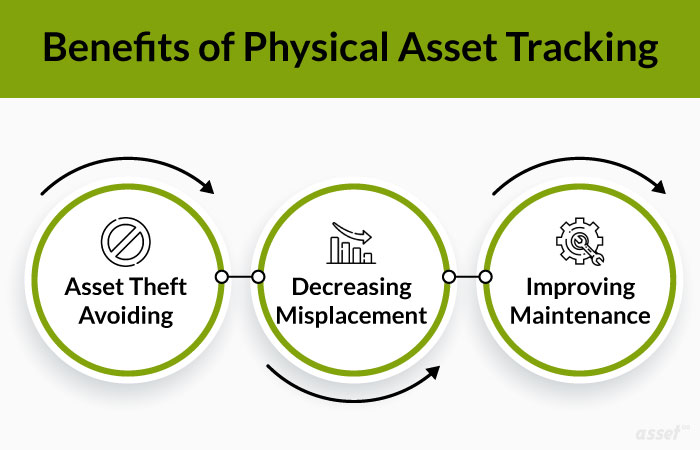
1. Asset Theft Avoiding
One of the main reasons for physical asset tracking is protecting assets from theft. Asset theft is a big issue in every industry, and it directly hurts an organization’s bottom line and productivity.
Also Read: Mobile Device & Asset Management Check-List for IT Managers
2. Decreasing Misplacement
In large warehouses, assets sometimes cannot be found because one employee leaves an asset in one place and another employee moves it somewhere else.
As a result, employees spend a lot of time looking for their equipment.
3. Improving Maintenance
Physical asset tracking also improves maintenance work, because the team gets accurate information about equipment, such as when an asset was last maintained, when it next needs maintenance and how it is performing.
Software Fixes the Common Mistakes
Asset tracking management software like Asset Infinity solves these issues by bringing all of an organization’s fixed assets online in one place. The value of fixed assets, maintenance schedules and write-offs can be managed digitally, with an audit trail that shows every change.
The software can exchange data with existing systems such as ERPs through its API, and it can keep separate depreciation books for statutory and tax purposes.
By avoiding the common mistakes made in physical and fixed asset management, organizations can protect their profits and avoid penalties caused by human error.