







Asset management matters in every industry and sector. If your organization owns assets, you need asset management to get the most value from them and to keep them secure. This post looks at banking asset management.
What Is IT Asset Management in the Banking Sector?
To understand IT asset management in the banking sector, we first need to know what IT asset management is. IT asset management is the process of making sure all assets are monitored, upgraded, deployed, maintained and disposed of at the right time.
In simple terms, all assets are tracked and used as needed. The purpose of tracking and monitoring assets is to prevent asset theft and misplacement.
When a bank does all of this, it is called IT asset management in the banking sector.
It includes activities such as tracking assets, maintaining assets on time, deploying assets where they are needed and upgrading assets when a newer version is available.
What Are the Benefits of IT Asset Management Software in the Banking Sector?
The benefits of IT asset management software in the banking sector are discussed below:
Recommended Reading: Easier Way to Manage Fixed Assets of Bank: Asset Management System
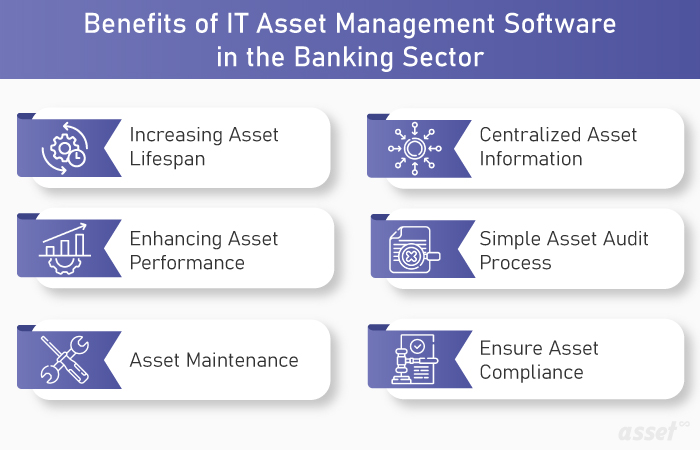
1. Increasing Asset Lifespan
When asset life is extended, an asset keeps working longer and needs replacing less often. Keeping track of each asset with IT asset management software helps extend asset life. To do that, you need to monitor assets and maintain them regularly.
2. Improving Asset Performance
IT asset management provides data on each asset individually. It helps you keep track of asset performance and improve it. You can also find assets that are not performing as expected.
3. Asset Maintenance
Assets in the banking sector are crucial for running daily operations. If they stop working or fail, work is delayed. That is why asset maintenance is important.
It gets complicated when you have many assets to keep track of. IT asset management software schedules maintenance for each asset, so maintenance work does not need to be tracked by hand. The software tells you in advance when maintenance is due.
Missed It? How Mobile Device Management and IT Asset Management Go Hand in Hand
4. Centralized Asset Information
The dashboard in IT asset management software gives you a single view for keeping track of assets. It makes every asset visible, and you can use your IT asset data to make informed decisions.
The software provides detailed reports for making accurate decisions. When asset information is centralized, everyone is on the same page.
5. Simple Asset Audit Process
A bank has many branches, and each branch has many assets. That means assets are spread across many locations.
Without software, an effective audit means gathering information about every asset in one place. With IT asset management software, the audit process is easier, more effective and faster.
6. Ensure Asset Compliance
Regulatory compliance is essential. These are the rules and regulations every organization in a sector must follow.
When an organization fails to comply, it can end up paying a large penalty. IT asset management software helps an organization follow the rules and regulations of its industry.
Also Read: Transforming ATM Management with Asset Infinity for Better Efficiency
Why Banks Should Move IT Asset Tracking Off Spreadsheets
Many large organizations still use spreadsheets for asset tracking. Spreadsheets are one of the traditional methods of tracking assets.
This approach harms the business and compromises accuracy. That is why organizations should invest in IT asset management software, which offers many benefits.
A bank has many assets that need to be tracked properly, and IT asset management software helps do that. Investing in IT asset management software can help a bank avoid unnecessary expenses.
It can benefit your bank in several ways. You will see better visibility of IT assets and inventory, more productive staff, lower expenses and better service.
Also Read: What Is the Importance of Timely Verification of Your Physical Assets?
Frequently Asked Questions (FAQs)
1. Why Is Banking Asset Management Important?
Banking asset management is important because a bank has many assets and pieces of equipment. They need to be tracked and used properly. If they are not used, resources are wasted, and when assets are not tracked, the chances of theft and misplacement increase. Banking asset management lets organizations use assets to their full capacity and increase their return on investment (ROI).
2. What Is the Purpose of Asset Auditing?
The purpose of asset auditing is to verify assets physically, and it is one of the most important activities done at the end of the fiscal year. Asset auditing is not only about physically verifying assets. The corresponding documents are cross-checked as well, so that the value of all assets can be calculated easily. It also helps with asset depreciation. Asset auditing is an important part of the asset compliance process.
3. What Kinds of Assets Does a Bank Have for IT Asset Management?
A bank has many assets and kinds of equipment, such as water systems, lighting systems and other infrastructure. IT asset management in a bank covers laptops, computers, monitors, USB drives, servers, printers, hard disks, machines, routers and so on. These are a few of the assets IT asset management covers in a bank.