






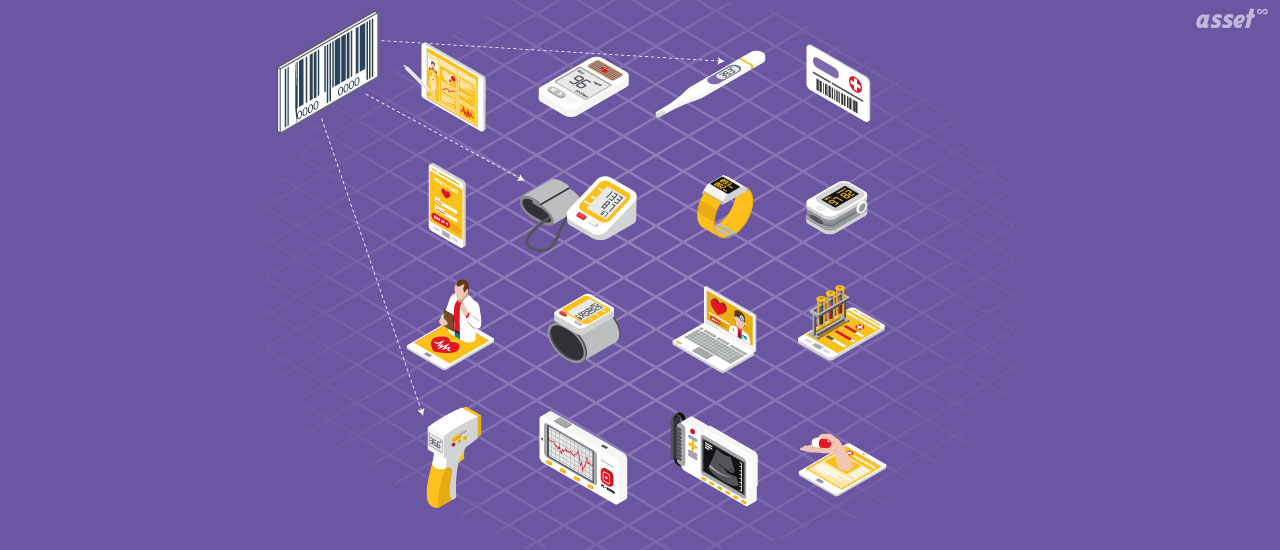
Since their invention, barcodes have become a crucial part of everyday life, especially for tracking goods and assets in industry, corporate offices, and healthcare facilities.
A medical device barcode lets hospitals track their machines, equipment, vehicles, and more. With barcodes on devices, hospital staff can pull up all the information about hospital goods and reorder them automatically when stock falls below a set minimum.
The medical device barcode also helps remove unwanted or out-of-date products from inventory, which keeps patients safe.
The benefits include better patient safety and a simpler health system. Automated inventory tracking software prevents human errors with the inventory and medication intended for patient care.
A medical device barcode also tracks how well different equipment, machines, and devices are used. For instance, some of the equipment can wear out faster than others, so keeping a record tells hospital staff how often they need to refill or buy that unit to keep operating.
Also Read: What Are the Benefits of Barcode Scanner Software?
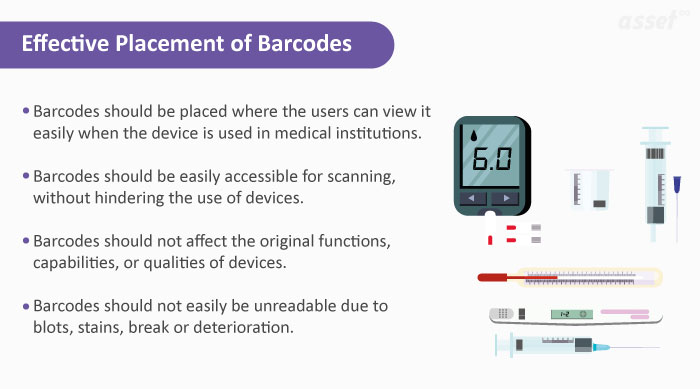
UDI is the unique device identifier, a code given to a specific device by its manufacturer. UDIs help hospitals get the most from devices over their long working lives. UDIs can be recorded in asset management software alongside each device, so that tracking and inventory management yield greater cost savings.
A medical device barcode also brings other benefits, like:
- Improved inventory control
- Increased sales (for a manufacturer)
- Enough time to detect issues
- Accuracy in billing
- Reduction in fraud
The UDI System benefits healthcare providers, manufacturers, and individual consumers by enabling:
- Fast inspection of flawed medical devices
- Faster recalls
- Reduction in medical errors
- Reduction in counterfeiting
- Improved patient treatment
- Better assessment of device performance
- Improved inventory management
- More time involved with patients
Benefits of Implementing Medical Device Barcode
An up-to-date system for tracking medical devices through UDI information has many benefits. For example, manufacturers can spot counterfeit products before they enter the market, thanks to the efficient tracking processes now in use.
Data on previous products is also kept, to analyze and compare with current products. This information is checked for compliance, better usage, product efficiency, and the product’s working life, so that outdated products can be taken out of use.
Scanning technology for barcodes and labels associated with medical devices can be used in a range of healthcare areas, such as:
- Patient identification and profiling
- Patient movement and handover
- Diagnosis, including pathology and radiology
- Medication management
- Blood transfusion
- Surgical procedure
- Devices and implants
- Medical record tracking
- Sterile services
- Asset management
Medical device labels also help with purchasing inventory and consumables, beyond keeping track of the devices themselves. To get more from their devices, manufacturers need to implement UDI to meet compliance standards.
The UDI framework helps manufacturers stay ahead of competitors and avoid fines, recalls, rejections, or any other kind of delay.
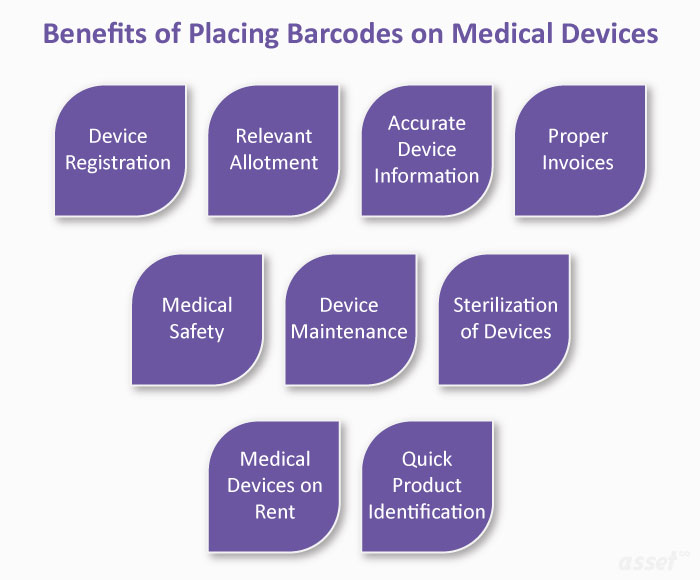
The benefits of using medical device barcode are:
Also Read: How Important Are Patient ID Wristband in the Healthcare Industry?
1. Device Registration
Barcodes make data entry into device registries efficient.
2. Relevant Allotment
Allot inventory or equipment to the right departments according to how much they use and discard.
3. Accurate Device Information
Accurate device information in medical records reduces the burden on nurses and improves accuracy in the use of medical devices.
4. Proper Invoices
Barcodes support proper invoices and insurance claims, preventing incomplete billing.
5. Medical Safety
Medical safety is necessary to avoid the use of an incorrect device or outdated device. This can be achieved by the proper use of medical device labels.
6. Device Maintenance
Proper device maintenance means regular maintenance work, checked against logs and registers, with notifications when inspections fall due.
7. Sterilization of Devices
Management of sterilization of devices is as essential as the maintenance of devices. Repeatedly used equipment is sterilized to improve safety, and barcodes make each device traceable through the process.
8. Medical Devices on Rent
Barcodes help manage medical devices that are rented, which greatly reduces administrative workload.
9. Quick Product Identification
Quick identification of products gives medical institutes, device manufacturers, and suppliers more accurate information for identifying devices and defective pieces.
Major Uses of the Medical Device Barcode
The medical device barcode is used in the healthcare industry for several major purposes. Some of them are:
A. Better Device Assessment
Medical device labels and UDI generate data so that devices can be tracked on a cloud platform and made accessible to everyone who should have access. The information is then used for analytics on costs, recalls, and waste.
The health inspectors and doctors can view the health outcomes of the device from its performance and operation records.
B. Improved Inventory Management
When all medical devices have barcodes attached, far less inventory and equipment is exposed to human error. This lets healthcare administrators reduce waste, audit inventory more often, and keep the required stock available.
C. More Time with Patients
More accurate data lets doctors and their teams spend more time with patients and less time worrying about whether equipment and devices are available, sterilized, or ready for the operating room.
The personnel can attend to more important tasks and devote more time to patient care. The mental well-being of patients is as critical as their physical health.
Also read: How a Client Improved Surgery Kit Efficiency with Asset Infinity
Barcodes Serve Administrators and Patients Alike
The goal of the medical device barcode and UDI is to monitor, recall, and analyze medical devices on the premises of healthcare establishments and associated devices outside them.
Barcodes are necessary both for administrators, who gain cost benefits, and for patients, who receive the best treatment and recover faster.
Also Read: How Do Medication Barcodes Help Improve Patient Safety?
Frequently Asked Questions
1. What are considered medical devices?
A medical device can be any item used in hospitals to treat patients, such as an instrument, apparatus, implement, machine, contrivance, implant, or in vitro reagent.
2. What is an example of a medical device?
Examples of medical devices include ultrasound and MRI machines, PET and CT scanners, and X-ray machines. Treatment equipment includes infusion pumps, medical lasers, surgical machines, life support equipment, and many more.
3. What does UDI stand for?
Unique Device Identification (UDI) is a system that assigns a unique identifier to medical devices.