







When an organization has lots of assets and equipment, it is essential to keep track of each one. Keeping track of each asset is not an easy task, and this is where asset labeling comes into play.
Labeling helps the organization keep track of its assets and lets you store valuable information about each one. This post gives a complete overview of asset labeling.
What Is Asset Labeling?
Asset labeling is the process of giving a unique identity or code to every asset. It helps identify each asset and provides crucial information. An asset label carries a unique number through which asset tracking is done, and the label is stuck to the asset.
This unique number is stored in the database of the asset tracking software, so whenever an asset label is scanned, the software fetches all the information related to that asset. When you know an asset’s precise location, operations run better, because employees do not waste time searching for the assets they need.
It lets the organization know where an asset is, so the right asset is at the right place at the right time. In this way, the asset label helps organizations become more productive.
Recommended Reading: How Does Asset Optimization Help Small Business?
What Is the Importance of Asset Labeling?
Asset labels are very important, especially when an organization has lots of assets. They make each asset easy to identify, and they make the work more efficient because staff no longer have to keep track of assets by hand.
With a handheld scanner, all staff need to do is scan the asset, and the system fetches its information automatically.
Asset labeling also helps in the audit process and in the physical verification process. It saves time and makes your team more efficient.
To run an effective and efficient asset tracking system, asset labels are crucial. They also help with asset maintenance, because each asset can be found and identified.
Four Ways Asset Labeling Helps
The benefits of asset labeling are discussed below:
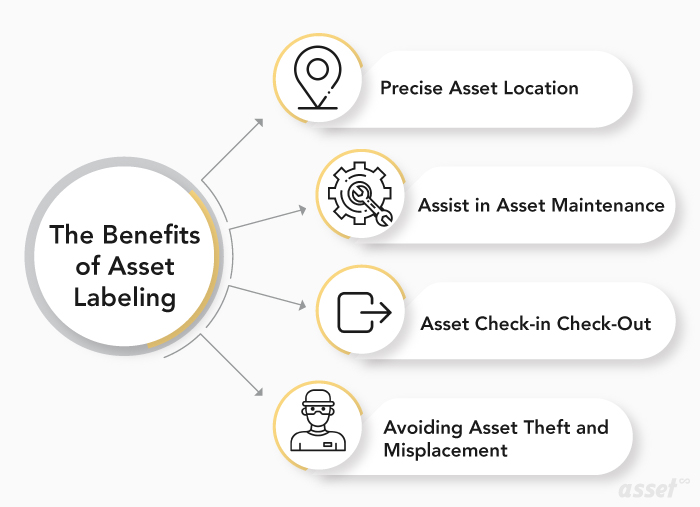
1. Precise Asset Location
Asset labels come in handy when assets are moved from one place to another frequently, which is when the chance of losing them is higher than usual. Employees do not have to hunt for the assets they need, because the software tells them where each asset is, so no confusion occurs.
With the right type of asset tag, you can get essential information about an asset, such as where it is located, who is using it and how often it is used. This information is very helpful in making business decisions.
2. Assist in Asset Maintenance
Asset labels do more than provide an asset’s location. They also provide data the asset tracking system uses to schedule maintenance. Asset labeling therefore plays a crucial role in effective asset management.
With the right asset tracking system, you can get alerts when each asset is due for maintenance, so nobody has to remember it and keep track of it manually.
Missed This One? 7 Most Common Types of Asset Tracking Techniques [Infographic]
3. Asset Check-In and Check-Out
Asset check-in and check-out helps keep track of assets, and the asset tag or label plays an important role in this process.
The check-in and check-out process makes employees more responsible for the assets they use. It helps make sure employees return assets on time, and it shows who had an asset, such as a headset, if it goes missing.
4. Avoiding Asset Theft and Misplacement
Many organizations struggle with asset theft and misplacement. When a theft occurs, it leads to the direct loss of the asset, and the organization has to spend money again to replace it.
When assets are misplaced, the organization loses valuable time and operations are held up. Both lead to lost productivity, so it is important to protect every asset, and asset labeling helps you do that.
Choosing Labels That Fit Your Assets
Asset tags are used to track assets, especially when they are moved from one site to another. Asset tags help in other ways as well, such as supporting asset maintenance and showing asset history and use.
Labels also simplify asset accounting for tax and audit purposes, and they help the organization deliver productive work. There are several types of asset labels on the market.
Some are made of paper and others of plastic, so you need to work out which type of asset label will work best for your business.
Asset labeling, one of the important features of our asset management software, can be very helpful for the organization. It can make your employees and your organization more efficient. See how labels are designed and printed on the asset tags page.
Frequently Asked Questions (FAQs)
1. Which Technologies Are Used in Asset Labels?
Asset labels use various technologies, such as barcodes, QR codes, RFID, GPS, BLE, IoT and NFC. Each has its own advantages and disadvantages. Some are cost-effective, some are more costly, some provide real-time information, and some do not.
2. Which Assets Need to Be Tagged or Labeled?
Some assets matter more than others. An organization can keep working without some of its assets, while others are so important that losing them would hamper daily operations. In simple terms, some assets have a higher priority, and those assets need to be tagged or labeled. They can include heavy equipment, vehicles, HVAC units, computers, printers, medical devices, hydraulic power units, and so on.
3. Why Should Asset Labels Be Used with Asset Labeling Software or Asset Tracking Software?
Without asset tracking software, asset labels are far less effective, because the labels only point to the asset information the software holds. Asset tracking software uses that information to improve asset performance and keep track of assets, which helps the organization get a better return on investment (ROI).