







Asset optimization is the practice of getting the most useful work out of the equipment you already own, at the lowest total cost, for as long as it makes sense to keep it. For a small business, that means fewer surprise breakdowns, fewer duplicate purchases and a clear answer when someone asks whether to repair a machine or replace it.
Large companies have reliability engineers for this. Small businesses usually have an owner, an office manager and a spreadsheet. This guide shows how a small team can do asset optimization without a specialist: what to measure, the steps to follow, what it looks like in different industries, and how software makes it a routine instead of a project.
What Is Asset Optimization?
Asset optimization is the process of balancing an asset’s performance, cost and risk over its life. It combines knowing what you own and where it is, maintaining it before it fails, using it as fully as the work allows, and replacing it at the point where keeping it costs more than a new one. The goal is more output from the same assets.
It is not the same as cutting maintenance. Skipping service saves money this month and costs more when the machine stops. Asset optimization looks at the whole life of each asset rather than a single budget line.
Why Asset Optimization Matters More for Small Businesses
A large company can absorb a broken oven or a van off the road. A small business often cannot. One unplanned breakdown can mean a lost day of revenue, an emergency repair at a premium rate, and a customer who goes elsewhere.
Small businesses also tend to have:
- Few backup assets. If the only compressor fails, work stops.
- Tight cash. Buying a duplicate because the first one could not be found hurts more.
- Records in people’s heads. When the person who knows the service history leaves, the knowledge goes too.
- No time for big projects. Any improvement has to fit into a normal week.
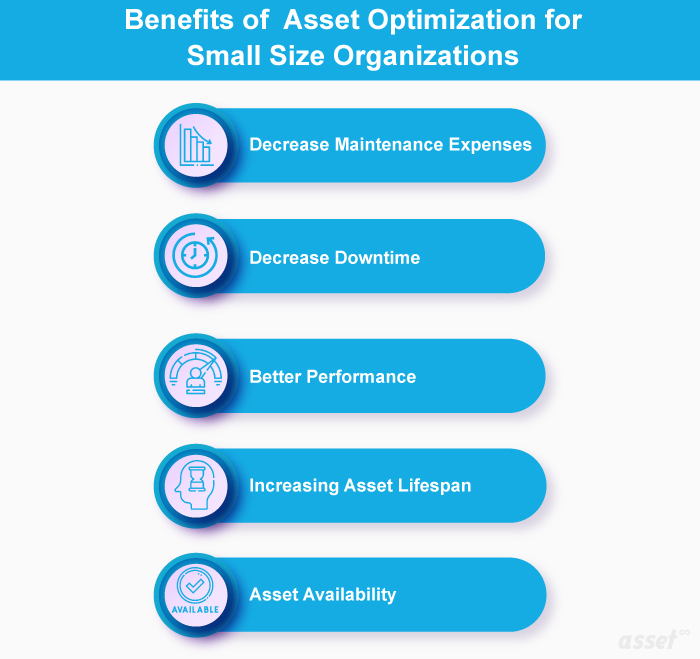
The Benefits of Asset Optimization
| Benefit | What changes | How you see it |
|---|---|---|
| Lower maintenance spend | Planned service replaces emergency repairs | Fewer rush call-outs and overtime hours |
| Less downtime | Wear is caught before it causes a failure | Fewer days with equipment out of service |
| Longer asset life | Equipment is serviced on time and used within limits | Replacement dates move later |
| Higher utilization | Idle assets are found and moved to where they are needed | Fewer purchases of items you already own |
| Better replacement decisions | Repair cost and age are on record | You replace assets on evidence, not on a hunch |
How to Measure Asset Utilization
You cannot optimize what you do not measure. Four numbers cover most small businesses.
| Measure | Formula | What it tells you |
|---|---|---|
| Utilization | Hours used ÷ hours available | Whether you own more than you need |
| Availability | Time able to run ÷ time it should be able to run | How much breakdowns cost you in lost time |
| Maintenance cost ratio | Yearly maintenance cost ÷ replacement cost | When an asset is nearing the end of its useful life |
| Planned work share | Planned jobs ÷ all jobs | Whether you are fixing things before or after they fail |
A worked example
A landscaping company owns four mowers. Over a 40-week season each is available for 1,600 hours. The service log shows:
| Mower | Hours used | Utilization | Repairs this year |
|---|---|---|---|
| M-01 | 1,280 | 80% | 1 |
| M-02 | 1,200 | 75% | 2 |
| M-03 | 560 | 35% | 0 |
| M-04 | 960 | 60% | 6 |
M-03 is barely used, so the business does not need a fifth mower for its new contract; it needs to send M-03 to that crew. M-04 broke down six times. Its repair cost belongs next to the price of a new mower before anyone pays for a seventh repair.
Steps to Optimize Assets in a Small Business
- List what you own. Record every asset worth tracking with its name, location, purchase date, cost and who looks after it. A spreadsheet is a fine start.
- Tag each asset. A QR code or barcode label means anyone can scan an asset with a phone to find its record and history.
- Set preventive maintenance plans. Base them on the calendar or on use, such as every 250 engine hours or every 3 months, whichever comes first.
- Record every repair. Log the fault, the fix, the parts and the cost against the asset, so patterns show up.
- Track use. Record hours, miles or bookings, so you can see which assets sit idle.
- Review once a quarter. Look at utilization, downtime and repair cost per asset. Move idle assets, fix plans that miss failures, and list candidates for replacement.
- Plan replacements. Use age, condition and repair cost to schedule purchases before an asset fails, so you buy on your terms.
Asset Optimization Examples by Industry
Restaurants and cafes
Ovens, fryers, refrigerators and ice machines run every day. Monthly cleaning and quarterly service plans prevent the failures that close a kitchen. Temperature logs and repair history show which unit to replace first.
Construction and landscaping
Mowers, generators and compact equipment move between jobs. Tracking hours and location shows which machines sit idle and which are overworked, and service by engine hours keeps them running. See equipment checkout for recording who has each item.
Clinics and small offices
Laptops, printers and medical devices need warranty dates, service records and named custodians. A yearly count with a phone finds what has gone missing before an audit does.
Small manufacturers
A few critical machines decide the day’s output. Meter-based plans and a record of every stoppage show where to focus maintenance and when a machine has become a bad investment.
Common Mistakes to Avoid
- Treating maintenance as a cost to cut. Skipped service shows up later as bigger repair bills.
- Buying before checking. Search your own records for an idle asset before ordering a new one.
- Keeping records in one person’s head. Put service history where the whole team can see it.
- Measuring everything. Start with utilization and downtime on your most important assets.
For more on finding idle equipment, read the hidden cost of idle assets and how to optimize asset utilization.
How Asset Infinity Supports Asset Optimization
Asset Infinity gives a small team the records asset optimization depends on, without a specialist to run them.
- One register. Each asset has its number, category, site, location, custodian, purchase cost, expected life and replacement date. Statuses such as Operational, Standby, Under Maintenance and Breakdown show what is running at a glance.
- Labels and counts. Print QR, barcode or RFID labels, and walk verification counts with the mobile app. See asset inventory software.
- Preventive maintenance. Plans fall due by calendar, meter reading, condition or a date on the asset, and raise work orders ahead of time. See preventive maintenance software.
- Reliability figures. MTBF, MTTR and availability per asset, with repeat faults flagged, so the worst performers stand out. Maintenance reporting puts them on a dashboard.
- Bookings. Shared equipment is checked out and in against a named person and a return date.
- Transfers. Move an idle asset to another site and keep its history with it.
If maintenance is your main concern, the CMMS software page covers work orders and scheduling in more detail.
Frequently Asked Questions
What is asset optimization in simple terms?
It means getting the most useful work from your equipment for the least total cost over its life, by maintaining it well, using it fully and replacing it at the right time.
How is asset optimization different from asset management?
Asset management keeps records of what you own and where it is. Asset optimization uses those records to make decisions about maintenance, use and replacement.
Do small businesses need software for asset optimization?
Not at first. A spreadsheet can hold a short list of assets. Software helps once several people need to update records or maintenance plans start slipping.
What is a good asset utilization rate?
It depends on the asset and the business. Compare similar assets with each other: one sitting far below the rest is a candidate to move or sell.