






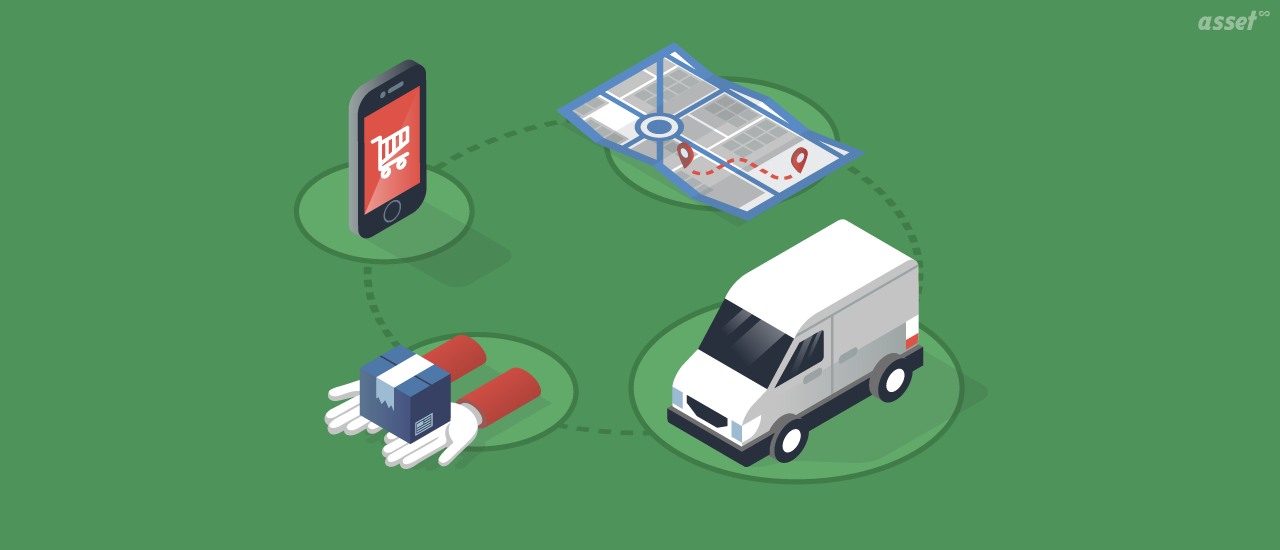
RFID for car rental and sale yards puts a radio frequency tag on every vehicle and a reader at every gate, so the system records each car leaving and returning without anyone writing down a plate number. A lot attendant looking for a silver compact on a yard of 600 cars can go to the right row, and the manager knows at closing time which vehicles are on the lot, out on rent or in the workshop.
Rental companies and dealerships run on knowing where each vehicle is and whether it is ready. Manual lot walks and clipboards break down as soon as a yard gets busy: cars are parked in the wrong row, keys go missing, and a vehicle that left without a contract is noticed days later. This guide explains how RFID vehicle tracking works in a yard, where it pays off, how it compares with GPS and barcodes, and what to look for in car rental asset management software.
What is RFID for car rental?
RFID for car rental is the use of radio frequency identification tags on rental or sale vehicles, read by fixed readers at gates and bays and by handheld readers on the lot. Each read is tied to the vehicle’s record, so check-outs, returns, yard location and lot counts are recorded automatically, without line of sight or manual scanning.
It sits between two older methods. A barcode or QR sticker is cheap but only updates when someone scans it. A GPS tracker reports by itself but needs power and a data plan per vehicle. RFID updates whenever a vehicle passes a reader, and the tag itself needs no battery.
How RFID vehicle tracking works in a yard
An RFID system for vehicles has three parts: tags on the cars, readers with antennas at the places that matter, and software that turns reads into events on each vehicle’s record.
- Tags. Most yards use passive UHF tags, which have no battery and are powered by the reader’s signal. They are read from several meters away.
- Fixed readers. Mounted at entry and exit gates, wash bays, service bays and the handover area, they record each tagged vehicle as it passes.
- Handheld readers. Staff carry them along the rows to count the lot or find one car among hundreds.
- Software. It links each tag to a vehicle, turns a burst of reads into one arrival or departure, and decides what happens next, such as updating the vehicle’s location or alerting someone.
The choice of tag matters more for cars than for most assets, because metal and glass both affect radio signals.
| Tag type | Where it goes | Things to know |
|---|---|---|
| Windshield tag | Inside the windshield, behind the mirror | Easy to fit and read at gates; some windshields have metallic coatings that block the signal, so test each model |
| On-metal tag | Body panel, door frame or under the hood | Built with a layer that lets it read on metal; harder to remove |
| Key tag | On the key fob or key ring | Tracks keys at the key cabinet and the handover desk |
| Active RFID tag | Anywhere on the vehicle | Battery-powered with a longer range, at a higher cost per vehicle |
Where RFID for car rental pays off
RFID earns its cost in a rental or sale yard in six places.
- Gate check-in and check-out. A reader at each gate records the time every tagged vehicle leaves or returns. A car leaving without an open rental contract stands out at once.
- Finding a car on the lot. Readers at the entrance to each zone, or a handheld sweep, show which area a vehicle was last seen in.
- Lot counts. A handheld reader counts a row of cars in the time it takes to walk it, without reading plates or VINs. Discrepancies between the system and the lot show up the same day.
- Theft and unauthorized movement. A rule on the exit gate can alert a supervisor when a vehicle leaves outside business hours or without a booking.
- Preparation flow. Readers at the wash bay, the detailing area and the service bay show where each returned car is in the turnaround, so the counter knows what will be ready and when.
- Accountability. Every read is recorded with a time and a place, which settles disputes about when a car came back.
RFID fleet management for rental companies
RFID fleet management goes beyond location. Each gate read is an event on the vehicle’s record, and those events feed the decisions a fleet manager makes every week.
- Utilization. Cars that sit on the lot for days while others are rented every day show up in the movement history. Rotating them evens out mileage and wear across the fleet.
- Maintenance by use. A rental fleet is serviced by mileage and time. Recording the odometer at every check-in drives service plans, so a car due for an oil change is held back before it goes out again.
- Damage at return. A return inspection that finds damage should raise a repair job against that vehicle immediately, with the rental it came back from.
- Disposal timing. Rental cars are sold at a planned mileage or age. Mileage and repair costs on each record show which cars to move to the sale yard next.
For servicing schedules, inspections and repair history across a fleet, see our page on fleet maintenance software.
RFID vs GPS vs barcodes for rental fleets
Most rental and dealer operations end up using more than one technology. The question is which one answers which question.
| Method | What it tells you | Best for | Needs |
|---|---|---|---|
| Barcode or QR sticker | Which vehicle this is, when someone scans it | Low-cost identification, paperwork, keys | A phone or scanner |
| Passive RFID, fixed readers | That a vehicle passed a gate or bay, and when | Check-in, check-out and yard flow | Readers and antennas at gates |
| Passive RFID, handheld | Which tagged vehicles are near you | Lot counts and finding a car | A handheld reader |
| GPS tracker | Where a vehicle is on the road, its trips and mileage | Vehicles off the lot, long rentals, theft recovery | A tracker with power and a data connection |
RFID covers the yard and GPS covers the road. QR codes still have a place on keys and paperwork, as our article on QR codes in car sale yards and rentals explains.
Rolling out RFID in a car rental yard
- Load every vehicle into the register. Record the unit number, VIN, plate, make, model, purchase date and cost, and the location it belongs to.
- Choose and test tags. Try windshield and on-metal tags on each model in your fleet before ordering in volume.
- Start with the gates. Put a reader on the main exit and entry first. That alone gives you check-out and return times.
- Tag the fleet. Encode each tag with the vehicle’s number and fit it as cars pass through the wash bay or service, so nothing waits for a special day.
- Claim and clean up. Link any unregistered tags the readers pick up to their vehicles, and dismiss tags that are not yours.
- Add rules. Start with one, such as “tell the yard supervisor when a vehicle leaves outside business hours”, and add more once the first works.
- Extend to bays and counts. Add readers at wash and service bays, and give lot staff handheld readers for the daily count.
RFID for car rental by type of business
Airport rental locations
Airport lots turn cars around quickly, with returns, washing and handovers all happening at once. Readers on the return lane, the wash bay and the ready line show where every car is in the turnaround.
Used car dealerships and sale yards
Dealers need to know where each car on a large lot is when a buyer asks to see it, and which cars are out on a test drive. An exit reader records every test drive, and a weekly handheld count keeps the stock list honest. Read how a used car dealer used RFID to manage its yard.
Van and truck rental
Commercial rentals go out for longer and travel further. RFID at the depot gates records each departure and return, while GPS trackers on the vehicles show where they are between.
Subscription and fleet leasing
Vehicles are swapped between customers and depots. RFID records each swap at the depot, and the vehicle’s history shows every customer it went to.
What to look for in car rental asset management software
RFID hardware only produces reads. The software decides whether those reads become something a manager can use.
| Capability | Why it matters for a rental or sale yard |
|---|---|
| Reads turned into visits | Thousands of reads at a busy gate must become one arrival or departure per vehicle |
| Per-gate settings | An exit lane and a wash bay need different read thresholds |
| Rules on movement | A vehicle leaving without a booking should alert someone automatically |
| Unknown tag handling | New and stray tags should be easy to link to a vehicle or dismiss |
| Bookings and meter readings | Check-out and return should record the odometer and condition |
| Damage to repair | Damage found at return should raise a repair job on that vehicle |
| Service by mileage | Maintenance plans should fall due on odometer readings as well as dates |
| One record per vehicle | Location, rentals, repairs and costs belong on the same record |
How Asset Infinity supports RFID for car rental
Asset Infinity’s RFID asset tracking records vehicles at gates and bays, and keeps those visits on the same vehicle record as its maintenance and costs.
- Readers and antennas. Each fixed reader is added on the Readers screen, and each antenna is given a location and a purpose: observe, entry, exit or checkpoint. Readers report over MQTT or HTTPS, with a payload map for each brand.
- Visits, not raw reads. Reads become visits with an arrival and a departure, with per-antenna thresholds so a car waiting at a barrier does not arrive four times.
- Unrecognized tags. Tags nobody has registered are listed so staff can attach each one to its vehicle or mark it “Not ours”.
- Rules. An automation rule can move a vehicle to the location the antenna points at, or notify someone when it leaves the yard. Readers that stop reading are reported, so a dead gate is not mistaken for a quiet one.
- Handheld counts. Zebra, TSL and Chainway handhelds pair with the Android app to count rows, encode tags and find one vehicle by a rising beep.
- Bookings. Bookings and reservations record who took a vehicle, require the meter reading at handover when a rental is billed on the meter, and on return record the reading and whether it came back damaged, which raises a corrective work order. See equipment checkout.
- GPS on the road. A GPS tracker registered to a vehicle shows its trips, raises an alert when it leaves an area, and feeds its odometer. See GPS asset tracking.
Frequently Asked Questions
How does RFID help car rental companies?
RFID records each vehicle leaving and returning through the gates automatically, shows where cars are on the lot, and makes lot counts a quick walk with a handheld reader. That cuts time spent searching for cars and flags vehicles that leave without a rental.
Where do you put an RFID tag on a car?
Windshield tags inside the glass behind the mirror are the most common, because they read well at gates. Where a windshield’s coating blocks the signal, use an on-metal tag on the body or door frame.
Can RFID track a rental car on the road?
No. Passive RFID only records a car when it passes a reader, usually at your own gates. Use GPS trackers for location away from the lot.
Is RFID or GPS better for a car sale yard?
For a yard where cars rarely leave, RFID is usually enough: readers at the exit and handheld counts cover most needs at a lower cost per vehicle. GPS adds value for test drives off-site, long rentals and theft recovery.