






Excavating and acquiring historical motifs, artifacts and stones is what most people think a museum does.
The Rosetta Stone, the Parthenon (Elgin) Marbles and the Nefertiti Bust are some of the famous, priceless artifacts that have been kept in museums for many years.
A museum is an institution that conserves and cares for a collection of artifacts and objects of artistic, cultural, historical or scientific importance.
Many museums display these items to the public through permanent or temporary exhibitions. The purpose of a museum is to collect, preserve, interpret and display items for public education.
There are tens of thousands of museums around the world, and together they hold an enormous number of objects.
Why Asset Management System in a Museum?
A museum is filled with antique, priceless and irreplaceable objects, which are its assets. Examples include paintings, statues, dinosaur models and other valuable equipment.
Here are the questions a museum has to answer:
How does a museum account for its priceless collection? or How is it maintained and managed?
Even How is it moved? or How does a museum avoid wear and tear on these unique, irreplaceable objects?
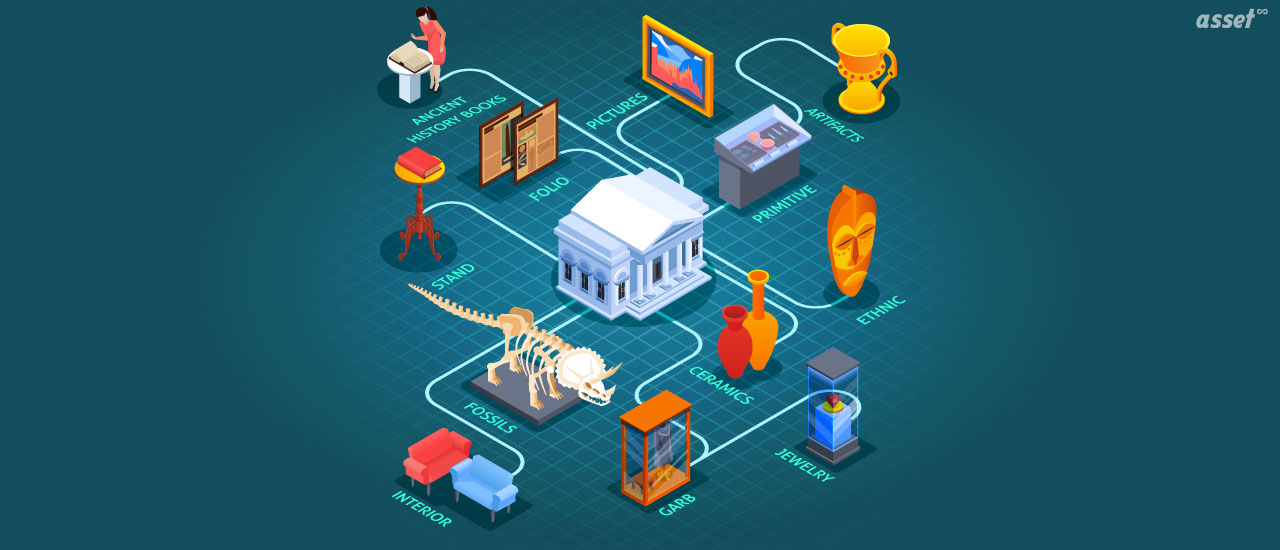
Assets of Museums: Art collections, operating assets, buildings, parking lots, paintings, statues, dinosaur models, antique display cases, archives, sculptures, etc.
Other Additional Assets: CCTV, alarms, HVAC systems, etc.
Protecting artwork from theft is a continuous challenge for the owners and managers of museums, art galleries and private collections.
Asset management in museums and art galleries can be achieved with the right combination of RFID asset tracking capabilities.
An asset management system with RFID asset tracking can protect, manage, monitor and track every artifact in the museum, such as paintings and statues.
It also covers artifacts that are not on display, stored inventory and pieces undergoing restoration, and it helps keep these valuable objects safe in transit.
Real-life Example of Forgotten Artifacts
Only a few selected artifacts are displayed in the galleries, and most sit in the museum’s storage areas. Some are too fragile or are undergoing testing and are judged unfit for exhibition. As a result, some remain undiscovered or are forgotten.
Museums have rediscovered objects in their own stores decades after they arrived: a textile left in an old parcel since it was cataloged, or a specimen thought lost that had been sitting on a shelf all along. Each time, the object was there the whole time. The record of where it was had simply not kept up.
These stories are a reminder that a collection is only as well known as its records. When an object’s location and condition are written down only on paper, or kept in the memory of a long-serving curator, it can easily slip out of view when staff change or storage is reorganized.
To avoid forgotten pieces like these, asset management with RFID asset tracking is necessary. The museum should always know which objects are on display and which are in storage.
Benefits of Asset Management System in a Museum
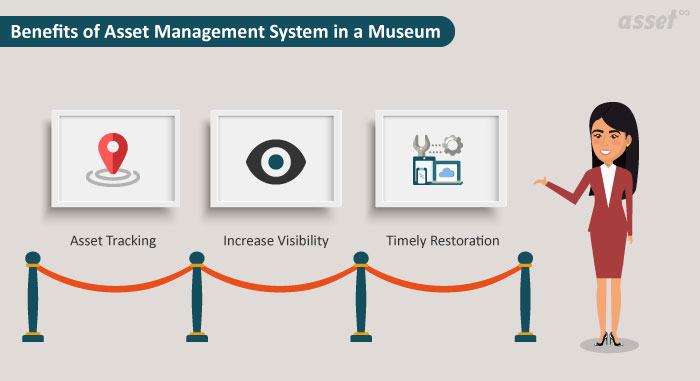
1. Accurate Tracking of Artifacts
An asset management system helps a museum track its artifacts accurately. A museum may have thousands of artifacts, so managing and monitoring them is a difficult task.
Modern asset management software lets you record the details of every artifact in one system, so you can look them up whenever and wherever you want. Each record can hold the object’s description, photographs, condition reports, its current location and the history of every move, loan and exhibition.
You can type the asset’s name into the system or simply scan the asset tag on it. This way you can also keep track of artifacts that are in storage (not yet opened or checked) or under testing.
2. Management of Store Inventory
Most museums have a shop selling related books, stationery, art supplies and so on, which need to be restocked when required.
Inventory management lets you set up requests and purchase orders for the shop’s stock. Keeping shop stock in the same system means staff can see what is running low and reorder it before it sells out.
3. Restoration/Maintenance of Items
Many art pieces go through maintenance or restoration. The system keeps a record of all maintenance work, whether on the museum building or on an artifact.
You can set reminders before scheduled maintenance so that you don’t forget it. Records of past treatments also help conservators plan future work and show lenders and insurers how an object has been cared for.
Innovative RFID Technology for Asset Tracking
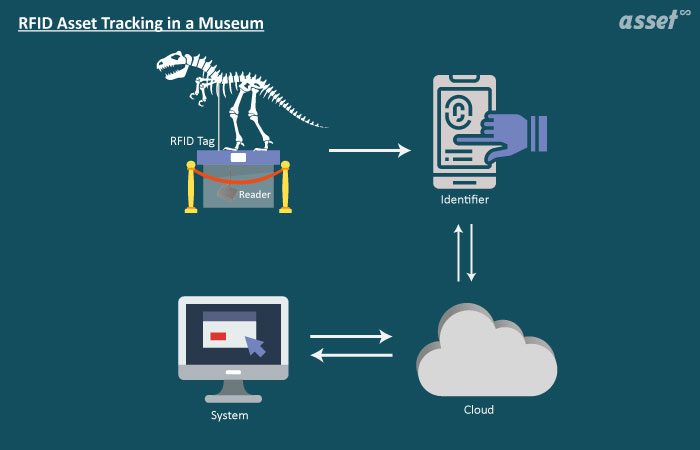
RFID technology has been around for a long time and is widely used for asset tracking.
For museum asset tracking, RFID tags help staff quickly locate valuable artifacts and objects, which helps prevent loss and gives better visibility.
RFID asset tracking puts all the information in one place, so you know where your assets are, where they were before and who had them.
RFID is an automatic identification technology that works on radio frequency and allows artifacts and objects to be monitored remotely through a unique tag.
These are the applications of RFID technology in museums:
1. Inventory Information
RFID can read hundreds of tags at a time, which is an advantage for tracking cultural artifacts in museums and exhibitions. Because items are read without physical contact, the risk of damage from handling is reduced.
RFID also lets you track and identify cultural artifacts that are in storage rather than on display, saving a lot of time and effort.
2. Track of Museum Artifacts
Fixed RFID readers at doorways and in galleries record when tagged objects move, so a museum can follow its collection without walking the floor. When an object is moved for an exhibition, a loan or conservation, the movement is captured without anyone having to update a spreadsheet.
Some sensors also report changes in humidity, temperature and light.
3. Museum Exhibition
To attract visitors, some museums give them handheld devices to scan artifacts and read more information about them.
These devices use RFID to deliver multimedia content, letting museums share far more about an object than a printed label can hold.
Keeping a Museum’s Collection Accounted For
An asset management system with RFID asset tracking reduces the time and effort of regular assessments in a museum. Because the records stay current, staff have more time for other work.
Every museum should consider an asset management system for tracking and monitoring its artifacts and keeping them secure.