







The ice cream and dairy product business is one of the best-known businesses in the world. Customers everywhere enjoy its products, especially in summer. Making ice cream in large volumes takes a large number of assets and pieces of equipment, and ice cream equipment is prone to breakdowns. To avoid them, organizations need asset management, and asset management needs a strategy. This post explains what asset management and an asset management strategy are, and, most importantly, what problems dairy product businesses face and how you can avoid them.
What Is Asset Management?
Asset management is the process an organization uses to keep track of its assets and equipment. These assets are essential for running day-to-day operations. Asset management software helps organizations keep track of asset life and supports every stage, from procurement to maintenance to disposal. The software centralizes asset information. It plays a crucial role in reducing maintenance expenses, improving asset performance and extending asset life.
What Is an Asset Management Strategy?
Asset management is essential for running daily operations effectively, but putting asset management software to work in any business takes proper planning. Profit margins in the ice cream business keep shrinking, which is why asset management matters: it brings maintenance expenses down. An asset management strategy helps the organization get the most value from each asset with the least investment.
With an asset management strategy, the organization takes a planned approach to maximizing production and reducing maintenance costs, and, most importantly, plans its assets around its operations. The strategy analyzes risk, keeps assets secure and accounts for external factors, so that work is delivered on time as efficiently as possible.
What Are the Most Common Issues in Dairy Product Businesses?
The most common issues in dairy product businesses are discussed below:
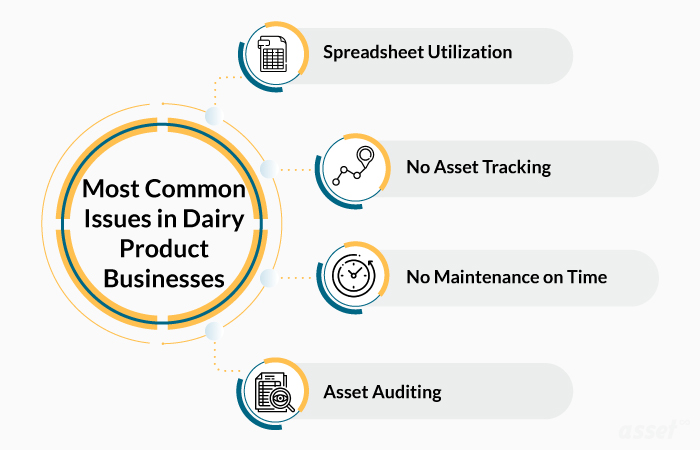
Most Common Problems in Dairy Product Businesses
Reliance on Spreadsheets
Many dairy product businesses still use spreadsheets to keep track of assets. This is a poor practice, because several people use the same sheet at once. Data gets changed, on purpose or by accident, and there is no proper way to trace who changed it. Inaccurate data builds up and the business suffers.
No Asset Tracking
A dairy product business regularly sends its assets from one location to another, so it is important to know where each asset is. When manual asset tracking methods are used, assets are misplaced or cannot be found. This leads to theft and hurts the business directly.
Missed Maintenance
When an asset is not maintained on time, it can fail suddenly. That is dangerous for the business, because it disrupts daily operations and lowers productivity. Sudden equipment failure also raises maintenance expenses, and it shortens asset life and hurts performance.
Asset Auditing
When assets are spread across many locations, keeping track of them becomes hectic. If you do not know where an asset is, it is hard to account for every asset during an audit. Each asset also needs its own documentation.
How Does Asset Infinity Help Dairy Product Businesses Avoid These Issues?
All of these problems have one solution: asset management software. Asset Infinity can be extremely helpful in resolving every one of them.
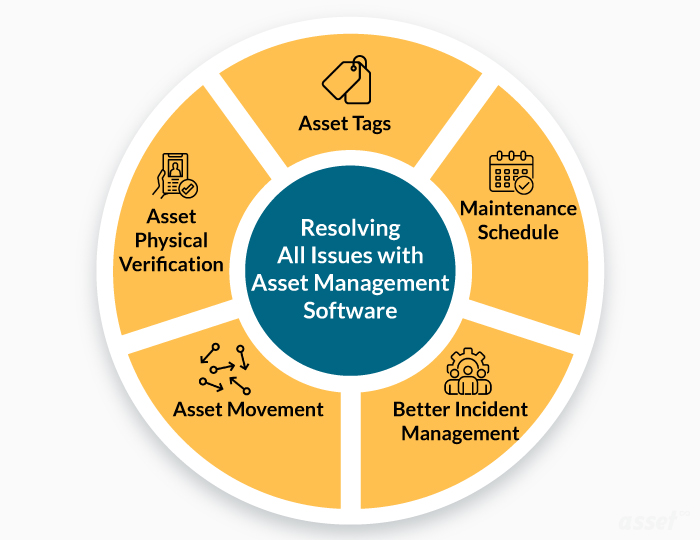
Asset Tags
The first thing to do is use asset tags. Asset tags play a crucial role in every part of an asset management strategy. With an asset tag, you know where an asset was last scanned, and you can see other crucial information such as who is using it, its status, its current condition and its last maintenance date.
Maintenance Schedule
The software also lets you schedule routine maintenance with its preventive maintenance feature. When an asset is maintained regularly, its productivity improves, its life increases and maintenance expenses fall.
Better Incident Management
When maintenance issues come up, you can raise a request in the software. The maintenance team is notified, investigates the issue and resolves it as quickly as possible. The spare parts used and any other costs are recorded as well.
Asset Movement
Asset tags tell you where assets such as freezers are. That helps prevent theft and misplacement, and it is especially useful when assets move often from one place to another. Every move is recorded, so you know where each asset is.
Asset Physical Verification
Asset tagging and tracking also help with auditing. You can physically verify assets and store all the documents for each asset in the system. You can also calculate depreciation for all assets easily with the software, and audits keep ghost assets out of your records.
Why Dairy Businesses Should Put Their Assets in One System
Dairy product businesses run heavy equipment, such as deep freezers that keep products in good condition. When assets are spread across many locations and conditions, keeping them maintained is important, and that is why investing in asset management software makes sense. It helps solve the problems dairy product businesses face and makes the organization more efficient. With our asset management software, dairy product businesses can get more from their assets and reduce many of these problems.
Frequently Asked Questions (FAQs)
What are asset tags?
An asset tag is a label attached to an asset, and you can put whatever important data you need on it. Each tag has a unique identification number, and whenever the tag is scanned, all the information related to that asset is pulled up. Asset tags make asset tracking possible. Several asset tracking techniques are available. The most used are barcodes, QR codes and RFID, which are cost-effective. Other options include GPS, BLE, IoT and NFC, which cost more and report location as it changes.
What are ghost assets?
Ghost assets are assets that appear in the accounting books and asset list but are not physically available. They have usually been stolen or misplaced. You pay taxes on those assets but cannot use them. They cause problems during an asset audit and can lead to compliance issues.