







In business decisions, one metric stands out as a measure of success: return on investment (ROI). As organizations try to get the most from their resources, understanding ROI analysis becomes a strategic necessity. This guide explains ROI analysis step by step and gives you the tools and insights to use it in your decisions. Whether you’re a seasoned business leader, a growing entrepreneur or an individual who wants to make informed financial choices, it will help you understand how ROI works. Along the way, we’ll look at ROI calculator software, a tool that speeds up the analysis and helps you turn the numbers into action.
Understanding Return on Investment (ROI)
Return on Investment, or ROI, serves as the bedrock of business decision-making and financial evaluation. At its core, ROI measures the profitability of an investment relative to its cost. This critical metric gauges the efficiency of resource allocation by quantifying the gains generated in relation to the resources expended. Expressed as a percentage, ROI allows businesses and individuals to assess whether an investment has generated positive returns or incurred losses. Whether evaluating marketing campaigns, capital projects, or financial assets, a higher ROI signifies a more successful and lucrative endeavor. Through ROI analysis, decision-makers can objectively compare investment opportunities, optimize resource allocation, and steer their efforts toward endeavors that promise the greatest return on their investments.
The formula for calculating Return on Investment (ROI) is:
In this formula:
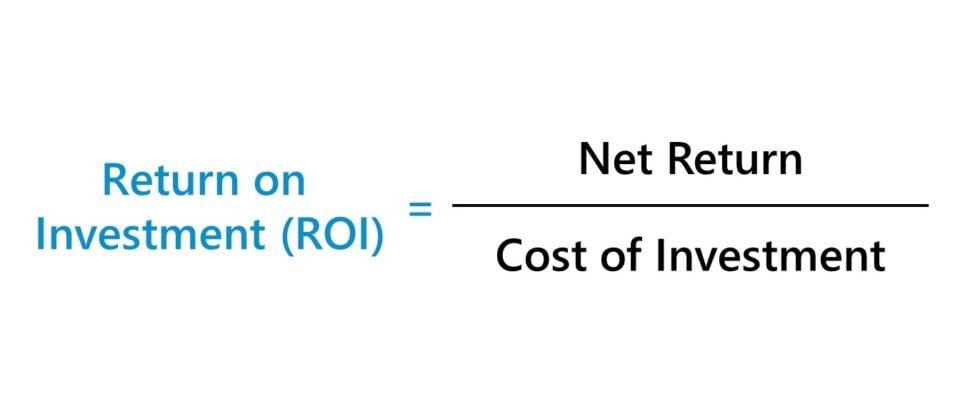
Net Profit or Gain refers to the total amount earned from the investment after deducting all costs and expenses associated with it.
Cost of Investment represents the initial amount of money invested in the project or venture.
The result is usually expressed as a percentage, which helps in understanding the efficiency and profitability of the investment. A positive ROI indicates that the investment generated more profit than it cost, while a negative ROI signifies that the investment resulted in a loss.
Also Read: How to Maximize ROI with Maintenance Tracking Software?
How to calculate ROI?
The ROI, an abbreviation for “return on investment”, is the ratio between the net return and the cost of an investment.
The return on investment (ROI) formula is straightforward, as the calculation simply involves dividing the net return on the investment by the investment’s corresponding cost.
Net Return → Total Profits Received
Cost of the Investment → Total Amount Spent
In practice, individual and institutional investors use ROI to track their portfolios, and corporations rely on the metric for internal purposes too, such as their decision-making processes regarding which projects to pursue and for decisions on optimizing how to allocate their capital on hand.
Therefore, the ROI is a method for investors to determine the efficiency of their current capital allocation strategy, including the effectiveness of past investments.
The higher the return on investment (ROI) on a project or investment, the greater the monetary benefits received, all else being equal.
However, what constitutes whether the ROI is adequate differs based on the target return specific to the investor and the length of the holding period, among other factors.
Importance of ROI Analysis for Businesses and Individuals
ROI analysis stands as a cornerstone of informed decision-making for both businesses and individuals. In the corporate realm, understanding the return on various investments, whether projects, marketing campaigns or resource allocation, helps organizations make strategic choices that improve profitability and efficiency. ROI analysis aids in prioritizing ventures that promise the most substantial returns, guiding businesses toward sustainable growth and prudent resource management.
For individuals, ROI analysis goes beyond financial planning, influencing choices that range from education and career investments to real estate and personal projects. It serves as a compass, helping individuals allocate their resources wisely and pursue endeavors that offer the greatest potential for financial gain. Whether for entrepreneurs assessing new ventures or professionals evaluating education options, grasping the ROI provides clarity and rationale for pursuing paths with optimal outcomes. In essence, ROI analysis gives both businesses and individuals a powerful tool for handling a changing economy and planning for a prosperous future.
ROI Analysis: Understanding Return on Investment Evaluation
ROI Analysis, short for Return-on-Investment Analysis, is a systematic process used to measure the efficiency and profitability of an investment. It involves assessing the ratio between the gain or profit generated by an investment and the cost of that investment. ROI analysis enables individuals and businesses to evaluate the financial performance of various ventures, helping them make informed decisions about resource allocation, project prioritization, and investment strategies.
By quantifying the relationship between the returns achieved and the resources invested, ROI analysis provides valuable insights into the success or failure of an investment. It allows investors to gauge the effectiveness of their capital allocation strategies and compare different investment opportunities. ROI analysis is a versatile tool applied in various fields, from assessing business projects and marketing campaigns to evaluating personal financial decisions. Ultimately, mastering ROI analysis helps individuals and organizations improve their investments, enhance decision-making processes, and strive for sustainable growth.
Interpreting ROI Results
Interpreting ROI results involves understanding the calculated percentage and its implications for the investment in question. Here’s how to make sense of different ROI values:
- Positive ROI (Above 0%): A positive ROI indicates that the investment generated more profit than it cost. The higher the positive ROI, the more lucrative the investment. For example, an ROI of 20% means that for every dollar invested, you gained an additional 20 cents in profit.
- Negative ROI (Below 0%): A negative ROI suggests that the investment resulted in a loss. This could happen when the costs exceed the returns. A negative ROI prompts a reassessment of the investment strategy or adjustments to minimize future losses.
- ROI of 0%: An ROI of 0% indicates that the investment neither gained nor lost money. It means that the returns are equal to the costs. While it’s not a loss, it’s essential to consider whether the effort and resources invested are justified for the minimal return.
- Comparing ROI: Comparing the ROI of different investments can help you prioritize projects. Choose the investment with the highest ROI when resources are limited. However, it’s crucial to consider the risk associated with each investment. An investment with a higher ROI might also come with higher risks.
- ROI and Timeframe: Keep in mind that the timeframe of the investment influences ROI. Short-term investments might have higher ROI percentages, but they may not be sustainable over the long term. Consider the investment’s duration and whether the ROI aligns with your financial goals.
- Target ROI: The adequacy of an ROI depends on your goals and the industry norms. A lower ROI might be acceptable in certain industries with stable, long-term returns, while others might demand higher returns due to higher risks.
- Overall Assessment: Interpreting ROI results means looking at the whole picture. Consider the investment’s risk level, future potential, and alignment with your financial objectives. A high ROI is favorable, but it’s crucial to balance it with other factors for a comprehensive understanding.
What is a “good” ROI Ratio?
A “good” Return on Investment (ROI) ratio is relative and varies based on factors such as the industry, the investment type, the risk associated, and the investor’s goals. Generally, a positive ROI is desirable, but what constitutes a “good” ROI depends on the context. Here are some considerations to help you understand what might be considered a good ROI ratio:
- Industry Norms: Different industries have varying profit margins and risk levels. For example, industries with higher risk, such as technology startups, might expect higher ROI percentages to justify the risk, while more stable industries might have lower ROI expectations.
- Risk Factor: Riskier investments may demand higher ROI to make up for the potential of losses. Conversely, safer investments might have lower ROI expectations.
- Investment Type: Short-term investments might yield higher ROI percentages compared to long-term investments. However, long-term investments might be more stable and sustainable.
- Economic Conditions: Economic conditions can influence what is considered a good ROI. During economic downturns, expectations for ROI might be adjusted due to reduced consumer spending and market volatility.
- Personal Goals: An investor’s goals and risk tolerance play a significant role. Some investors might prioritize steady, long-term growth with lower ROI, while others might be more comfortable with higher risk and higher potential ROI.
- Risk-Adjusted Returns: Some investors focus on risk-adjusted returns, which consider the risk taken to achieve a certain ROI. Investments with lower risk might be considered good if they offer consistent returns with manageable risk.
- Opportunity Costs: ROI should also be evaluated in comparison to alternative investment opportunities. If an investment offers a higher ROI than other available options, it might be considered good within that context.
- Timeframe: A good ROI might also depend on the investment’s timeframe. Short-term investments might have higher ROI expectations, while long-term investments could be evaluated differently.
In essence, there’s no universal benchmark for a “good” ROI ratio. It’s crucial to assess ROI in the context of your specific situation, goals, risk appetite, and the industry or investment type. Research industry standards, consult financial experts, and align your ROI expectations with your overall financial strategy for the most informed decision-making.
How ROI Calculator Tools Work and How to Use Them
ROI calculator tools bring precision and simplicity to investment evaluation. These tools offer a systematic way to effortlessly calculate and analyze the potential return on an investment without the need for complex manual calculations. By inputting the initial investment cost, net return, and other relevant figures, these calculators quickly provide an accurate ROI percentage, which speeds up decisions.
To use ROI calculator tools effectively, start by gathering accurate data about the investment’s costs, expenses, and earnings. Input these figures into the calculator, and within moments, you’ll obtain a clear ROI percentage. This instant insight allows for swift comparisons of multiple investment opportunities, aiding in identifying the ventures that align with your financial goals.
Furthermore, ROI Calculator tools enable you to conduct “what-if” scenarios by adjusting various parameters. You can simulate different investment outcomes, helping you understand how potential changes might affect the ROI. This helps you make well-informed decisions by assessing different investment strategies and understanding their potential impact.
Incorporating ROI Calculator tools into your investment analysis toolkit enhances your ability to make precise and data-driven decisions. These tools offer efficiency and confidence, helping you approach complex investment decisions with clarity and foresight.
Also Read: How to Optimize Asset Utilization for Maximum ROI
ROI Analysis Turns Investment Choices Into Clear Numbers
In investment decisions, mastering Return on Investment (ROI) analysis is an essential skill for individuals and businesses alike. This step-by-step guide to ROI analysis with ROI calculator software gives you the insights to handle this vital part of decision-making. By understanding ROI’s nuances and using ROI calculator software, you gain the ability to evaluate investments with precision and confidence. This guide takes you through the step-by-step process of ROI analysis and shows what calculator tools can do. With ROI analysis and the aid of calculators, you’ll be equipped to make informed investment choices that align with your goals and aspirations, amplifying your potential for financial success.