






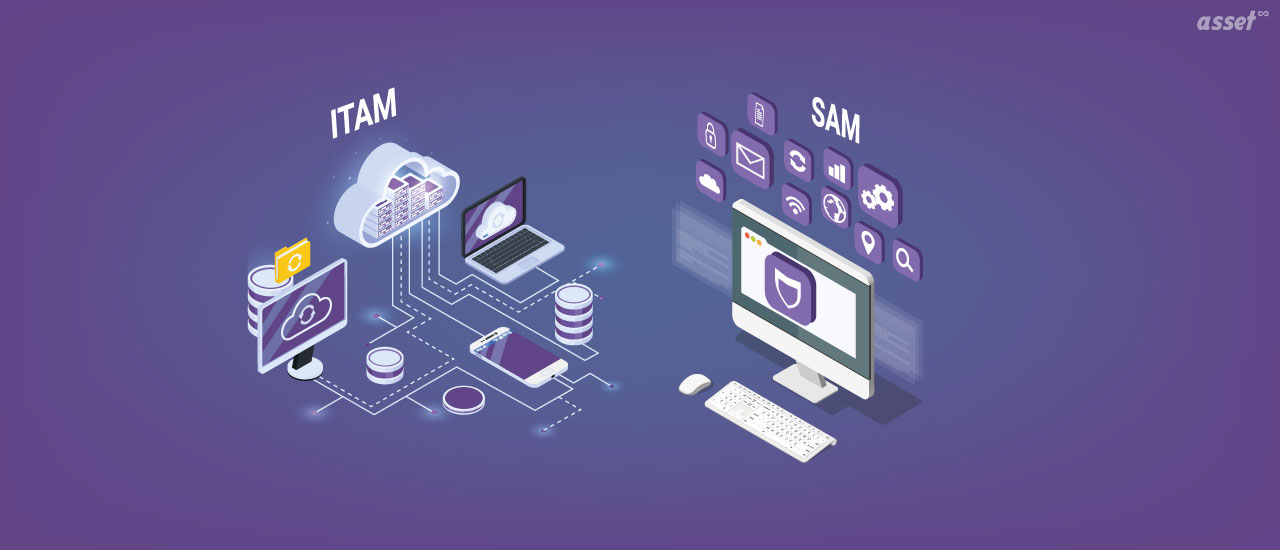
ITAM is defined as “a set of practices that incorporates IT assets across the business units within an organization. It enjoins upon the financial, inventory, contractual and risk management responsibilities to manage the overall life cycle of IT assets, including strategic decision making.” ITAM covers all IT resources such as software, hardware, network services, and forms the umbrella over SAM, SM and CAM.
Software Asset Management (SAM) is the management and optimization of on-premise software applications that were purchased or downloaded and installed on servers and clients. This makes Software Asset Management a subset of ITAM.
Let us look at the definitions describing ITAM and Software Asset Management.
- ITAM is defined as the methodology to provide accurate asset lifecycle costs and risks to get the most business value from strategy, architecture, funding, contractual and sourcing decisions.
- Software Asset Management includes “all of the infrastructure and processes necessary for the effective management, control, and protection of the software assets within an organization throughout all stages of the lifecycle.”
ITAM can thus be seen as an overarching discipline, with subsets including SAM, Hardware Asset Management (HAM), and the platforms that are required to manage all these processes.
Also Read: What Are the Benefits & Best Practices for IT Asset Management?
What is IT Asset Management?
ITAM includes financial, contractual, and risk management of all the IT assets present in an organization, both physical and digital. It is like an encompassing umbrella of all asset management, including hardware and software assets.
Software Asset Management is becoming a necessity because of software license management and the risk of audits. Note that software cannot run without a physical asset. ITAM therefore has to be among the priorities of the business.
Processes That Fall Under ITAM
A complete ITAM program consists of many processes. The International Association of Information Technology Asset Managers Inc (IAITAM) identifies the following as the key process areas that fall under ITAM:
- Acquisition Management
- Asset Identification
- Communication and Education
- Compliance Management
- Disposal Management
- Documentation Management
- Financial Management
- Legislation Management
- Policy Management
- Program Management
- Project Management
- Vendor Management
What Well-Managed IT Assets Give an Organization
- Asset visibility and control
- Better use of assets
- Audit requirement compliance
- Regulatory requirement compliance
- Reduced costs of software and hardware
- Support for changes and projects of the organization
- Alignment of asset costs to services
- Configuration data for service management
- Data source for accurate decisions
The goal of ITAM is to establish a centralized asset repository to account for the presence and purchase of an organization’s hardware and software inventory.
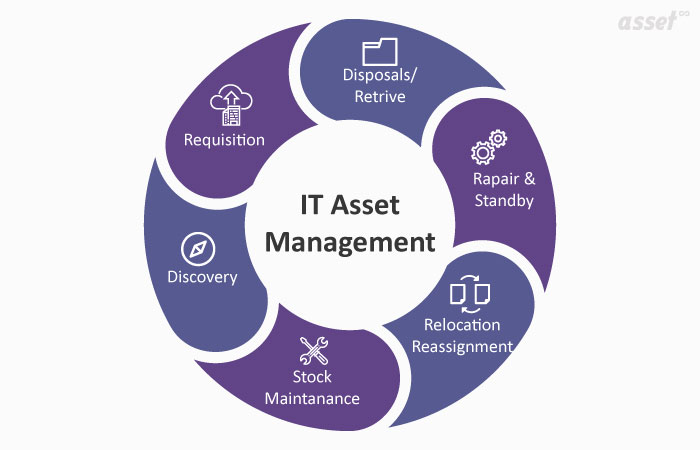
Further Benefits of ITAM
Owing to the various advantages of asset management systems for organizations, ITAM is assuming importance for business growth in many ways. Moreover, several potential issues can be detected and prevented using ITAM processes.
- Accountability for assets, services, and their costs
- Provision of road map to best practices
- Practical steps to comply with relevant compliance requirements
- Routine and accurate assessments of future asset needs to meet business and technology initiatives
- An improved position of strength for managing vendors and contracts
- Consistent and proactive software and license management
- Reduced support costs
- Ability to proactively manage service-level agreements (SLAs)
- Reduced security risk by highlighting vulnerabilities on unsupported software and non-compliant software instances
What is Software Asset Management?
The aim of Software Asset Management, or SAM, is to get the most value and ROI of the software assets used in the business. One of its main processes is software license compliance to achieve organizational goals.
Software license compliance reduces the chances of legal and reputational risk by ensuring that the company has all appropriate licenses for each software package in its possession.
Beyond software license compliance, Software Asset Management includes other processes like inventory, auditing, and redeployment of software assets.
Software inventory management helps in making informed decisions while purchasing additional software programs and applications. Internal software audits help to discover policy violations, risks to data security, and potential problems in workflows. The redeployment enables the organization to make continued use of aging software that may be found to be valuable for the business.
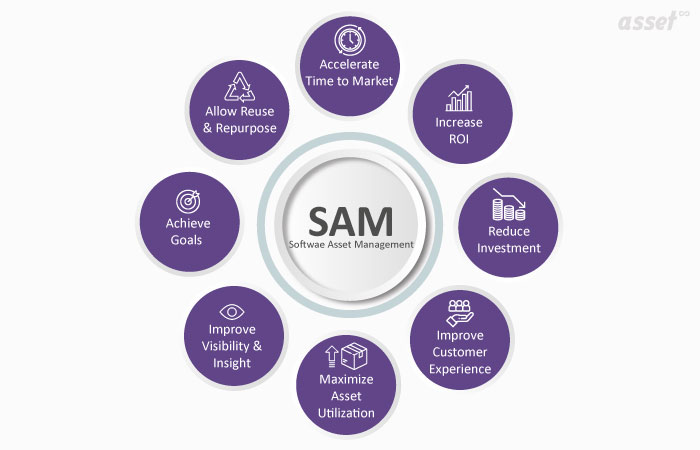
Benefits of Software Asset Management
- Cost savings
Software Asset Management helps organizations secure their software environment, taking effective control over costs and delivering the information required to guide future investment decisions.
- Avoid fines and penalties
Software vendors audit their customers regularly. With SAM, any license discrepancy or shortfall can be identified and addressed in advance, minimizing the legal and financial risk in the process.
- Strategic alignment
Software Asset Management allows an overall view of an organization’s existing IT investments and how they are being used so that they can be aligned with the business strategic objectives. Therefore, software metering and usage data allows the responsible managers to forecast their future IT needs.
- Repurposing
Instead of buying new software every time an employee changes roles, SAM gives you a cost-effective way to reassign licenses and ease the pressure on IT budgets.
- Competition
In this technology-driven era, adopting a manual approach to tracking software licensing is typically expensive, time-consuming, and prone to errors. Automating this process cuts administrative work and frees up resources for high-value projects.
The other step besides software asset management is establishing a process with respect to the data available on software asset deployment, utilization, and other stages of the asset lifecycle. In the final analysis, continuous process improvement must be realized through monitoring and lifecycle assessment.
What Is the Difference Between SAM and ITAM?
Asset management software works for both tangible and non-tangible assets. Similarly, IT Asset Management software allows the management of both hardware and software assets.
However, Software Asset Management can get more exposure and emphasis as:
- Software audits are expensive, compelling business focus
- The software can get outdated, expensive and short-lived
Hardware occupies space, depreciates over time and use, and can raise issues when not in use. This can be a tricky situation to explain to a non-IT finance person about where the money was spent on physical servers in regard to client access licenses etc. With SAM, it becomes significantly easier to explain the business case.
Choosing Software That Covers Both ITAM and SAM
When you choose ITAM software, consider Asset Infinity and try it with the 14-day free trial. It discovers devices and the software installed on them and counts that software against the licenses you own, so hardware and software are managed in one place.