







From education to manufacturing, from healthcare to food and beverage, from quick-service restaurants to business hubs, almost every industry took a hit during the pandemic. Hotels, restaurants, catering, and travel were among the sectors hit hardest.
When the first wave of COVID cases rose, businesses closed, many employees lost their jobs, and many more were forced to work from home. As a result, productivity suffered. In this post, we look at the solution for when working from home is required.
What Is Contactless Tracking?
Contactless tracking lets organizations track their assets in remote locations. While you are at home or away from the office, you can schedule maintenance of assets and equipment. Much of the work you do in the office, you can do from home.
Remote work has become simpler over time, and many applications are used for collaboration. Digital asset tracking made the biggest difference, because it brings several contactless tracking techniques together. To get there, asset tracking software is essential.
The market for asset tracking software and technology has grown quickly. Now, back to our main topic.
Recommended Reading: A Courageous New World: What Future Holds for Asset Management?
What Are the Main Contactless Tracking Techniques?
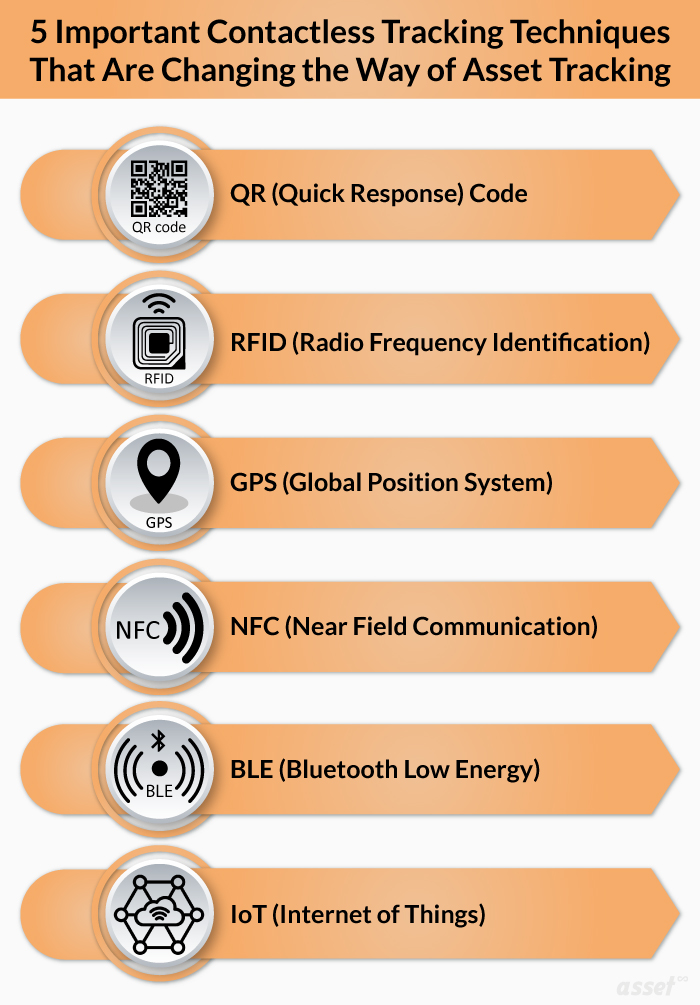
Below we discuss five important contactless tracking techniques that are changing the way assets are tracked.
1. QR (Quick Response) Code
The QR code is one of the technologies used in asset tracking. It has long been used in marketing, and it is now widely used for online payments.
It is one of the essential tools of digital asset tracking. It is a cost-effective technology that can help businesses grow. You can try it with a free QR code generator.
2. RFID (Radio Frequency Identification)
RFID stands for radio frequency identification. It is widely used for asset tracking and management. RFID tags have been used for contactless tracking for a long time, including during the pandemic.
The RFID market keeps growing, because readers record where each asset is seen and provide data about it as well.
3. GPS (Global Positioning System)
Most of us have used GPS, and we know how effective it is. GPS (Global Positioning System) is widely used in transportation.
It provides the location of vehicles and assets, which is why fleets and logistics businesses rely on it. You can also tell drivers which routes to take and which to avoid to stay out of traffic jams, which saves wasted fuel.
4. NFC (Near Field Communication)
NFC is a short-range form of RFID technology. One of its biggest advantages is that it exchanges information quickly. NFC comes in the form of NFC tags, which are attached to an asset and provide information about it.
NFC is a short-range wireless technology that makes life simpler for people across the globe by making it easier to exchange digital content, make transactions, and connect electronic devices.
It is mostly used in phones, laptops, and tablets for exchanging information over a very short range (about 10 cm or less).
5. BLE (Bluetooth Low Energy)
BLE asset tracking is most effective when it is used on the organization’s premises, especially when there is a lot of inventory and many assets to look after.
In huge warehouses, it can be very hard to find assets and inventory when they are needed. BLE has a short communication range, which is why it works within a limited area.
Bonus: IoT (Internet of Things)
This one is a bonus. The Internet of Things is one of the biggest tools used in digital asset tracking. It provides location and security for assets. With remote monitoring, you get asset data that makes decisions easier.
The market for managing IoT devices has also grown quickly as more businesses connect their equipment.
Technology Is Only Half of Contactless Tracking
These are only a few of the asset tracking technologies. Each one has its own advantages and disadvantages.
As we said before, choosing a contactless asset tracking technology is only one part. The other important part is using asset tracking software. Asset tracking software provides several advantages to the organization.
Cloud-based software can be accessed from anywhere, which means that when you are working from home, you can still see all the information about your assets.
In contactless tracking, asset tracking software matters because it provides the information and sends alerts and notifications for asset maintenance. To keep your assets productive, make sure they are maintained regularly.
Also Read: How to Effectively Track and Audit Your Assets with RFID Tags?
Frequently Asked Questions (FAQs)
1. What Is Asset Tracking Software?
Asset tracking software provides many benefits to organizations. It keeps track of assets and also helps organizations maintain them on a schedule. When assets are maintained, their chance of failure goes down and so do maintenance expenses. Asset tracking also reduces the chances of asset theft and misplacement.
In simple words, asset tracking software automates the process of tracking assets. It plays a crucial role in asset maintenance by monitoring assets, and it sends alerts and notifications when something needs attention. Well-maintained assets work more reliably, so production increases and asset life lengthens. That leads to a higher return on investment (ROI).
2. What Are the Benefits of Cloud Asset Tracking Software?
Most importantly, you can access cloud asset tracking software from anywhere. That is one of the biggest advantages of cloud technology, and it comes in handy when people work from home. A good cloud provider adds security to your data. It makes you more efficient and more productive.
3. How Are Asset Thefts Avoided with Asset Tracking Software?
When your assets are tagged, asset tracking technology records where each asset is. Tagged assets are easier to find, which helps avoid theft and saves the organization unnecessary expenses.