






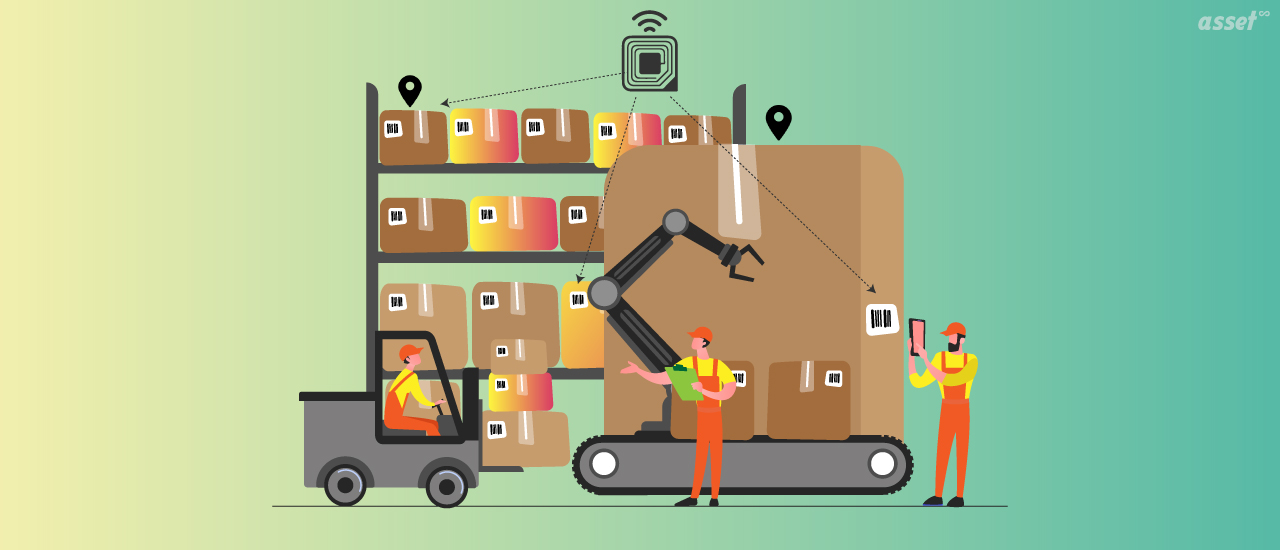
RFID has been used for asset tracking for a long time, especially by asset-intensive organizations. RFID technology comes in the form of a tag or label, and there are two types: active RFID and passive RFID. This article explains the difference between active and passive RFID and which one is a better option for your business.
What Is RFID Technology?
RFID technology is one of the asset tracking technologies. It helps organizations keep track of assets and equipment. It is a wireless technology that uses radio waves.
Every RFID system has three components: an antenna, a transceiver and a transponder. The antenna and transceiver work together as a reader. This reader scans the RFID tag.
To activate the tag, the reader transmits a radio signal. The tag responds to the antenna, and this is where the data is transmitted.
What Is the Difference Between Active RFID and Passive RFID?
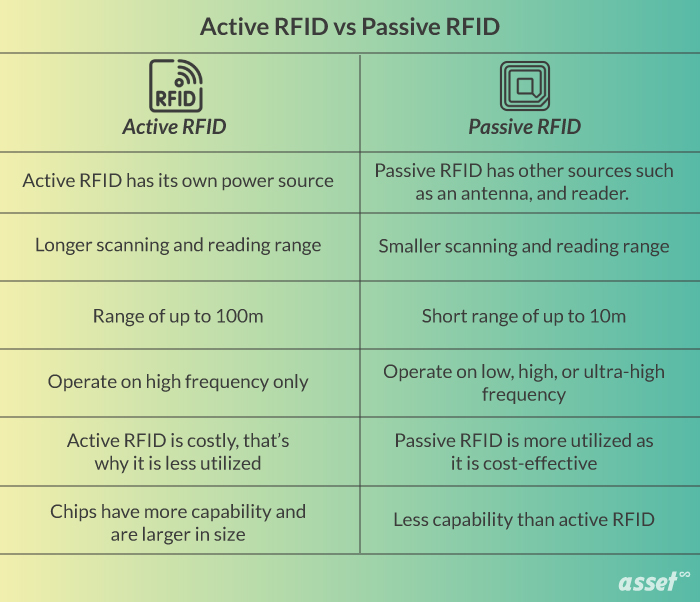
Below are the main differences between active RFID and passive RFID:
1. Active RFID has its own power source, such as a battery, whereas passive RFID draws its power from the reader’s signal through its antenna.
2. Active RFID has a longer scanning and reading range than passive RFID.
3. Passive RFID typically reads at up to about 10 m, whereas active RFID can communicate at up to about 100 m.
4. Passive RFID can operate on low, high or ultra-high frequency, whereas active RFID usually operates in the ultra-high frequency range.
5. Active RFID tags cost more, which is why they are used less, whereas passive RFID is used more widely because it is cost-effective.
6. Active RFID tags have more capability and are larger than passive RFID tags.
How Do Active and Passive RFID Differ for Location Tracking?
Active RFID and passive RFID both help with inventory tracking and with preventing theft and misplacement of inventory. However, active RFID is more powerful than passive RFID because it provides real-time information.
It can be used in a real-time location system (RTLS), which means you get updated information all the time. Active RFID is costly, though, and that is why many organizations choose passive RFID.
When an organization has a large budget, it can choose active RFID. If your organization is just starting out or the budget is limited, you can go with passive RFID. It is also an effective technology, which is why so many organizations choose it.
What Is Low Frequency, High Frequency, and Ultra-High Frequency RFID?
Low-frequency RFID sits in the 30 kHz to 300 kHz band, and most LF tags work at 125 to 134 kHz. Low-frequency RFID has a slow reading speed, but it copes well near water and metal.
It has a short reading range of about 10 cm. It is widely used for access control and animal identification. Low-frequency and high-frequency RFID both work well in moist conditions.
High-frequency RFID sits in the 3 MHz to 30 MHz band, and most HF tags work at 13.56 MHz. High-frequency RFID has a reading range of up to about 1 meter. It is used in payment and ticketing systems.
Ultra-high frequency RFID sits in the 300 MHz to 3 GHz band. Passive UHF tags can be read at up to about 10 to 12 meters. Ultra-high frequency RFID reads faster than low- and high-frequency RFID, although its readers cost more.
Choosing Between Active and Passive RFID
Active and passive RFID tags both have their advantages and disadvantages. It is up to you to work out which one suits your business requirements.
RFID technology is helpful in asset and inventory tracking. When you use it with asset tracking software, you get better results with less effort. RFID helps automate work procedures and speeds them up as well.
It makes employees more efficient because they no longer record each item by hand. With RFID technology, you get better inventory visibility, and the software can alert you when stock is running low.
Most importantly, it improves business operations by reducing inventory shrinkage and avoiding stock-outs. Investing in automated software will improve your business and productivity.
Frequently Asked Questions (FAQs)
What Are the Various Industries Where RFID Is Used?
Every industry that holds inventory and struggles with inventory tracking and management can use RFID asset tracking. It is widely used in warehouses, retail, pharmaceuticals, hospitals, hospitality, oil and gas, automotive, food and beverage, education, manufacturing and more.
What Are Some Use Cases of RFID Technology?
RFID is widely used for asset tracking, but the assets vary. Some organizations use it to keep track of equipment, some keep track of employees, and some track livestock such as goats and cows. RFID provides valuable data that helps owners and organizations measure productivity, and with that data they can see how to improve it. Most importantly, RFID shows where each asset was last seen.
Another example of RFID technology can be seen in hospitals. Hospital staff use RFID to keep track of patients, such as heart patients, who need to be located quickly at any time. RFID wristbands are worn like a watch and linked to software so that nurses and doctors can check them. They can also help confirm that a patient has been given the right medicine.
Does RFID Provide Data?
Yes, it provides data, and organizations make decisions based on that data. An RFID tag’s memory is small, usually from a few bits to a few kilobytes, so only essential information is stored on it, such as an ID that links to the full record in your software.