






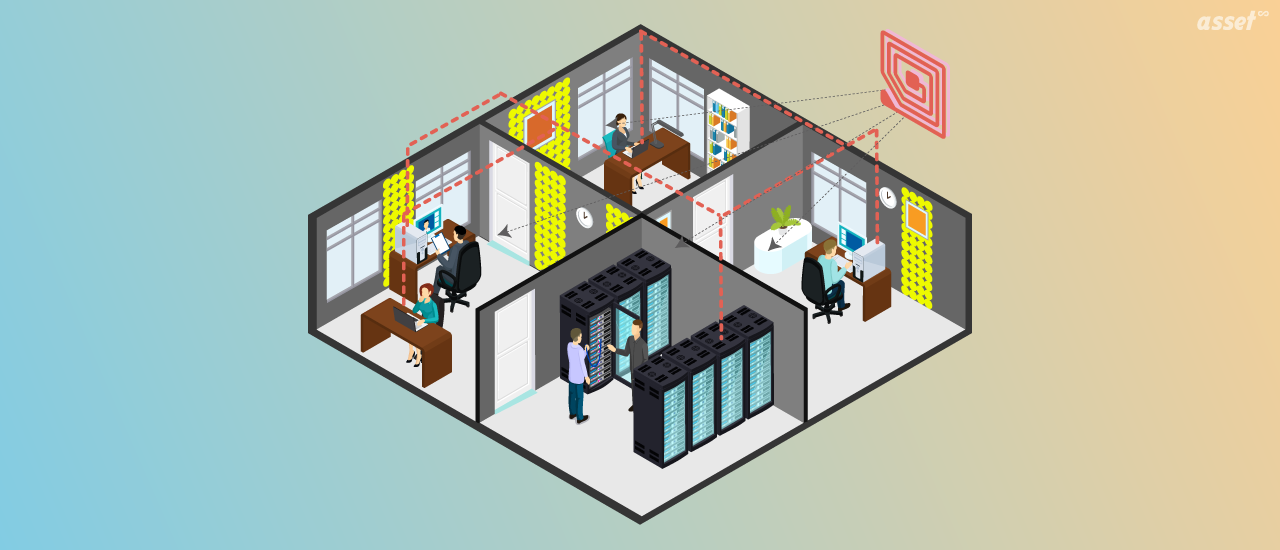
Offices are complex environments where assets are always moving, from furniture and equipment to files and documents. Tracking these assets can be difficult and time-consuming. RFID technology can help optimize asset use in offices by providing current visibility and location tracking for these assets.
What Is RFID?
RFID (Radio Frequency Identification) is a technology that uses radio waves to identify and track objects. RFID tags or labels are attached to objects, and an RFID reader emits radio waves to communicate with the tags. This lets the reader read the unique identifier of each tag and track the object’s location and movement as it happens.
Components of RFID
RFID technology has three main components: RFID tags, RFID readers, and a backend system.
RFID Tags
RFID tags are small, inexpensive devices that contain a microchip and an antenna. The microchip stores data and the antenna enables communication with an RFID reader. Tags can be active or passive. Active tags have a battery and can transmit signals over longer distances, while passive tags have no battery and rely on the RFID reader to power them.
RFID Readers
RFID readers emit radio waves and receive signals from RFID tags. They are connected to a backend system that processes the data received from the tags. Readers can be handheld or fixed, and their range depends on the type of tag being used.
Backend System
The backend system processes data received from the RFID readers. It stores the data, tracks the movement of assets, and shows where assets are and how they are used. It is usually part of an asset management system, which links each tag to the asset’s record.
What Are the Benefits of Using RFID Technology?
These are the benefits of using RFID technology in offices:
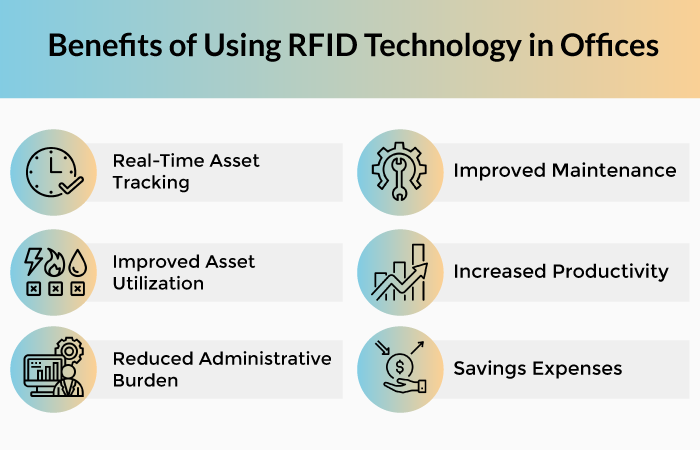
Real-Time Asset Tracking
RFID technology shows where assets are and how they are used. Office managers can track assets and monitor their usage, reducing the risk of loss or theft. It cuts the time and effort of tracking assets manually and keeps critical items available when needed, improving overall efficiency. Readers placed at doorways can record when an asset moves from one room or floor to another.
Improved Asset Utilization
RFID technology lets office managers make better use of assets by tracking usage patterns and identifying where assets are underused. They can then move assets to where they are needed most.
Reduced Administrative Burden
RFID technology removes the need to track assets manually. This reduces the administrative burden on office managers and frees up time for more important tasks. Stock-takes that once took days of manual counting can be completed far more quickly by walking the floor with a handheld reader.
Improved Maintenance
RFID technology can be used to track the maintenance history of assets, so they are properly maintained and serviced. Scanning a tag brings up the asset’s service history on the spot. This can extend the lifespan of assets and reduce maintenance costs.
Increased Productivity
RFID technology improves productivity by reducing the time it takes to locate and track assets. Employees spend more time on productive work and less time searching for missing assets. It also automates many tasks that used to be done manually, such as counting inventory and locating assets.
Savings Expenses
RFID technology can save money by reducing the need to buy new assets, improving asset use, and lowering maintenance costs.
RFID can also be combined with other technologies such as IoT and AI to add more value. For example, by pairing RFID with IoT sensors, office managers can track environmental conditions such as temperature and humidity to make sure assets are stored properly. By combining RFID with AI, they can analyze asset usage patterns and make better-informed decisions about allocation and maintenance.
Where Else Is RFID Used?
RFID is used well beyond the office, in industries such as healthcare, retail and logistics. Hospitals use it to locate medical equipment and supplies, city services use it to manage vehicle fleets, and libraries use it to speed up checking books in and out. The same ideas apply to an office: tag what matters, read it automatically, and let the records keep themselves current.
Making the Most of Office Assets with RFID
RFID technology can optimize asset use in offices by providing current visibility and location tracking of assets. It helps office managers reduce the risk of loss or theft, use assets better, cut administrative work, improve maintenance, increase productivity, and save money. As RFID becomes more affordable, more offices are likely to adopt it. With RFID asset tracking, offices can simplify operations and improve efficiency, leading to better business outcomes.
Overall, RFID is a practical tool that helps offices use their assets well and control costs. Its ability to show where assets are and how they are used makes a real difference to office management. As more businesses adopt it, offices can expect better efficiency, productivity and profitability.