






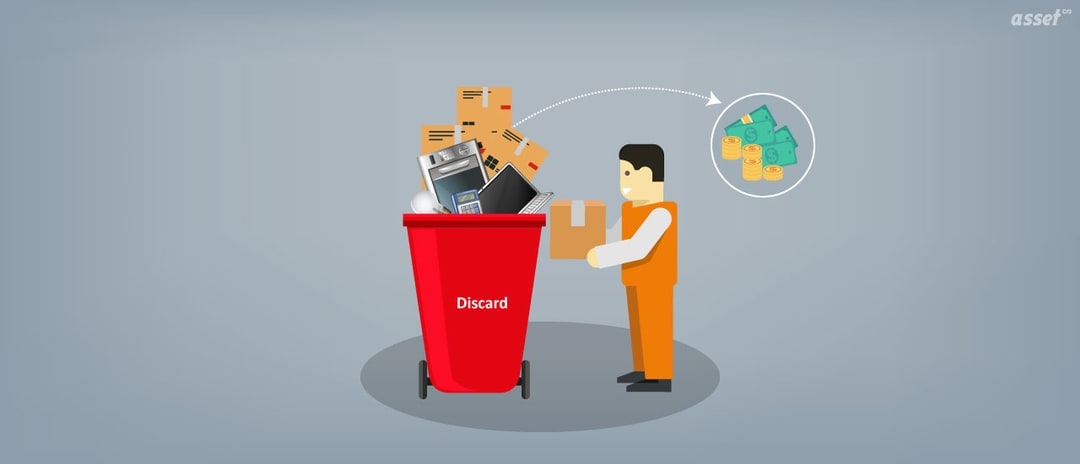
Asset disposition, also known as asset disposal, is the process of removing or discarding assets that are no longer of use to an organization. This process is an essential component of the asset management lifecycle, as it helps organizations free up space, reduce maintenance costs, and avoid the risks associated with holding onto obsolete or underperforming assets. Proper asset disposition ensures that an organization can maximize the value of its assets while minimizing potential liabilities.
Disposal is also an accounting event. When a capital asset is sold, scrapped, donated or lost, it has to come off the fixed asset register and the balance sheet, depreciation has to stop, and any gain or loss has to be recorded. This guide covers why disposal matters, when an asset should go, the disposal methods, a step-by-step procedure, how to account for the disposal of assets, and the do’s and don’ts that keep it clean for auditors.
What is asset disposal?
Asset disposal is the final stage of an asset’s life cycle, when the organization stops using an asset and removes it from its records. The asset may be sold, traded in, scrapped, recycled, donated, transferred or written off as lost. Its cost and accumulated depreciation are removed from the books, and any difference between its book value and what was received is a gain or loss.
Importance of Asset Disposal
Organizations must regularly evaluate their assets to determine when they are no longer providing value and should be disposed of. The key benefits of effective asset disposal include:
- Cost Savings: Disposing of obsolete or underperforming assets reduces maintenance and storage costs, freeing up resources for more productive uses.
- Compliance and Risk Management: Proper asset disposal ensures compliance with regulatory requirements and minimizes the risk of environmental liabilities, data breaches, and safety hazards.
- Maximizing Asset Value: By disposing of assets at the right time, organizations can recover some of their initial investment through resale, recycling, or other means, rather than allowing the asset to depreciate further.
- Optimizing Space: Removing old or unused assets helps optimize physical space within an organization, making room for new and more efficient assets or operations.
There is a fifth benefit that finance teams care about most: an accurate register. An asset that was thrown away but never recorded as disposed of stays on the books as a ghost asset. It keeps being depreciated, it may still be insured, and it shows up as missing in every physical count until someone finally writes it off.
When should an asset be disposed of?
Most disposal decisions come down to one of these triggers:
- Repair costs keep rising. When maintaining an asset costs more each year than the value it delivers, or its total repair bill approaches the price of a replacement, it is time to replace it.
- It no longer fits the work. The process, product or capacity changed, and the asset no longer meets the need.
- It reached the end of its useful life. Output, accuracy or reliability has fallen below what the job requires.
- A newer model does the job better. Newer equipment may be safer, faster or more energy efficient.
- It is idle. Assets nobody has used for a year tie up space and insurance and can often be sold while they still have value.
- It was lost, stolen or destroyed. These must be written off even though nothing was sold.
Important Factors for Disposing Assets
When it comes to disposing of assets, several critical factors must be considered to ensure the process is effective and compliant:
- Asset Condition: Assess the condition of the asset to determine if it can be refurbished, resold, or should be scrapped. This evaluation will guide the appropriate method of disposal.
- Depreciation and Financial Impact: Calculate the depreciation and remaining book value of the asset to understand the financial impact of its disposal. This will also help in determining the most financially beneficial disposal method.
- Environmental Considerations: Consider the environmental impact of disposal, especially for assets containing hazardous materials. Ensure that the disposal method complies with environmental regulations and seeks to minimize negative environmental effects.
- Data Security: For IT and digital assets, ensure that all data is securely wiped or destroyed before disposal to prevent data breaches and protect sensitive information.
- Regulatory Compliance: Ensure that the disposal process complies with relevant regulations, including industry-specific standards, environmental laws, and corporate policies.
Methods of asset disposal
The right method depends on the asset’s condition, what it is still worth and what it contains.
| Method | When it fits | What to record |
|---|---|---|
| Sale | The asset still works and has market value | Buyer, sale price, invoice or reference |
| Trade-in | A supplier credits the old asset against a new one | Trade-in value, linked purchase |
| Scrap or recycling | The asset has no working value but its materials do | Scrap proceeds, recycler, certificates for hazardous items |
| Donation | The asset works but is not worth selling | Recipient, date, fair value if needed for tax |
| Transfer | Another site or company in the group can use it | Receiving entity and location |
| Write-off | The asset was lost, stolen or destroyed | Date discovered, police or insurance reference |
Asset Disposal Procedures: Do’s and Don’ts
Effective asset disposal requires careful planning and adherence to best practices. Here are some do’s and don’ts to consider:
Asset Disposal Procedures Do’s
- Conduct a Thorough Asset Inventory: Before disposing of any assets, conduct a comprehensive inventory to ensure that all assets are accounted for and that none are disposed of prematurely.
- Document the Disposal Process: Keep detailed records of the disposal process, including the reasons for disposal, the method used, and any financial transactions involved. This documentation is essential for compliance and auditing purposes.
- Choose the Right Disposal Method: Select the disposal method that aligns with the asset’s condition, value, and regulatory requirements. Options include resale, recycling, donation, or scrapping.
- Ensure Data Destruction: For digital assets, confirm that all data has been securely wiped or destroyed before disposal to prevent unauthorized access.
- Follow Environmental Guidelines: Comply with environmental regulations and guidelines when disposing of hazardous or electronic waste to minimize the environmental impact.
Asset Disposal Procedures Don’ts:
- Don’t Rush the Process: Avoid hastily disposing of assets without a proper evaluation, as this could lead to financial losses or compliance issues.
- Don’t Neglect Data Security: Never dispose of digital assets without ensuring that all data has been properly wiped or destroyed, as this could lead to data breaches and legal liabilities.
- Don’t Forget to Update Records: Always update your asset management records after disposal to reflect the changes and ensure accuracy in future audits.
- Don’t Ignore Disposal Costs: Be aware of any costs associated with disposal, such as transportation, recycling fees, or environmental cleanup, and factor these into your decision-making process.
The asset disposal process step by step
A written process keeps disposals consistent across sites and gives auditors a trail to follow.
- Request. The asset’s owner raises a disposal request with the reason, such as end of life, damage or no longer needed.
- Approve. A manager, and finance for anything above a set value, approves the disposal and the method.
- Value. Finance confirms the asset’s net book value, and someone gets a market or scrap value if it will be sold.
- Prepare. Remove data from IT equipment, drain fluids, remove hazardous parts and take off asset tags.
- Dispose. Sell, scrap, donate or transfer the asset, and keep the invoice, receipt or certificate.
- Record. Mark the asset as disposed of in the register with the date, method, buyer or recipient, reference and proceeds.
- Account. Stop depreciation, remove the cost and accumulated depreciation, and post the gain or loss in the same period.
How to account for the disposal of capital assets
A capital asset disposal has three accounting effects: depreciation stops, the asset’s cost and accumulated depreciation leave the balance sheet, and any difference between net book value and proceeds becomes a gain or loss.
Gain or loss on disposal = proceeds − net book value
Net book value is the asset’s cost minus its accumulated depreciation up to the disposal date. If proceeds are higher, the result is a gain. If they are lower, or there are none, it is a loss.
Disposal value and salvage value
Salvage value is the estimate, made when the asset is bought, of what it will be worth at the end of its useful life. Depreciation is calculated on cost minus salvage value. Disposal value is what the asset actually brings in when it goes. The two are rarely the same, and the difference shows up as the gain or loss.
A worked example
A machine cost $40,000. Finance estimated a salvage value of $4,000 and a useful life of 10 years, so straight-line depreciation is ($40,000 − $4,000) ÷ 10 = $3,600 a year.
After 6 years, the machine is sold for $15,000.
| Item | Amount |
|---|---|
| Original cost | $40,000 |
| Accumulated depreciation (6 × $3,600) | $21,600 |
| Net book value | $18,400 |
| Sale proceeds | $15,000 |
| Loss on disposal | $3,400 |
The journal entry removes the asset and records the loss:
| Account | Debit | Credit |
|---|---|---|
| Cash | $15,000 | |
| Accumulated depreciation | $21,600 | |
| Loss on disposal | $3,400 | |
| Machinery (at cost) | $40,000 |
Had the machine sold for $20,000, the result would be a $1,600 gain instead. Many businesses keep separate book and tax depreciation, so the same disposal can produce a different gain or loss on the tax return. In the US, part of a gain on business equipment may be taxed as depreciation recapture, so check with your tax advisor. Our MACRS depreciation calculator shows the tax depreciation side.
Challenges and Best Practices in Asset Disposal
Asset disposal comes with its own set of challenges, but by following best practices, organizations can overcome these obstacles and ensure a smooth disposal process:
Challenges
- Regulatory Compliance: Navigating the complex web of regulations surrounding asset disposal, particularly for hazardous materials or digital assets, can be challenging. Non-compliance can lead to fines, legal action, and reputational damage.
- Data Security: Ensuring the complete and secure destruction of data on digital assets is critical to avoid data breaches. This requires specialized knowledge and equipment.
- Environmental Impact: Disposing of assets, particularly electronic waste, can have significant environmental impacts if not done correctly. Organizations must take care to minimize their ecological footprint.
- Asset Valuation: Accurately valuing assets for disposal can be difficult, particularly for highly depreciated or obsolete items. This can affect the financial outcome of the disposal process.
Best Practices
- Develop a Clear Disposal Policy: Establish a clear asset disposal policy that outlines the procedures, responsibilities, and criteria for disposal. This policy should be regularly reviewed and updated to reflect changes in regulations and business needs.
- Train Employees on Disposal Procedures: Ensure that employees involved in the disposal process are adequately trained on the organization’s disposal policy, data security protocols, and environmental regulations.
- Engage Certified Disposal Vendors: When outsourcing disposal tasks, work with certified vendors who specialize in environmentally responsible disposal, data destruction, and compliance with industry standards.
- Regularly Review Asset Management Practices: Periodically review asset management practices to identify opportunities for improving disposal processes, reducing costs, and enhancing compliance.
Recording asset disposal in Asset Infinity
Asset Infinity records a disposal once and carries it through the register and the books:
- One disposal record. The disposal form captures the reason (sold, scrapped, lost, donated or transferred), the buyer, a reference and, for a sale, the sale price.
- Gain or loss per book. Each depreciation book, such as statutory and tax, gets its own gain or loss, and the disposal journal is exported to the general ledger.
- Depreciation stops. Recording the disposal ends depreciation in every book, while the asset’s record and maintenance history stay in place for audit.
- Reports. Disposed and discarded assets, and disposals by reason, are standard reports.
- Audit trail. Every change to the record keeps who made it and when.
See fixed asset management software for how book and tax depreciation, disposals and journals fit together, or the asset register for the fields kept on each asset.
Frequently Asked Questions
How do you treat loss on disposal of assets?
Loss on disposal of assets is recorded as an expense on the organization’s income statement. It represents the difference between the asset’s book value and the proceeds received from its disposal, where the book value exceeds the proceeds.
What are the reasons for asset disposal?
Assets may be disposed of for several reasons, including obsolescence, underperformance, technological advancements, high maintenance costs, or when they no longer meet the organization’s needs.
How to determine if an asset is obsolete?
An asset is considered obsolete if it no longer provides value to the organization, typically due to technological advancements, changes in business needs, or excessive maintenance costs. Regular assessments and comparisons with current alternatives can help determine obsolescence.
How to ensure data security during asset disposal?
To ensure data security during asset disposal, organizations should use certified data destruction methods such as degaussing, shredding, or secure wiping. Working with certified disposal vendors can also help ensure compliance with data protection regulations.
What happens when you discard an asset?
When an asset is discarded, it is removed from the organization’s books, and any remaining book value is written off. If the asset is sold or recycled, the proceeds are recorded, and any gain or loss on disposal is recognized in the financial statements.