






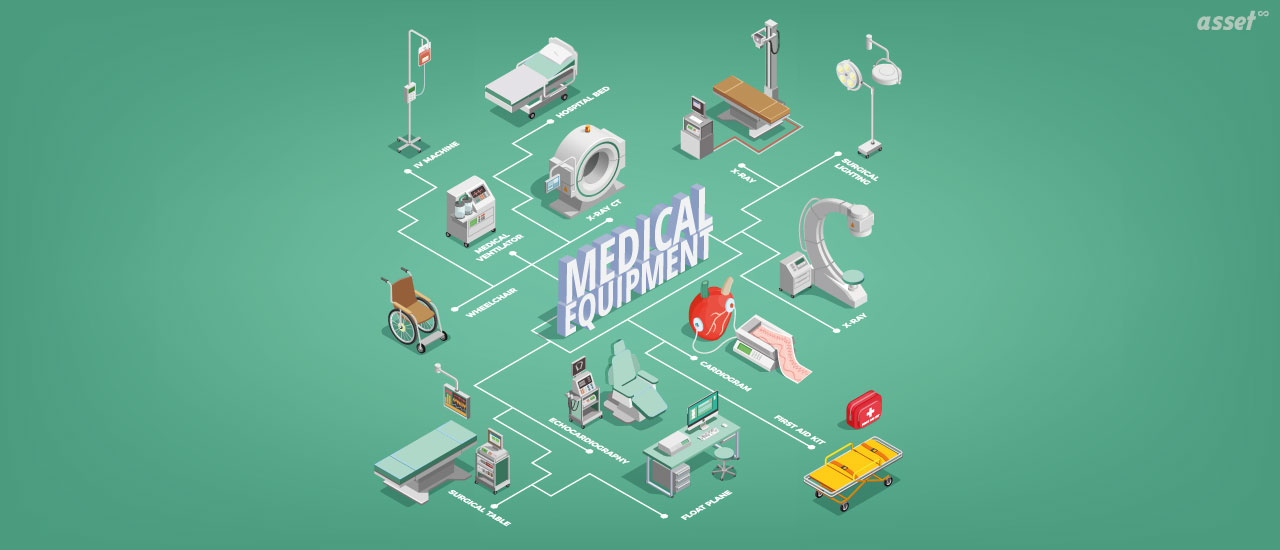
Hospital equipment tracking records where every infusion pump, monitor, wheelchair, bed and surgical kit is, who last had it, and whether it is due for service. Hospitals own large fleets of mobile medical equipment that move between floors all day, and a device nobody can find is a device that gets rented, bought twice or hidden in a cupboard by a ward worried about running short.
This guide explains what hospital asset tracking is, how it differs from tracking in an office or a warehouse, the tracking methods that work in a hospital, the benefits, the steps to set up a hospital asset tracking system and what to look for when you compare products.
What is hospital equipment tracking?
Hospital equipment tracking is the practice of recording the location, status and service history of medical equipment using labels, RFID tags or Bluetooth tags read by scanners, doorway readers or room gateways. It tells nurses where the nearest available device is, and tells clinical engineering which devices are due for preventive maintenance or safety testing.
It is often called hospital asset tracking or medical equipment tracking. The most useful systems combine tracking with maintenance, because the device a nurse is looking for is the same device biomedical engineering needs to service.
What a hospital needs to track
Hospitals hold three kinds of things, and each needs a different approach:
- Mobile medical equipment: infusion pumps, patient monitors, ECG machines, ventilators, mobile X-ray units, ultrasound units, wheelchairs, beds and surgical kits. These move constantly and are the main reason hospitals buy tracking.
- Fixed equipment and building systems: mammography units, sterilizers, blood bank refrigerators, chillers, generators, lifts, medical gas and HVAC. These stay put but need scheduled maintenance and inspection records.
- IT and furniture: laptops, workstations on wheels, examination tables and furniture, which need a register and periodic counts.
Consumables such as gloves, masks and medicines are usually managed in a separate inventory or pharmacy system, with batch and expiry tracking.
How hospital asset tracking differs from regular asset tracking
Tracking in an office answers “where is the laptop?” once in a while. Tracking in a hospital has to answer it in minutes, for equipment a patient may be waiting on. The differences are worth understanding before you choose a system.
| Regular asset tracking | Hospital asset tracking | |
|---|---|---|
| How often assets move | Occasionally, when someone changes desk or site | Many times a day, between wards, theaters and storage |
| Cost of not finding one | Time lost and a possible duplicate purchase | Delayed care, rentals and staff time away from patients |
| Maintenance | Often separate from tracking | Must follow the manufacturer’s PM interval and be shown to surveyors |
| Records | Location and custodian | Location, PM history, safety tests and service contracts |
| Preferred methods | Barcode or QR labels scanned at each move | Doorway RFID or room-level BLE, so location updates without a scan |
| Cleaning and infection control | Rarely a factor | Tags must survive cleaning and not get in the way |
Hospitals also identify patients with barcoded or RFID wristbands, which is related technology used for a different purpose. Equipment tracking and patient identification usually run in separate systems.
Hospital asset tracking methods compared
Most hospitals use more than one method: a QR or barcode label on everything, and RFID or BLE on the devices that move most.
| Method | How it works in a hospital | Best for | Things to know |
|---|---|---|---|
| Barcode or QR label | Scanned with a phone or handheld scanner | Every device, as a baseline | Needs someone to scan; use high error correction on QR codes so scuffed labels still read |
| Passive RFID | Readers at doorways record tags passing; handheld readers sweep rooms | Pumps, monitors and kits moving between departments | Readers and antennas must be planned door by door |
| BLE (Bluetooth Low Energy) | Gateways in rooms hear battery tags and place them on a floor plan | Room-level location in busy departments | Tags need batteries; gateways need coverage |
| NFC | A phone is tapped against the tag | Checking in at a fixed point | Very short range, one tag at a time |
| GPS | Satellite position from a tracker | Ambulances and vehicles | Does not work indoors |
Barcode and QR code tracking
Labels cost almost nothing and any phone can read a QR code. They suit every device as a baseline and are how most hospitals run equipment counts. Their limit is that the record only updates when someone scans.
RFID tracking
Passive RFID tags have no battery. Fixed readers at doorways record each tag that passes, so a device’s location follows it without anyone scanning, and a handheld reader can sweep a storeroom in seconds. See RFID asset tracking for how readers and antennas are planned.
BLE tracking
Bluetooth tags heard by gateways in the ceiling place equipment in a room on a floor plan. That level of detail suits emergency departments and theaters, where “somewhere on floor 3” is not enough.
Benefits of hospital equipment tracking
- Less time searching. Nurses find the nearest available pump instead of walking the floors.
- Fewer rentals and duplicate purchases. A hospital that knows where its devices are can buy and rent fewer.
- Fewer losses. Exit alerts show when a device leaves through a doorway it should not.
- PM done on time. Biomed can find each device when it falls due, so it stays inside the manufacturer’s interval.
- Records ready for a survey. PM history, safety tests and inspection rounds are on file when surveyors ask.
- Longer device life. Equipment serviced on schedule fails less and lasts longer.
- Better capital decisions. Usage and repair history show which devices to replace and which departments have too many or too few.
How to set up a hospital asset tracking system
- Build the device register. Record each device with its model, serial number, department, criticality, warranty and service contract.
- Label everything. Fix a QR label to every device, so any device can be scanned even where there are no readers.
- Tag the devices that move most. Add RFID or BLE tags to pumps, monitors, beds and kits.
- Place readers or gateways where they matter. Start with department entrances, equipment storerooms and exits.
- Load the PM plans. Set each device type’s plan to the manufacturer’s interval, with electrical safety tests where required.
- Set exit and overdue alerts. Decide who is told when a device leaves or misses its service.
- Count once a year. Run a verification round by department to confirm the register matches the floor.
Hospital equipment tracking by team
Nursing and clinical departments
Nurses need the nearest clean, available device. Doorway reads or room-level BLE show where it is, and a handheld reader or a phone finds it on the shelf.
Biomedical and clinical engineering
Biomed owns the device register, the PM schedule and the OEM contracts. Tracking lets them find the fifty pumps due this month instead of waiting for each one to come back.
Facilities and environment of care
Facilities teams track generators, chillers, medical gas and air handlers, and run daily, weekly and monthly inspection rounds that surveyors will ask to see. See inspection management software.
How Asset Infinity tracks hospital equipment
Asset Infinity keeps tracking and maintenance on one record, so the device a nurse finds is the same one biomed services. The healthcare page covers the full setup.
- Register and tags. Each device goes on the register with its model, serial number, department and criticality, and carries a QR label plus an RFID or BLE tag. See asset tags.
- Doorway reads. Each antenna on a fixed reader is mapped to the department or corridor it covers. When a tag passes, a rule can move the device to that location and notify the people you name when it leaves.
- Reader health. An antenna that stops reading is flagged, because a quiet doorway would otherwise look like an empty room.
- Finding the device. A technician follows a handheld RFID reader’s beep, or a phone’s distance bar to a Bluetooth tag, to the exact device.
- Biomedical PM. Plans fall due by calendar, by a meter such as autoclave cycles, or by a date on the device. See preventive maintenance software.
- Contracts. Warranty and OEM service contracts sit on each device, with cover flagged on each repair. See maintenance contract management.
- Counts. Verification rounds by department list what is missing or damaged.
Asset Infinity keeps the records Joint Commission surveyors ask for. It does not certify compliance.
Frequently Asked Questions
What is the difference between hospital asset tracking and a CMMS?
Hospital asset tracking records where devices are. A CMMS plans and records their maintenance. Hospitals get the most from a system that does both on one record, so a device can be found and serviced in one workflow.
Should a hospital use RFID or BLE for equipment tracking?
Both work. RFID readers at doorways record devices moving between departments, while BLE gateways place devices in a specific room. Many hospitals use RFID for most devices and BLE where room-level location matters.
Which hospital equipment should be tracked first?
Start with the mobile devices staff search for most and that are rented when they cannot be found, such as infusion pumps, monitors and wheelchairs. Fixed equipment can start with labels and PM plans.
Does hospital equipment tracking help with accreditation surveys?
It helps by keeping PM history, safety tests, inspection rounds and an audit trail in one place. The hospital remains responsible for compliance.