






Most of us have eaten at busy restaurants. Things look calm and controlled in the dining room, where people are relaxed and enjoying their food and drinks. That is the front face of the restaurant, though. At the back, workers and chefs are busy preparing food. It’s a beehive of activity.
The kitchen can be tense during rush hours. Orders keep pouring in. One is being prepared even as another is announced, then the next, and so on. It would be no wonder if orders got mixed up, and that is precisely what nobody wants. The chefs are under pressure to dish out the best fare to waiting customers.
The chef’s table can look quite messy. At the same time, inventory needs to be taken care of. Customers cannot be kept waiting, and they don’t like it either.
How Can Asset Tracking Help the F&B Industry?
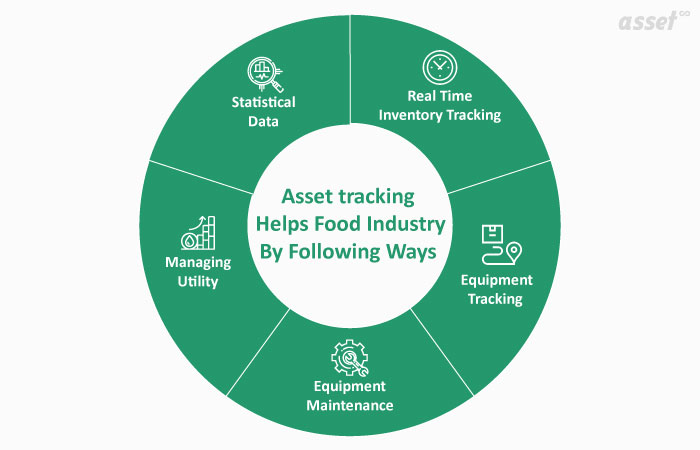
Asset tracking helps the F&B industry in many ways:
Also Read: How Important Is Asset Tracking Software for the Railway Industry?
Real-Time Inventory Tracking
Inventory is the consumable items that an organization or restaurant owns and uses in its daily operations. Inventory tracking means tracking the non-unique items of value used in a restaurant. Inventory includes stock, supplies and a host of items held in large numbers, such as oil, condiments, vegetables, pulses and cereals.
Inventory tracking tells you how many supplies are left in stock. It tracks daily, weekly and monthly usage. One of the main purposes of real-time tracking is also to use materials before they expire.
Equipment Tracking
Tracking assets in a restaurant can be challenging, especially when the restaurant has several branches. Assets can be small or large, and they are prone to theft. Asset tracking software tells you where each asset is.
For example, if you have delivery vehicles, you can track them in real time. You can see whether they are on the move or stationary. Who is using a particular asset? What is the current status of the vehicle?
Tracking software gives precise answers to such questions. Asset tracking software is also needed for depreciation tracking and for calculating the value of each asset.
For maintenance, equipment maintenance software plays a key role. It keeps assets in good condition and working efficiently, which helps optimize their performance. It can also extend asset life by enabling regular maintenance and reduce the risk of unexpected breakdowns.
Equipment Maintenance
Keeping assets in good condition is necessary to organize daily activities and keep them running smoothly. Maintenance also means keeping assets hygienic. In food service, hygiene is extremely important. If cleanliness and hygiene fall below standard, the service suffers, and so do the brand and its reputation.
Restaurant kitchens have many appliances and pieces of equipment, along with systems such as HVAC, that need regular maintenance. If they are not maintained, the business’s bottom line will take a damaging blow.
Managing Utilities
Managing utility services helps the restaurant monitor, analyze and report on utility consumption. This helps control and reduce utility bills.
Also Read: How Useful is It to Barcode Kitchen Equipment in a Restaurant?
A major advantage of the software is setting alerts on consumption limits. The system sends an alert when consumption crosses its limit.
With utility monitoring, the consumption of the HVAC system, electrical equipment, chiller plant, water and more can be managed effectively.
Statistical Data
If a hotel or restaurant uses asset tracking software, it can get analytical reports and data. This helps it serve customers better and optimize daily operations.
With the software, you can calculate how much raw material is used to prepare each dish. This helps set prices for the different items on the menu. It can also reveal other interesting data, such as which dishes are most popular with customers.
Which Technology Is Used for Asset & Equipment Tracking?
Several technologies are available for tracking assets and equipment, such as barcodes, QR codes (Quick Response codes), RFID (Radio Frequency Identification), NFC (Near Field Communication), BLE (Bluetooth Low Energy), GPS (Global Positioning System) and IoT (Internet of Things).
Any of these technologies can be used for tracking, depending on what suits the organization. The main decision is which method to choose and how to proceed from there.
Say you decide to go with QR codes. A QR code is a black square grid that a QR code scanner can read. The technology is very popular because it is quick to read and holds more data than a barcode. Once the QR code is scanned, the scan is recorded in the software, and the user can then check all the activity related to that asset.
Why Restaurants Need Asset Tracking Software
Any restaurant or food-service organization needs asset management software, because it captures essential data on assets and helps manage and monitor them. The system also keeps track of utility consumption. Software for food and beverage operations helps keep assets in peak condition and provides analytics on results such as costs and consumption.
The software gives a clear view of assets and inventory, with the functionality and configurability that the F&B industry needs today.
Software plays a crucial role in growing the business and optimizing daily operations. The food and beverage industry has many requirements to comply with, and tracking the work by hand is nearly impossible.
A restaurant has great potential to grow its business and improve its bottom line. To achieve that, it needs an effective solution, and that is what asset tracking software provides. It can give the business that extra edge.