






Asset tracking software is becoming one of the highest-return investments organizations can make. With rising labor costs, tight budgets, and growing pressure for operational efficiency, companies are searching for tools that reduce waste and make better use of what they own. Demand for asset tracking management has grown because businesses lose money through misplaced equipment, delayed audits, poor maintenance planning, and underused resources.
That is why asset tracking software is so often the first place companies look for cost reduction and better accuracy. Companies that automate tracking and gain clear visibility of their assets report savings across labor, loss prevention, maintenance, and compliance activities, and that is what asset tracking ROI measures.
Why Rising Costs in 2026 Make Asset Tracking Software Essential
Cost pressures in 2026 are driven by inflation, higher equipment costs, global supply chain disruptions, and workforce shortages. Organizations must operate leaner while still maintaining accuracy and productivity. This is why investment in asset tracking software keeps growing.
The lack of standardized asset tracking management leads to significant overspending. Companies without asset tracking software lose assets every year and waste hundreds of hours reconciling outdated spreadsheets. Asset tracking software removes these inefficiencies and gives clear visibility that directly supports profitability.
Breakdown of Where the Savings Come From Using Asset Tracking Software
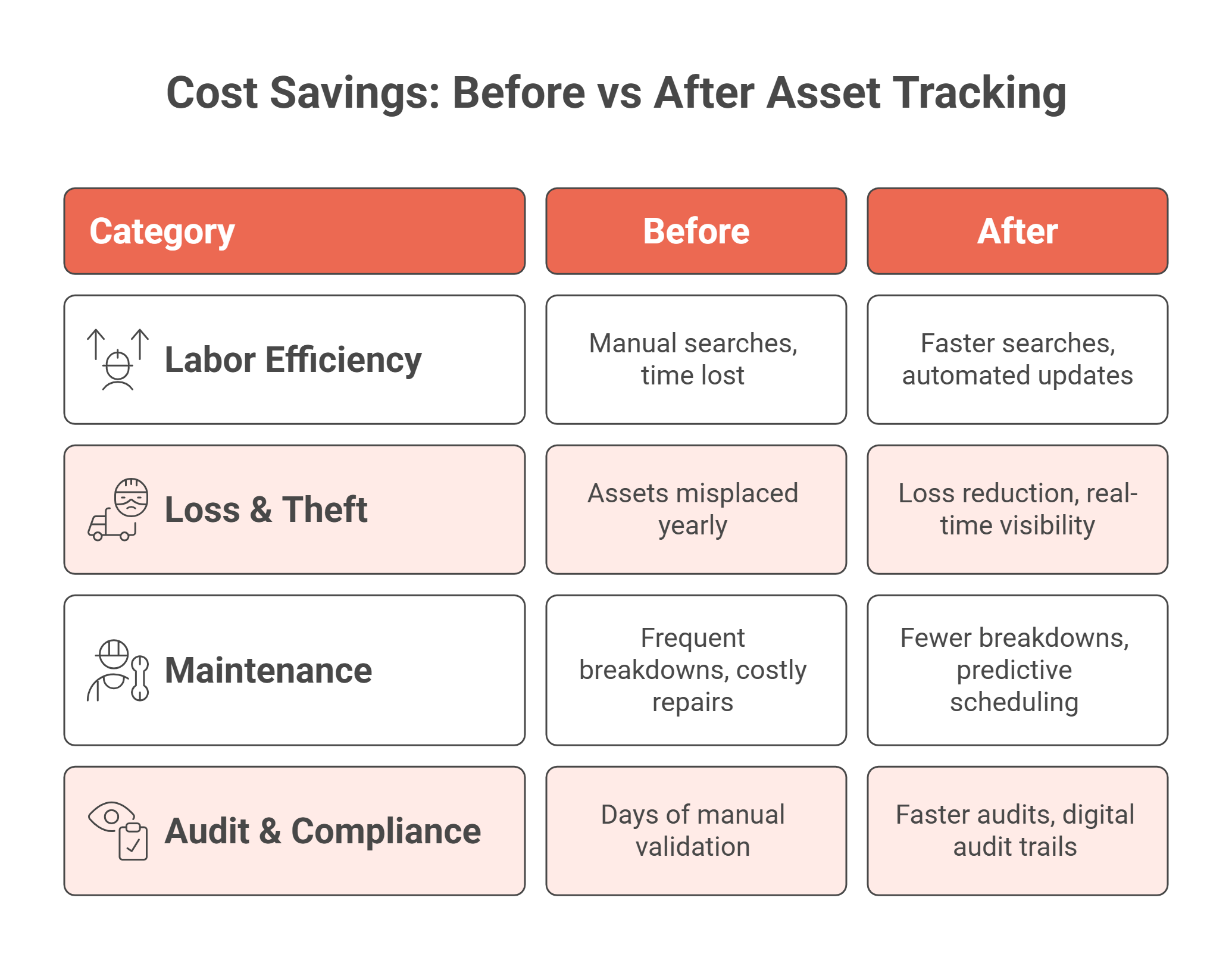
Companies using asset tracking software see a strong return because savings come from several areas at the same time. Here is the breakdown.
1. Labor efficiency savings
Manual tracking consumes enormous time. Employees spend hours every week searching for equipment, updating spreadsheets, and validating asset lists. Asset tracking software cuts that search time sharply.
Automation removes repetitive work, letting teams focus on more valuable tasks. Asset tracking software also cuts the administrative errors that lead to rework and costly delays.
2. Loss and theft prevention
Asset loss is one of the biggest financial drains for businesses. Without asset tracking management, organizations misplace a share of their equipment every year. Asset tracking software provides location history and accountability for each asset, which reduces loss.
3. Maintenance and downtime reduction
Without asset tracking software, companies often overspend on emergency repairs and suffer significant downtime. Scheduled maintenance within asset tracking software keeps servicing on time, which reduces breakdowns.
This steady improvement leads to better utilization, longer equipment life, and fewer purchases.
4. Audit and compliance optimization
Audits are time-consuming and expensive. Companies using spreadsheets spend days validating asset records, while asset tracking software shortens audit time considerably. Automated reports, digital trails, and up-to-date records help prevent fines and compliance risk.
Audit-ready documentation also supports quick financial reporting and smooth compliance cycles.
ROI Formula and Worked Example for Asset Tracking Software
Asset Tracking ROI Formula Explained
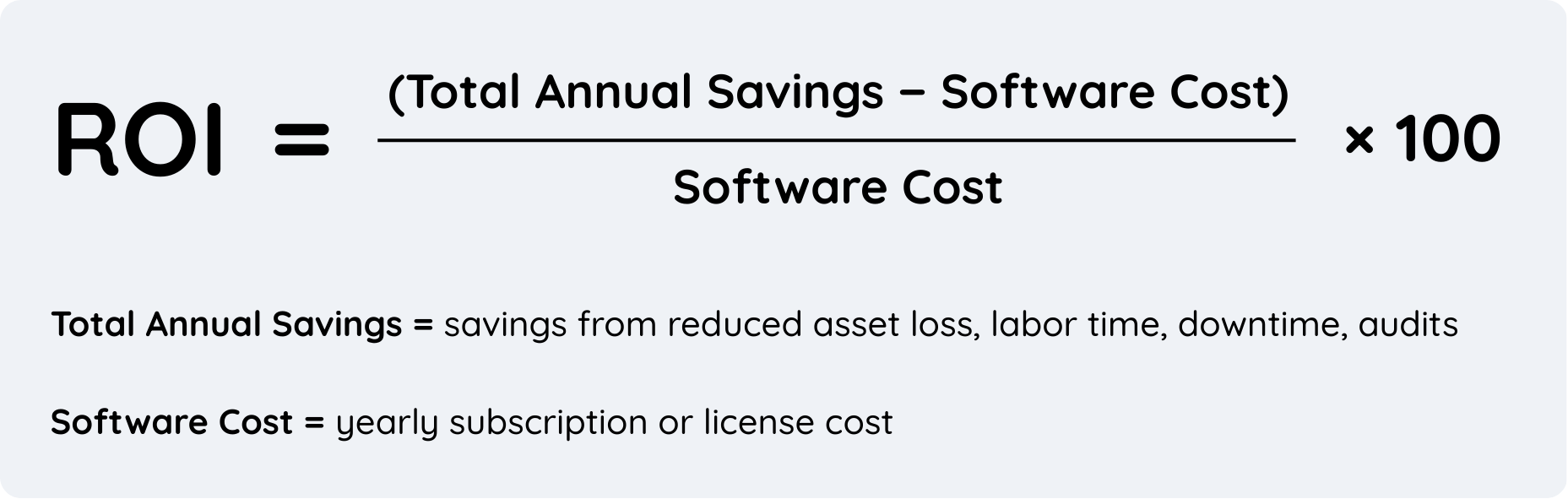
Organizations ask how to calculate asset tracking ROI accurately. The standard return on investment formula applies:
Return on investment equals total annual savings minus software cost, divided by software cost, multiplied by one hundred.
To see how the formula works, here is an illustrative calculation with hypothetical figures.
ROI example for a mid-sized company
Imagine a manufacturing company with 2,000 assets that invests in asset tracking software. Before implementation, it lost assets every year and spent hundreds of hours annually on asset verification and audit preparation.
After implementation, it expects:
- Fewer lost assets
- Less time spent on audits
- Lower maintenance cost
- Lower procurement spending, thanks to better asset utilization
Suppose its total annual savings come to one hundred eighty thousand US dollars, while the yearly software investment is thirty thousand US dollars.
Using the ROI formula
ROI equals one hundred eighty thousand minus thirty thousand, divided by thirty thousand, multiplied by one hundred.
ROI equals five hundred percent.
A calculation like this, run with your own figures, shows whether asset tracking software is an investment that pays for itself or simply another expense.
Use Cases and Cost Saving Examples Across Industries
Companies across industries are adopting asset tracking software and reporting financial improvements. Below are examples of where businesses find asset tracking ROI.
1. Healthcare sector
Hospitals that implement asset tracking software reduce equipment loss and the patient care delays caused by missing devices. Asset tracking also supports sterilization monitoring, maintenance scheduling, and compliance reporting.
2. Manufacturing industry
Manufacturers track machinery, tools, and safety equipment. This reduces unplanned downtime and lowers replacement purchases, because availability is known accurately. Asset tracking management helps every tool be ready when needed, removing production bottlenecks.
3. Construction and field service
Construction companies save money by preventing misplaced tools and machinery. GPS and RFID based asset tracking software lets teams locate items quickly across sites. Time saved translates directly into lower labor cost.
4. IT and technology
IT departments manage servers, laptops, cloud licenses, and network equipment. With asset tracking software, companies reduce license duplication, unauthorized device use, and hardware waste. Audits become much smoother because every digital and physical asset is documented.
Technologies Contributing to Higher ROI in Asset Tracking Software
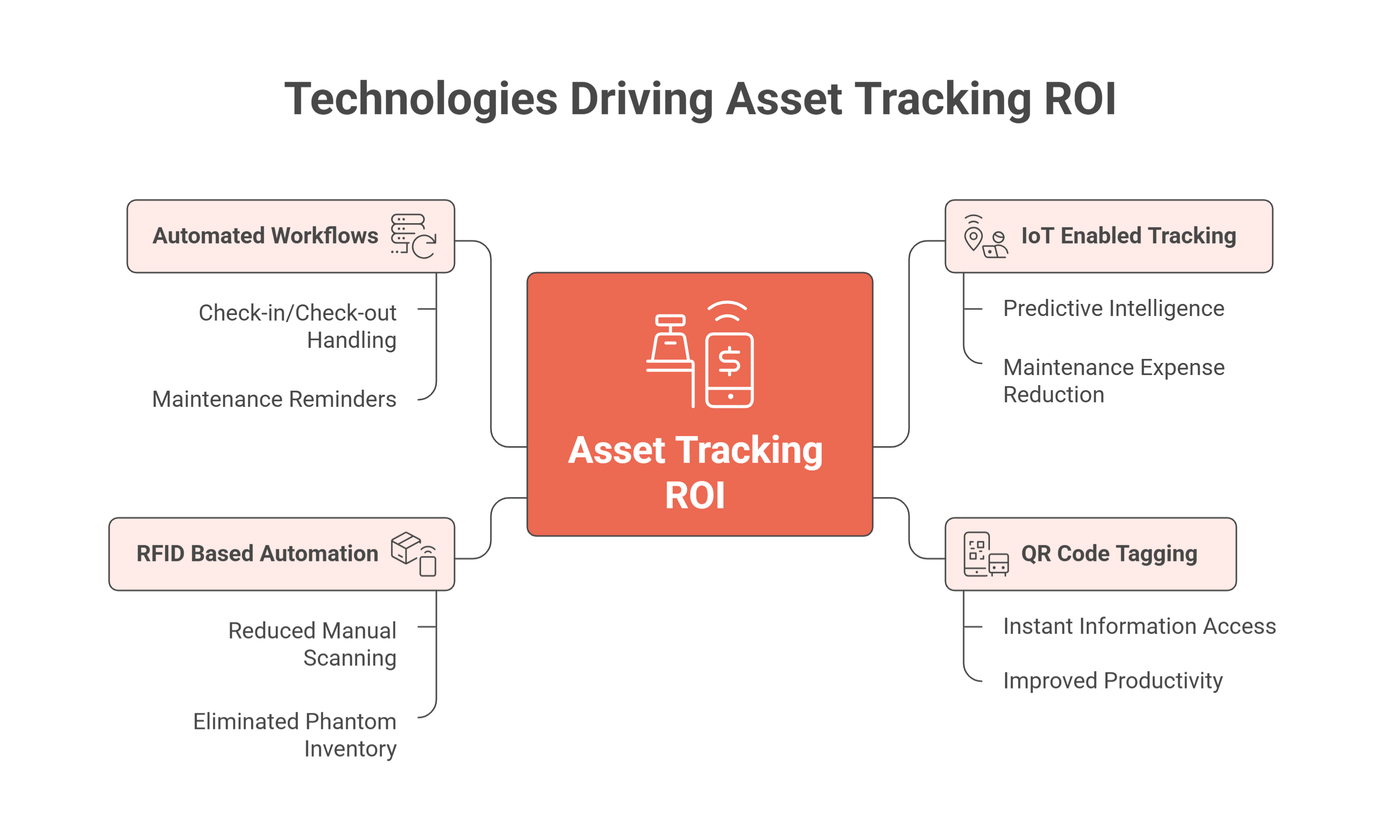
IoT, QR codes, RFID, and automation are the main technologies driving asset tracking ROI. Here is how each contributes.
1. IoT enabled tracking
IoT sensors provide continuous updates on asset health, temperature, energy consumption, and usage. Acting on these readings prevents breakdowns and reduces maintenance expenses.
2. QR code tagging
QR-based asset tracking is affordable, fast to deploy, and suits large teams. A scan brings up history, status, and documentation, improving productivity.
3. RFID based automation
RFID reads tags without a line of sight, which reduces manual scanning and allows rapid inventory checks. Companies using RFID save hours during audits and reduce phantom inventory issues.
4. Automated workflows
Automation handles check-in and check-out, asset assignment, alerts, maintenance reminders, and audit logs. These automated workflows remove manual work and support efficient asset tracking management.
Estimating Your Own Asset Tracking ROI
Understanding the financial impact of asset tracking shouldn’t be complicated. You can estimate how much your organization could save by improving asset visibility, reducing loss, and cutting audit time with a few figures you probably already have.
Gather the number of assets, how efficiently they are tracked today, the average asset value, and your current loss rate. From those you can work out:
- Your estimated annual asset loss
- Total potential savings with improved tracking
- Daily cost leakage you may not even realize
- How quickly an asset tracking system can pay for itself
What Drives Asset Tracking ROI in 2026
Companies report consistent savings from asset tracking software because of the combination of automated visibility, reduced downtime, and improved accountability.
Where the return shows up
- Lower overall operating costs after implementing asset tracking software
- Shorter audit preparation
- Fewer manual tracking errors
- Lower maintenance costs
- Fewer lost assets
Companies with strong asset tracking management tend to operate more efficiently and keep their equipment running longer.
Start Saving with Asset Tracking Software in 2026
Asset tracking software is one of the most effective cost saving technologies for modern organizations. With rising expenses, supply chain delays, and operational pressures, companies need to remove inefficiency and adopt automated systems. Asset tracking management provides visibility, transparency, and data-driven insights that support smarter decisions and audit-ready operations.
Asset Infinity helps companies save by combining asset tracking with automated workflows, reports, and an audit trail on every record. If you want to reduce operational waste, increase productivity, and achieve measurable savings, start your journey with Asset Infinity today.
Frequently Asked Questions About Asset Tracking ROI
What is asset tracking ROI and why does it matter?
Asset tracking ROI measures the financial return a company receives after implementing asset tracking software. It matters because organizations want to justify their investment and understand how much money automation and accuracy will save.
How does asset tracking management improve savings?
Asset tracking management improves savings by reducing asset loss, cutting audit time, automating tracking, and extending equipment life. These combined effects deliver strong returns.
Is asset tracking software suitable for small businesses?
Yes. Small businesses benefit because early adoption prevents long-term waste. Asset tracking software helps growing companies control costs and avoid buying unnecessary equipment.
Does asset tracking software help in compliance audits?
Yes. Automated audit trails, up-to-date reports, and accurate documentation reduce audit time and help prevent costly compliance failures.