







Asset management is important for an organization; there is nothing new about that. What matters more is the strategy you choose for asset management to take your business one step ahead.
Yet many companies hold back from putting an asset management strategy in place. Their reasons? Asset management is expensive, the team manages assets manually, and so on.
This article covers the importance of asset management and the strategies you can put in place in your business.
What are the different types of asset management strategies through which we can control cost?

Effective asset management is crucial for controlling costs and getting the most value from assets throughout their lifecycle. Here are some key strategies that organizations can adopt to manage assets efficiently and keep costs in check:
1. Preventive Maintenance:
A preventive maintenance strategy helps avoid equipment failures and extends the lifespan of assets. By scheduling regular maintenance based on time or usage, companies can reduce downtime and avoid the higher costs of emergency repairs.
2. Predictive Maintenance:
This strategy uses data from sensors and analytics to predict when an asset might fail. By addressing issues before they cause a breakdown, predictive maintenance can lower repair costs and minimize disruptions to operations.
3. Lifecycle Management:
Understanding and managing the entire lifecycle of an asset, from acquisition and use to decommissioning and disposal, helps organizations optimize their investments. This approach makes sure assets are replaced or upgraded at the right time, balancing cost and performance.
4. Standardization of Assets:
By standardizing assets across the organization, companies can reduce maintenance and inventory costs. Standardization simplifies training, reduces the number of spare parts that need to be kept on hand, and generally makes operations simpler.
5. Improving Asset Use:
Getting more use from assets means every resource is used effectively, with less idle time and more productivity. You can achieve this through better scheduling, sharing assets among departments, or moving resources to higher-value activities.
6. Technology Integration:
Technology such as IoT sensors, AI and cloud-based asset management systems can greatly improve monitoring and management. These technologies provide current data on asset performance and health, enabling better-informed decisions and timely interventions.
What asset management strategies can you implement in your business?
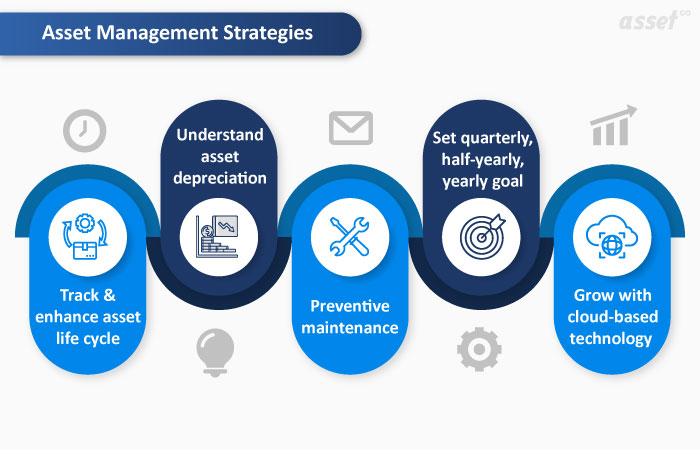
1. Track and extend the asset life cycle
With proper maintenance, you can extend asset life. Think of a person: if all their organs are healthy and working well, their life will be healthy and longer. The same is true of machines and equipment.
If a person is sick, their lifespan may shorten. But a person can speak to a doctor and find a solution to the problem, while a machine cannot speak. So you need a strategy for taking care of machines, and an asset management system helps you carry it out.
Also, track asset life for maintenance. It helps improve the efficiency of machines and equipment and can also extend your assets’ life. Without tracking asset life, you may face extra maintenance expenses.
2. Understand asset depreciation
It is important to know the depreciation of your organization’s assets. Find out which assets are no longer fit for purpose, and why. You may not realize that some of your assets are outdated.
Yet your workers still use them, which can slow down their work and get in their way. That is why regular depreciation tracking is vital: it shows you which assets should be sold, disposed of or donated.
3. Preventive maintenance
This is the most popular and widely used maintenance practice in organizations. It is part of planned maintenance and is effective because it is scheduled in advance. Its main focus is to head off problems before they happen.
Preventing potential problems is the objective of preventive maintenance. Preventive maintenance software helps you schedule this work and catch issues early. In short, fix small issues before they become major problems; that is the mantra of preventive maintenance and why it is an important part of business strategy in any organization.
4. Set quarterly, half-yearly and yearly goals
Set your objectives for the short, medium and long term, and set the priority and sequence of work. At the end of each period, top management should review whether the objectives were achieved.
If not, what was the reason? Find the problem and work out how to solve it. Make business processes and interactions systematic so that wasted time is cut and the process becomes more efficient.
5. Grow with cloud-based technology
As technology evolves, you should evolve with it. Keeping up with technology improves business output, so it is good for business to stay ahead of the curve.
Your asset management system should be cloud-based, so you can gather information about each asset anytime, anywhere. Cloud systems encrypt stored data, which keeps it secure and accessible at all times.
That way, you are always connected to your system and can collect information whenever you need it, without being tied to your desk.
What These Strategies Do for Your Business
These asset management strategies will take your business to another level, and you will see daily business operations improve. An asset management system aims to reduce cost through better purchasing, better use of assets and better management of the overall asset life cycle.
An asset management system can also reduce the risk of falling short on regulatory compliance. To manage your assets efficiently and effectively, you need an asset management system. It helps you hit your targets on time.